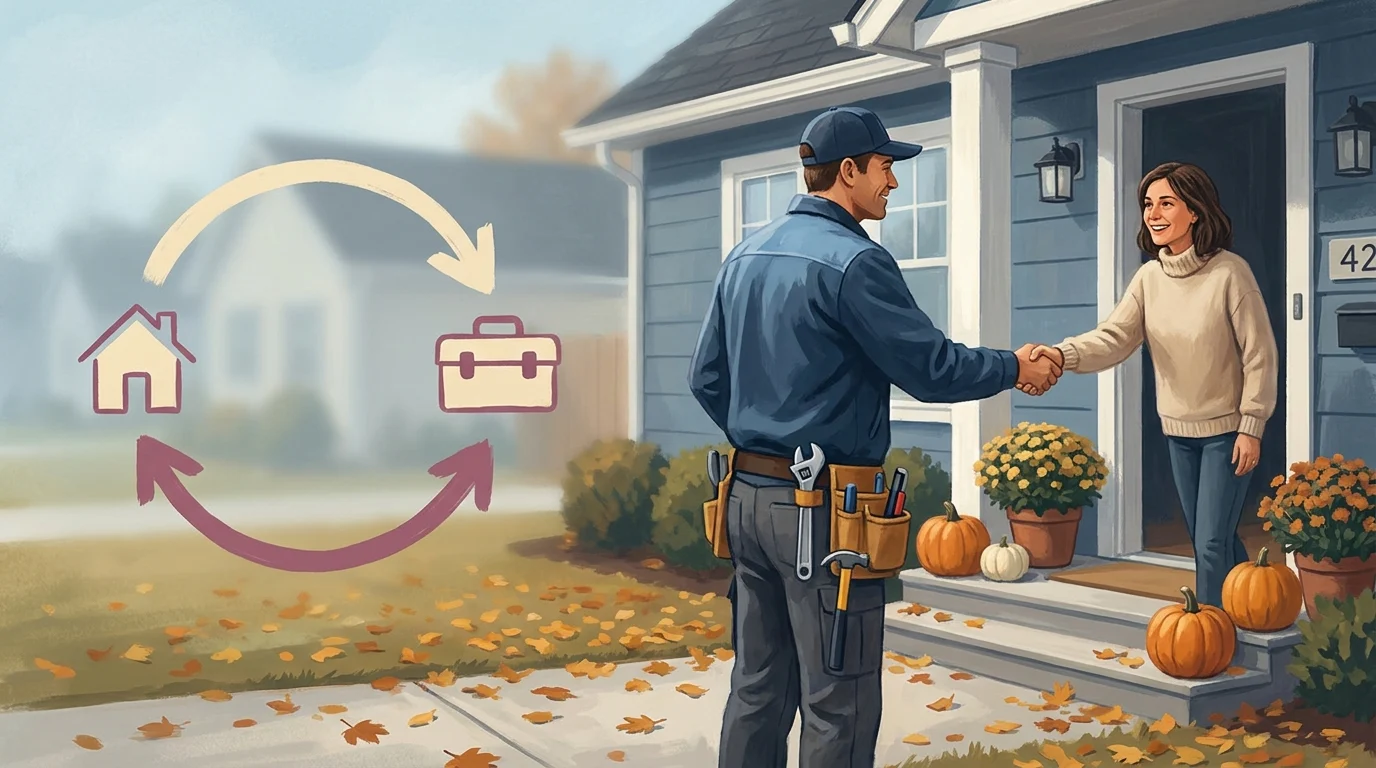


Someone finds your business on Google, opens your website and looks for a way to book. The service page leaves them guessing about what’s included. They send an enquiry anyway, but it lands in an inbox nobody checks until tomorrow afternoon. By then, they’ve booked elsewhere. That’s where businesses lose customers: in the small gaps between someone showing interest and getting a useful answer.
For owners serving Kingsville, Ontario and the Windsor-Essex Region, those gaps can quietly swallow the effort spent earning attention. Before you pay for another visitor, follow the path the last interested person had to take. Count the places where they had to wait, guess or repeat themselves.
The Leaky Bucket: Where Businesses Lose Customers Before They Buy
More traffic sends more people through the journey you already have. If that journey makes buying difficult, extra visitors encounter the same obstacles. Advertising can increase enquiries while the share that becomes accepted paid work stays painfully low.
That distinction matters when you’re deciding where to spend. An enquiry starts a conversation. A quote puts an offer in front of someone. A booked appointment reserves time. Accepted paid work is a separate outcome, and your records should keep those stages distinct.
Each Handoff Can Lose the Sale
Consider a hypothetical appliance repair business. Its search listing attracts a homeowner with a broken dishwasher. The website lists repairs, but leaves the service area and diagnostic fee unclear. The homeowner calls, reaches voicemail and keeps searching.
The business earned attention. The next handoff left questions unanswered. Buying more visits would send additional homeowners into that same gap, adding acquisition expense while leaving the obstacle in place.
Build a Connected Smart Digital Doorway
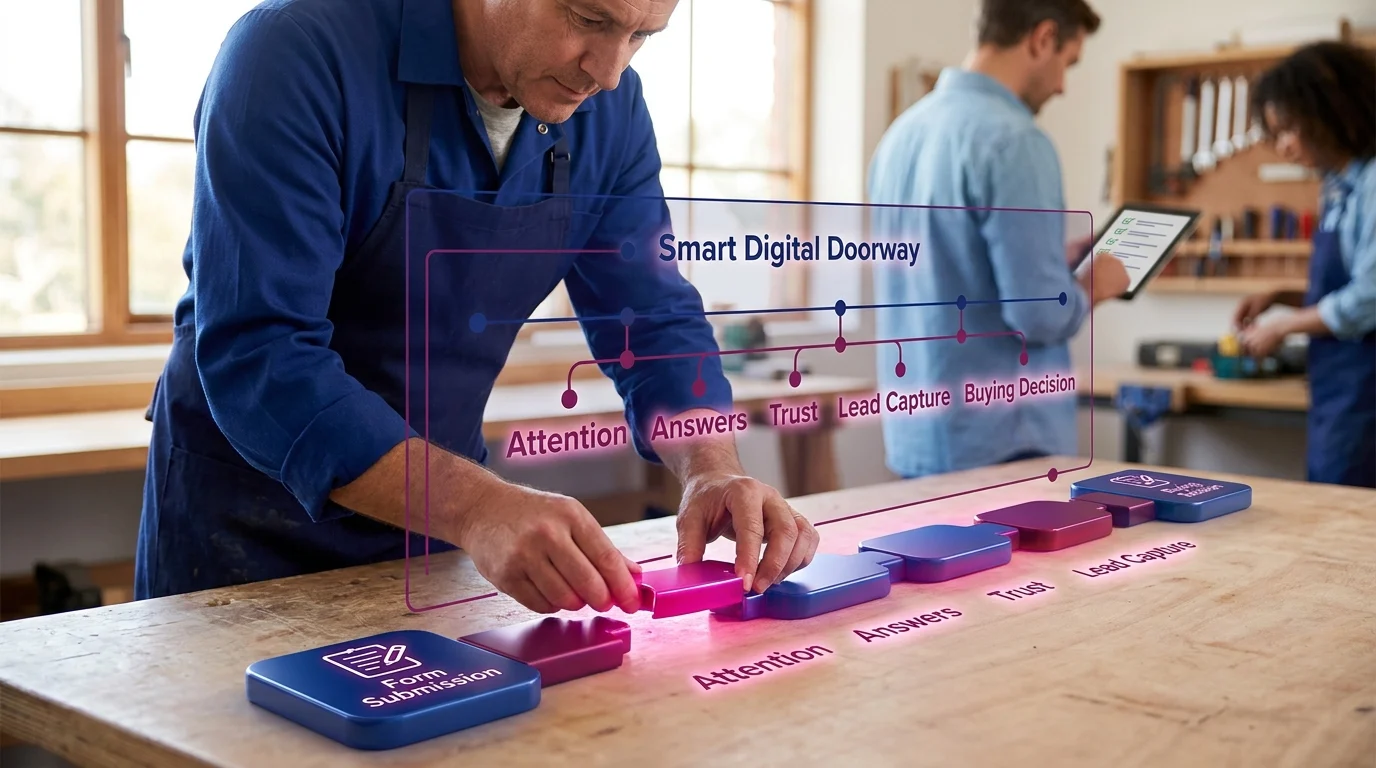
The Customer Journey Opportunity treats your Smart Digital Doorway as a connected system: it attracts attention, answers questions, builds trust, captures leads and converts prospects into customers. Each part needs to carry the person naturally into the next.
For that repair business, the system could pair clear service details and genuine customer reviews with a short enquiry form and an assigned person who replies. Publishing the diagnostic fee suits a fixed-price visit; explaining how the fee is determined suits jobs with variable travel or equipment requirements.
Both approaches give the homeowner enough information to decide whether to proceed. Fixing customer leaks starts with making those decisions easier, then checking whether more enquiries progress to quotes, appointments and accepted paid work. That gives your next traffic investment a stronger foundation.
The Most Common Customer Leaks Between Interest and Purchase
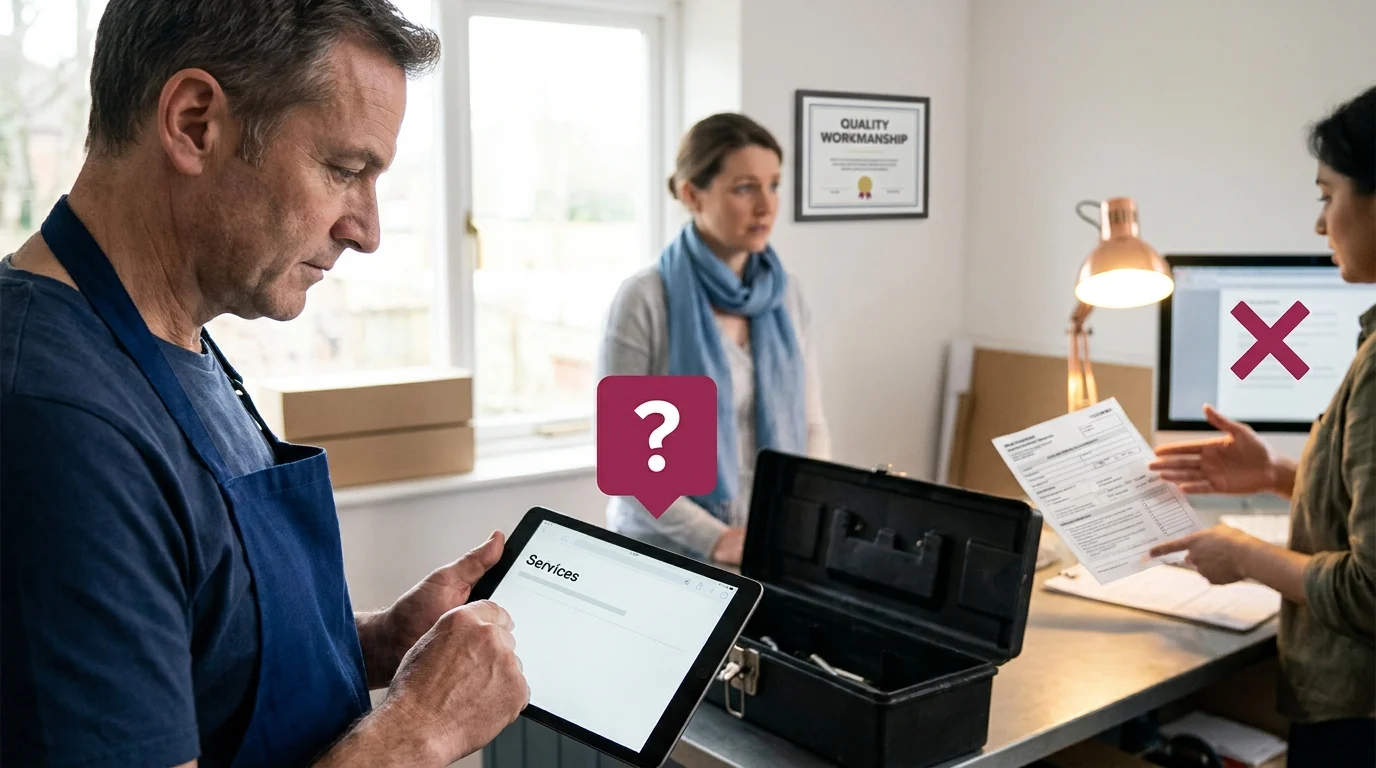
Look at where businesses lose customers between “this looks promising” and taking the next step. These conversion gaps often show up in 5 places.
Missing Information Leaves Decisions Hanging
Customers need answers that help them choose: what’s included, what they need to prepare and how long the work takes. Put those answers beside the relevant service so someone can judge whether it fits their situation.
Weak Trust Signals Leave Claims Unsupported
“Quality workmanship” gives a buyer little to inspect. Photos of completed work, clearly described warranties and named team members give that claim substance. Use your own project photos and explain what each job involved.
Difficult Booking Interrupts Momentum
Consider a hypothetical cabinet refinisher serving Kingsville, Ontario and the Windsor-Essex Region. A homeowner browsing on their phone must create an account and upload measurements before requesting a conversation. That’s considerable homework before anyone has confirmed suitability.
A Calendly appointment suits a standard introductory call. A short website form suits projects needing review before scheduling. Build that choice into the Smart Digital Doorway, with detailed measurements requested when they’re needed.
Unanswered Enquiries Break the Handoff
A form submission can sit unnoticed in an inbox while the customer waits. Assign someone to check incoming requests, arrange cover during absences and state when a human response should arrive. An automated acknowledgement confirms receipt; someone still needs to answer the question.
Absent Follow-Up Leaves Quotes Unresolved
A quiet prospect may be comparing scope, waiting for approval or stuck on a detail. A brief follow-up can ask whether anything needs clarification and agree on a next step. Keep the timing adjustable to the purchase and respect requests to stop.
Diagnose Your Leaks With Evidence, Not Guesses
To find where businesses lose customers, follow actual enquiries through the records you already have. Your call history, form notifications, calendar and quotes should tell a connected story.
Trace Each Enquiry to Its Outcome
Use Google Sheets for a small shared review; an existing CRM suits teams already recording customer activity there. Create fields for enquiry ID, first-contact channel, enquiry time, first human response time, appointment status, quote status, accepted paid work, latest outcome and customer feedback.
Review 10 recent enquiries, including purchases and conversations that went quiet. Give each enquiry an ID so a phone call followed by a form submission counts as one opportunity. Reconstruct the sequence from first contact through purchase or the last recorded exchange.
Keep enquiries, booked appointments, issued quotes and accepted paid work separate. Mark missing evidence as unknown. A blank record needs investigation.
Test the Mobile Path Yourself
Open your Smart Digital Doorway on your phone using mobile data. Find a service, tap the phone number, submit a clearly labelled test enquiry and try booking an available appointment.
Check whether the enquiry reaches the right inbox, confirmation arrives and calendar details match. Remove the test booking afterwards. Record confusing labels, broken controls and any point where you have to guess what happens next.
Compare the Handoffs
Group enquiries by first-contact channel. Compare response times and how many reach an appointment, quote or accepted paid work, allowing for different service needs.
Read customer feedback beside those outcomes. Ask stalled prospects one neutral question: “What affected your decision?” Repeated friction at the same handoff gives you a specific conversion gap to investigate. Treat this small sample as a starting signal.
Fix the Biggest Leak Before Buying More Traffic
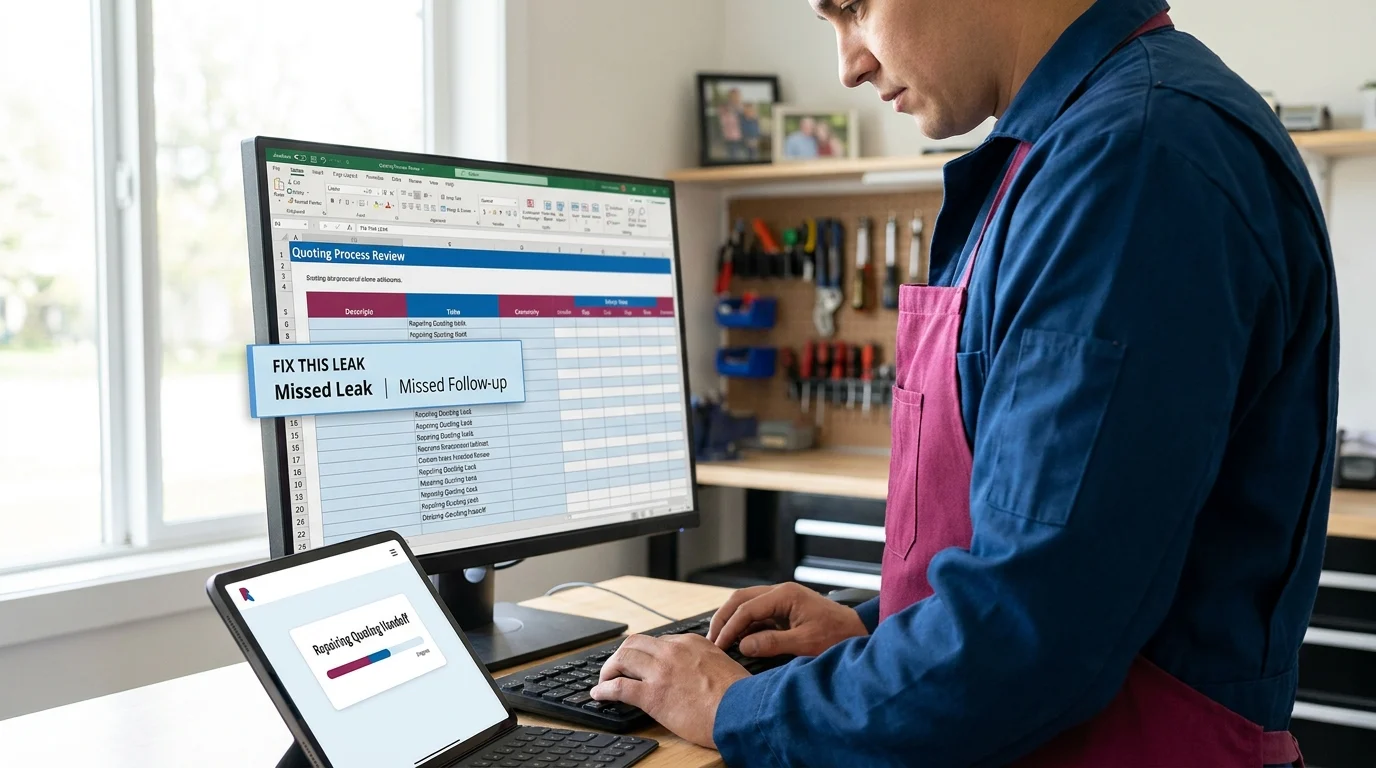
Once you’ve confirmed where businesses lose customers, choose 1 handoff to repair. Spreading the work across booking, quoting and follow-up makes it harder to see which change helped.
Rank the Cost of Each Leak
Add 3 fields to your review: estimated revenue at risk, leak frequency and repair effort. Estimate revenue at risk using affected opportunities, typical job value and your historical acceptance rate for comparable enquiries.
That estimate is a planning figure; the work remains unearned. If your acceptance history is thin, mark the estimate uncertain and use a range.
Count how often each confirmed failure occurs, then estimate repair hours and outside costs. Prioritize recurring failures with substantial revenue at risk and manageable repairs. A broken booking control deserves prompt attention; rewriting an entire service page takes more evidence.
Repair One Handoff
Hypothetical example: prospects receive quotes but struggle to accept them. Repair that Smart Digital Doorway handoff by adding a clear acceptance method, payment terms and an explanation of what follows approval.
For occasional quotes, an explicit reply-to-accept instruction may suit your workflow. For higher volumes, acceptance tracking in a quoting tool such as Jobber can reduce manual chasing. Choose the option your team can maintain.
Measure the Completed Next Step
Record the change date and compare similar groups before and after the repair. For this example, measure issued quotes that become accepted paid work, allowing enough time for customers to decide.
Keep pricing, service mix and seasonal demand in view when interpreting results. Higher acceptance across comparable quotes supports keeping the repair. Flat results call for another look at the handoff before you spend more bringing people to it.
What To Do Monday Morning
Set aside a focused working session with whoever handles incoming enquiries. Bring access to your website, business inbox and call records, plus the review you’ve already built.
Walk One Customer Route
Start where a prospect would start: a Google Business Profile listing, a referral message or a service page. Follow that route on your phone through to submitting an enquiry. Label your submission as a test, then check where it arrives and who sees it.
Review Recent Missed Enquiries
Compare recent voicemail messages, form submissions and inbox conversations with your review. Look for enquiries that received no response or stalled after an unanswered question. Separate confirmed handling failures from prospects whose decisions remain unknown. An empty conversation thread gives you a question to investigate.
Choose One Repair
Use the priority assessment you’ve already made to select a repair you can complete this week. Write down the specific failure and the expected next step. Keep the change small enough that you can test the whole route again afterward.
Assign an Owner and Deadline
Add a repair owner, completion deadline and verification note to your review. Name the person responsible for getting it finished, including any outside help needed. After testing, use the verification note to record what happened and whether the repair worked.
Schedule a Friday Check
Book a Friday review of the repaired route. Check how many eligible prospects reached the next step, alongside the total who entered it. Keep enquiries, quotes, booked appointments and accepted paid work separate. Friday is an adjustable checkpoint; longer buying cycles need more time before you can judge the outcome.
Keep the Customer Route Working
Finding where businesses lose customers becomes easier when someone owns the handoffs. A form can submit successfully while its notification sits in an inbox nobody checks. The useful question is whether the person asking for help can keep moving toward a decision.
A Smart Digital Doorway connects attention, answers, trust, lead capture and the buying decision. Its value depends on those pieces working together. Each repaired handoff gives the next prospect a clearer route and gives your team a process they can actually maintain.
Keep the review somewhere the people handling enquiries can reach it. As customer questions and staff responsibilities change, check the route again. That small maintenance habit helps you catch fresh conversion gaps before they become a recurring source of lost opportunities.
Want this fitted rather than figured out? Doorways Into Your Business helps owner-operators put systems like this in place. Book a free consultation.
Paul Hughes founded Doorways Into Your Business after more than five decades consulting across 30+ countries, from implementing early IBM email systems in the 1980s to running multi-million-dollar IT projects for global organizations. A St. Clair College graduate (1976), he settled in Kingsville, Ontario in 2019 to help local small businesses grow with practical “smart digital doorways”, websites, customer service, reviews, bookings, and payments, matched to what a business needs, not unnecessary technology.
All articles by Paul →