
Most local service businesses spend the majority of their marketing budget chasing new customers, then let those hard-won buyers walk out the door and disappear. A homeowner books a furnace tune-up, pays the invoice, and never hears from the company again until the furnace dies on the coldest night of the year, at which point they call whoever shows up first in a Google search. The relationship existed for exactly one transaction, and the business paid full price for it.
Learning to turn one-time buyers into repeat customers is one of the highest-return moves a local business can make. Existing customers already trust you, already know your quality, and cost a fraction of what you spend to acquire a stranger. The businesses that win in Kingsville, Ontario and the Windsor-Essex Region are rarely the ones with the biggest ad budgets. They are the ones that stay in touch after the sale.
Nail the Follow-Up: Post-Purchase Sequences That Bring Buyers Back
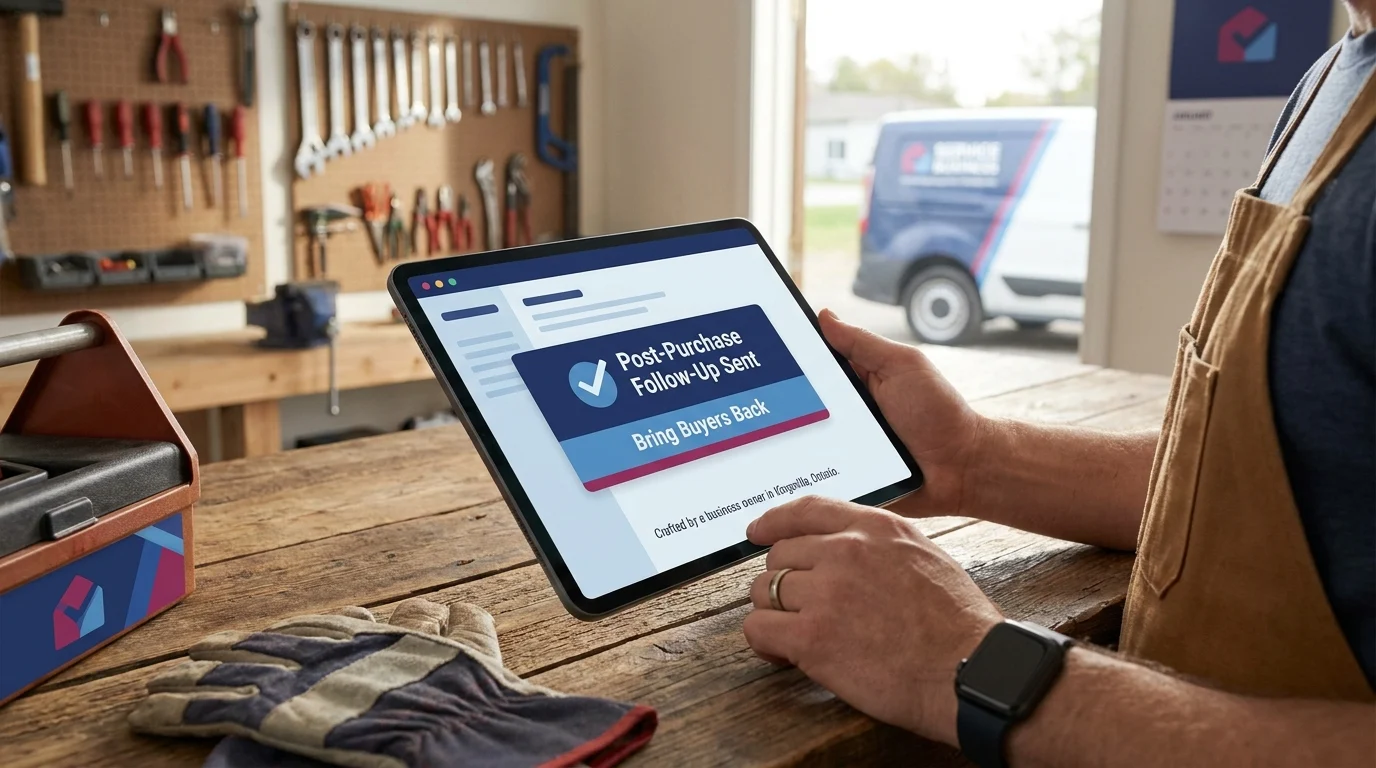
The window right after a purchase is when your customer thinks about you most and hears from you least. A structured follow-up sequence fills that gap. The goal is not to sell again immediately. It is to reinforce that they made a good decision and to make the next contact feel natural rather than pushy.
Send a Genuine Thank-You Within 24 Hours
Send a thank-you message the same day or the next morning. Keep it short and human: name the specific service, thank them by name, and give them a direct way to reach you if anything is off. A text works well for time-sensitive trades; email suits higher-value or slower-cycle services. Avoid stuffing an offer into this first message. Its only job is to close the loop and leave a good impression.
Check In When It Actually Matters
A few days after the work is done, follow up to confirm everything is holding up. For a plumber, that might be checking a repaired fixture is still dry. For a cleaning service, a note asking whether the results met expectations. This check-in does two things: it catches problems before they become bad reviews, and it signals that you care beyond the invoice. Customers who feel looked after come back.
Build a Simple Multi-Touch Sequence
Map out three or four touchpoints over the first 60 days:
- Day 1: Thank-you message
- Day 3 to 5: Service check-in and a soft request for a Google review
- Day 21: A useful tip related to what they bought (maintenance advice, seasonal reminder)
- Day 45 to 60: A relevant next-step offer or reminder to rebook
Each message should stand on its own and deliver something the customer values. Spacing them out keeps you top of mind without becoming noise, and by the time you make an offer, you have already earned the right to make it.
Build Loyalty Touchpoints That Reward Repeat Business
A good follow-up sequence gets a buyer to think about you again. A loyalty touchpoint gives them a reason to act. The difference matters: reminders keep you top of mind, but rewards change behaviour. For a local service business, the goal is simple. Make the second booking feel like the obvious, slightly-better-value choice compared to starting over with a competitor.
Keep the Program Simple Enough to Actually Use
The most common loyalty mistake is overcomplication. Punch cards with 12 slots, tiered points that require a spreadsheet to calculate, expiry dates buried in fine print. Customers disengage when the reward feels far away or hard to track.
Two structures work well for service businesses. The first is a visit-based reward: book five services, the sixth is discounted or free. The second is a spend-based credit: every dollar spent earns a small credit toward the next job. Pick one. Track it in your booking software or CRM so the customer never has to carry a card or remember a code.
Use Exclusive Offers to Reward Coming Back
Not every incentive needs a formal program. A one-time offer sent to past customers only, framed as something new prospects don’t get, does real work. A lawn care company can send a “returning client spring booking” rate. A cleaner can offer priority scheduling to anyone who’s used them before.
The word “exclusive” earns its place here because it is true. When a customer knows the deal exists specifically because they bought once already, the offer reinforces the relationship instead of just cutting price.
Personalize the Incentive to the Purchase
Generic discounts train customers to wait for discounts. Personalized incentives tied to what they actually bought feel like service, not a coupon. If someone booked a furnace tune-up in October, an April note offering a matching AC check-up lands because it fits their home and their calendar.
This is where good record-keeping pays off. Knowing what a customer bought, when, and how much they spent lets you send the right offer at the right moment. That relevance is often what separates businesses that turn one-time buyers into repeat customers from those that keep buying new leads to replace the ones they lost.
For service businesses across Kingsville, Ontario and the Windsor-Essex Region, a loyalty touchpoint doesn’t need a big budget. It needs to be simple, exclusive, and tied to something the customer already values.
Automate the Relationship: Simple Tools to Turn One-Time Buyers Into Repeat Customers
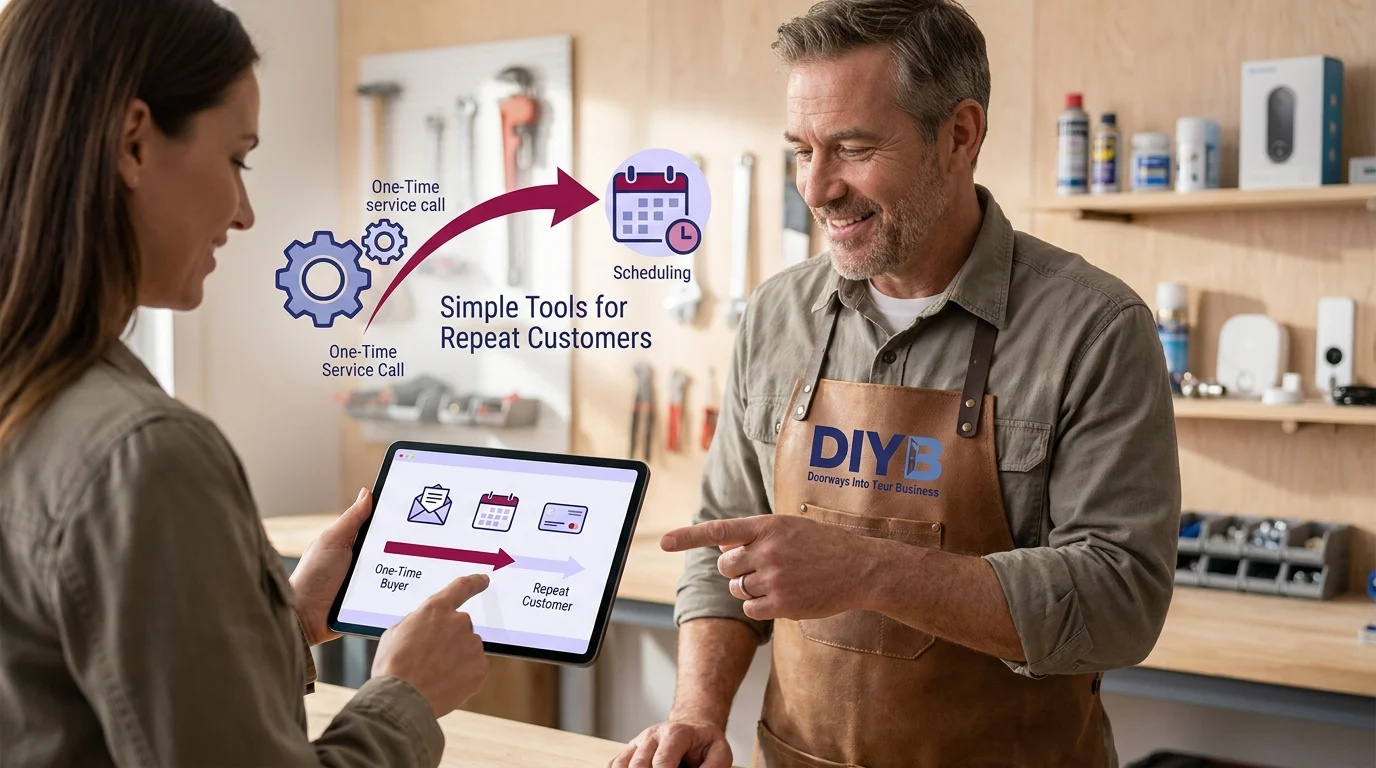
Follow-up sequences and loyalty rewards only work if they happen consistently. The problem for most owners is time. You are running jobs, answering calls, and quoting new work, so the manual reminder emails and check-in texts fall off the list within a week. Automation solves this by doing the repetitive relationship work in the background while you focus on the business. This is how you actually turn one-time buyers into repeat customers at a local business without hiring someone to babysit a spreadsheet.
Start With a CRM, Not a Spreadsheet
A customer relationship management (CRM) tool is the foundation. It stores every customer’s contact details, service history, and last purchase date in one place. Affordable options built for small service businesses include HubSpot’s free tier, Zoho CRM, and GoHighLevel. The key feature to look for is the ability to tag customers and trigger actions based on those tags. A spreadsheet cannot send a text on its own. A CRM can.
Once your customer list lives in a CRM, you can segment it: first-time buyers, repeat clients, customers who have not booked in 90 days. Each segment gets a different message.
Set Up Three Automated Triggers
- Appointment reminders. A text 24 hours before a booking cuts no-shows dramatically. Set it once and it fires for every appointment.
- Re-engagement after a set gap. If a customer has not returned in 60 or 90 days, an automated email or text with a reason to come back keeps you top of mind. A lawn care client might get a seasonal reminder; a salon client might get a “time for a trim” nudge.
- Review requests. A message sent two days after a completed job, asking for a Google review, builds your reputation while the experience is fresh.
Keep the Human Touch
Automation should feel personal, not robotic. Use the customer’s first name, reference the specific service they bought, and write in the same voice you use on the phone. A message that reads like a form letter gets ignored. One that sounds like a real note from a local owner gets a reply.
For businesses in Kingsville, Ontario and the Windsor-Essex Region, these tools cost less than a single lost customer and run whether you are on a job site or at home for the evening.
Key Takeaways
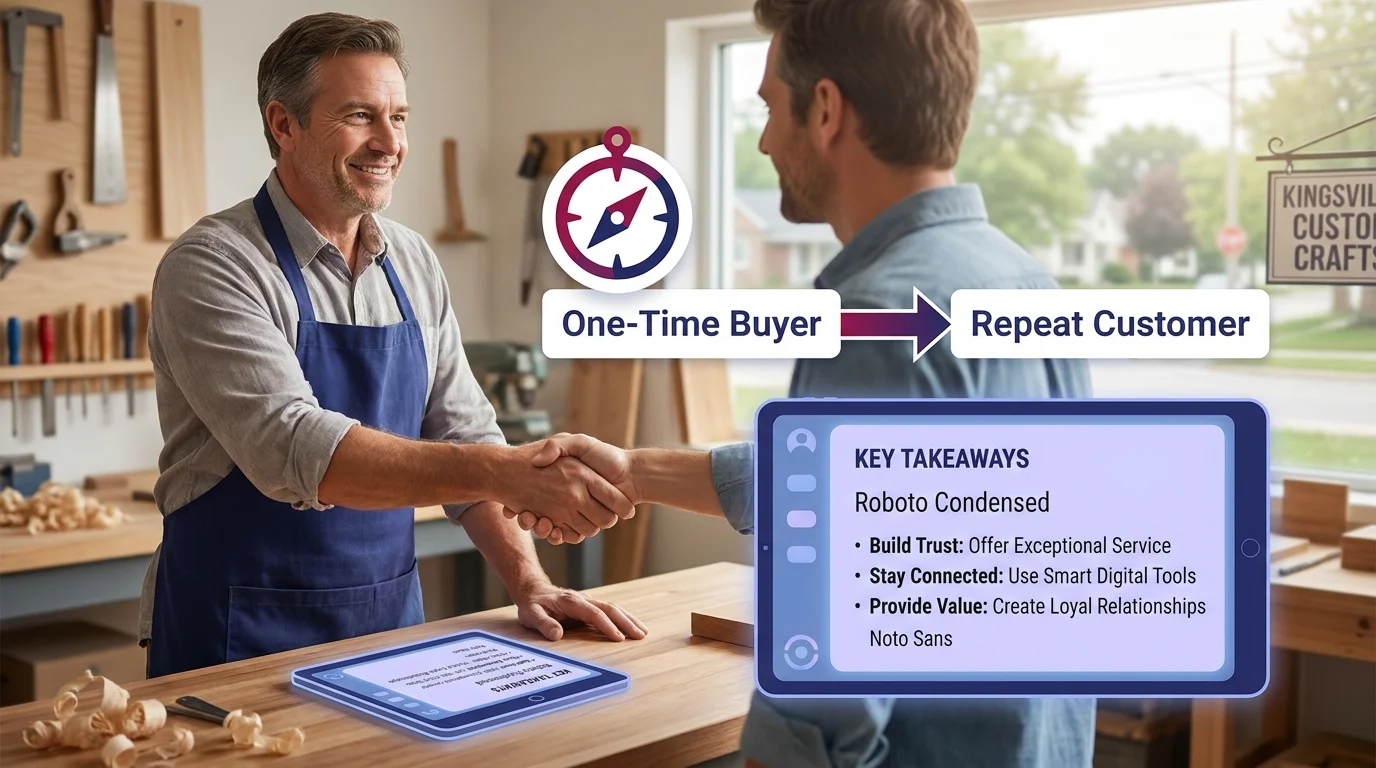
Repeat business is built on deliberate systems, not luck. A strong post-purchase follow-up sequence gets buyers back through the door, loyalty touchpoints reward them for staying, and automation keeps the whole relationship running without eating your time. Start with one piece: pick the follow-up message you keep forgetting to send, and automate it this week.
The businesses that grow steadily in the Windsor-Essex Region are rarely the ones chasing new leads hardest. They are the ones that turn a first sale into a second, third, and tenth. If your follow-up is inconsistent and past customers are slipping away, a simple system fixes that faster than you would expect.
Paul Hughes founded Doorways Into Your Business after more than five decades consulting across 30+ countries, from implementing early IBM email systems in the 1980s to running multi-million-dollar IT projects for global organizations. A St. Clair College graduate (1976), he settled in Kingsville, Ontario in 2019 to help local small businesses grow with practical “smart digital doorways”, websites, customer service, reviews, bookings, and payments, matched to what a business needs, not unnecessary technology.
All articles by Paul →