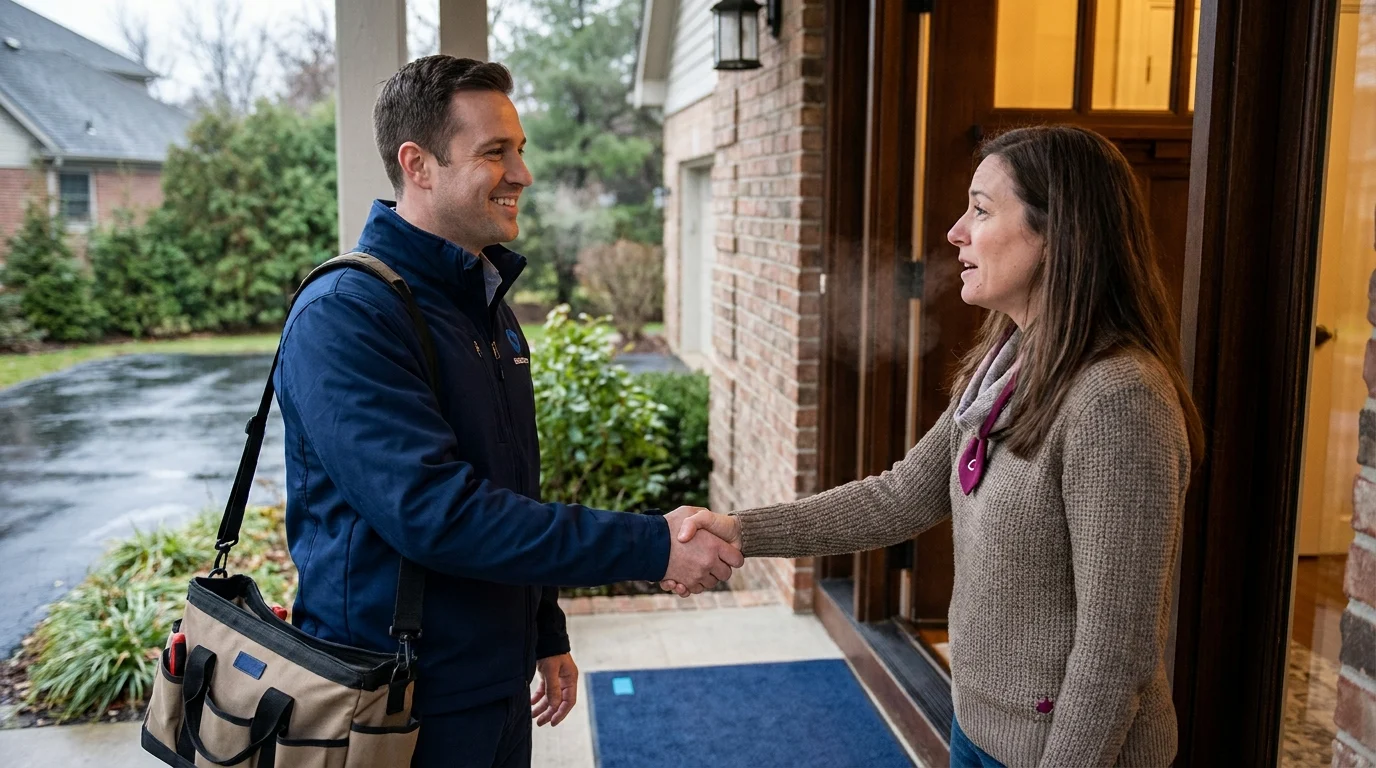


A customer just told you the new deck looks better than they imagined. Or thanked you three times on the way out the door. That’s the moment, and it’s also the moment most business owners let slip by, because asking for a review suddenly feels like asking for a favour they haven’t earned. That hesitation is normal. It’s also costing Kingsville, Ontario and Windsor-Essex region business owners real customers who never find them on Google. The good news: the awkwardness isn’t a personality flaw, it’s a mindset problem, and it has a fix.
Why Asking for Reviews Feels Awkward (And Why That Stops Most Owners Cold)

Most owners avoid asking for reviews for the same three reasons, and none of them are really about reviews at all.
Fear of Rejection
Asking directly opens the door to a “no,” or worse, silence. That small risk feels bigger than it is, especially for owners who built their business on relationships and don’t want a request to change the tone of one.
Feeling Salesy
Plenty of owners equate asking with pushing. They picture a used-car pitch, not a genuine request from someone who did good work and wants that work reflected honestly online. That association alone is enough to keep the ask stuck in their throat.
Not Wanting to Bother the Customer
This one sounds like consideration, but it’s often self-protection in disguise. The customer already gave their time and money. Adding one more thing feels like an imposition, even when the customer would happily oblige if simply asked.
The Reframe
Here’s the shift that fixes all three: a review request isn’t a favour, it’s part of finishing the job well. A mechanic who explains what he fixed is providing service. A mechanic who then says, “If that solved it, a quick Google review helps other people find someone honest,” is doing the same thing. Learning how to ask for Google reviews starts with treating the ask as a natural last step in good service, not a separate transaction bolted onto the end.
The Right Moment and the Right Words: Building a Review Request System
Timing matters more than wording. Ask at the peak of satisfaction, the moment right after the job works, the product delivers, or the problem gets solved. Wait until the invoice goes out three weeks later and that peak is gone, replaced by whatever the customer is dealing with that day.
Asking in Person
Keep it short and tied to the work just finished: “Glad that’s sorted for you. If you’ve got a minute, a Google review helps other people in the area find us.” No apology, no build-up.
Asking by Text
Text works because it’s low pressure and easy to act on immediately. Send it within an hour of the job finishing: “Thanks for choosing us today. If you have 30 seconds, we’d appreciate a Google review, here’s the link.” Include the direct link every time. Friction kills follow-through.
Asking by Email
Email suits businesses with a short delay between service and result, like a renovation or a consultation. Reference the specific work: “We finished the [job] on [date] and hope it’s working well. If it is, a quick review would mean a lot and helps neighbours find us.” Specificity signals it’s not a mass blast.
A Local Example
A Windsor-Essex region HVAC company built its review request around job completion, not billing. The technician sends a text the moment the work order closes, while the homeowner is still standing next to a furnace that’s running again. That single timing change, moving the ask from the invoice to the job site, is what separates owners who collect reviews consistently from owners who wonder why nobody responds.
Turning It Into a Habit: Automate Review Requests Without Losing the Personal Touch
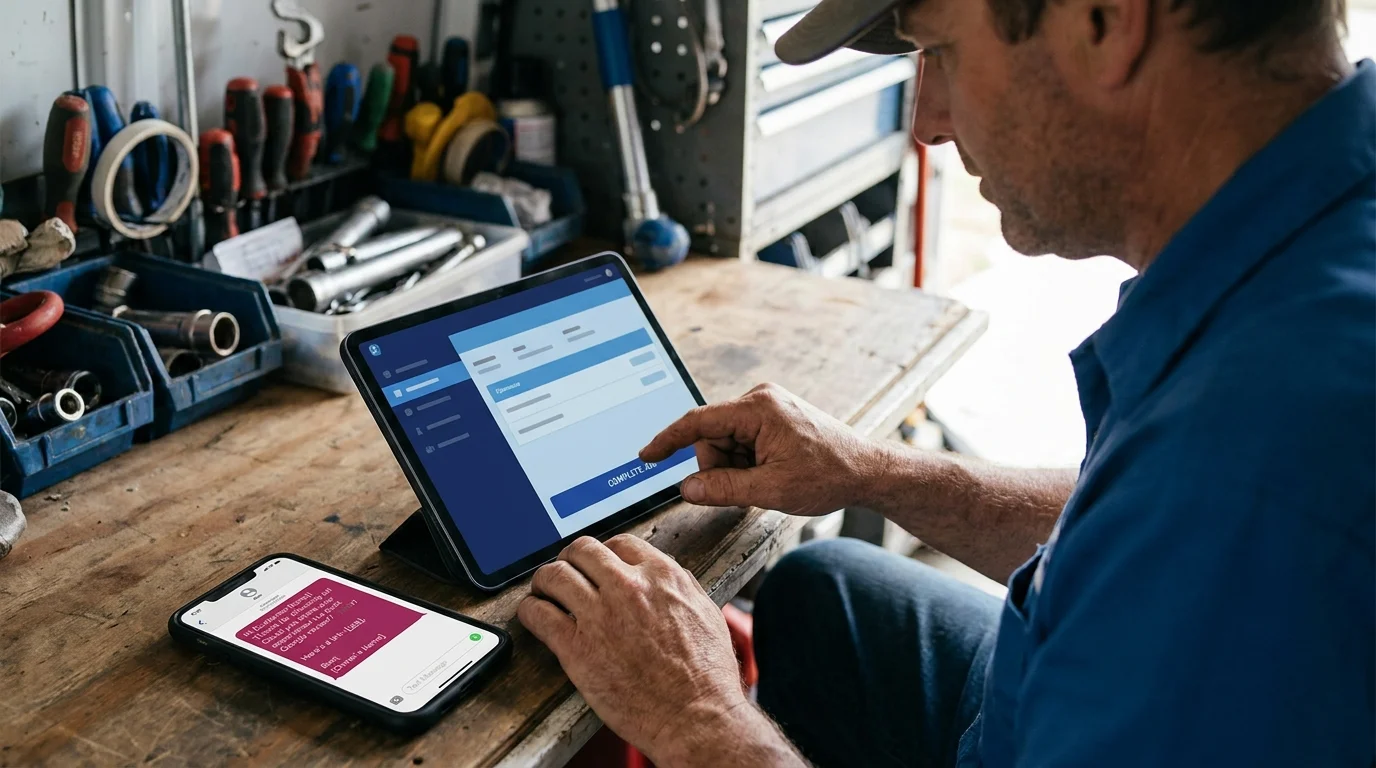
Remembering to ask is the hardest part. Even owners who know the right words forget when they’re juggling five jobs in a day. The fix isn’t discipline, it’s a trigger that fires the request automatically the moment a job closes.
Tie the Trigger to Something That Already Happens
Job completion and invoicing are events that already exist in every business’s workflow. Connect the review request to one of those, and the team never has to think about it. Closing a work order sends a text. Marking an invoice paid sends an email. The action that already happens becomes the action that also asks for a review.
Use Simple Tools, Not Complicated Ones
This doesn’t require custom software. A CRM with a text automation, a scheduling tool with a completion trigger, or even a shared checklist that reminds staff to tap “send” at the right moment can work. The goal is consistency, not sophistication.
Keep the Personal Touch Inside the System
Automated doesn’t have to mean generic. Pull the customer’s name and the specific job into the template so it still reads like it came from a person. A message triggered automatically but written with real details rarely feels robotic. A message sent manually but rushed and vague often does.
Consistency Beats Cleverness
One perfectly worded request sent occasionally won’t move the needle. A decent request sent every single time will. Owners who get customer reviews long-term aren’t the ones with the best script, they’re the ones whose system never skips a customer.
Key Takeaways

Asking for a Google review only feels awkward when it’s improvised. Fix the timing, keep the words short and specific, and let a simple automation carry the request so it happens every time, not just when someone remembers. Businesses in Kingsville, Ontario and the Windsor-Essex region that build this into their normal workflow stop treating reviews as a favour to ask for and start treating them as a natural last step of good work.
Paul Hughes founded Doorways Into Your Business after more than four decades consulting across 30+ countries, from implementing early IBM email systems in the 1980s to running multi-million-dollar IT projects for global organizations. A St. Clair College graduate (1976), he settled in Kingsville, Ontario in 2019 to help local small businesses grow with practical “smart digital doorways”, websites, customer service, reviews, bookings, and payments, matched to what a business actually needs, not unnecessary technology.
All articles by Paul →