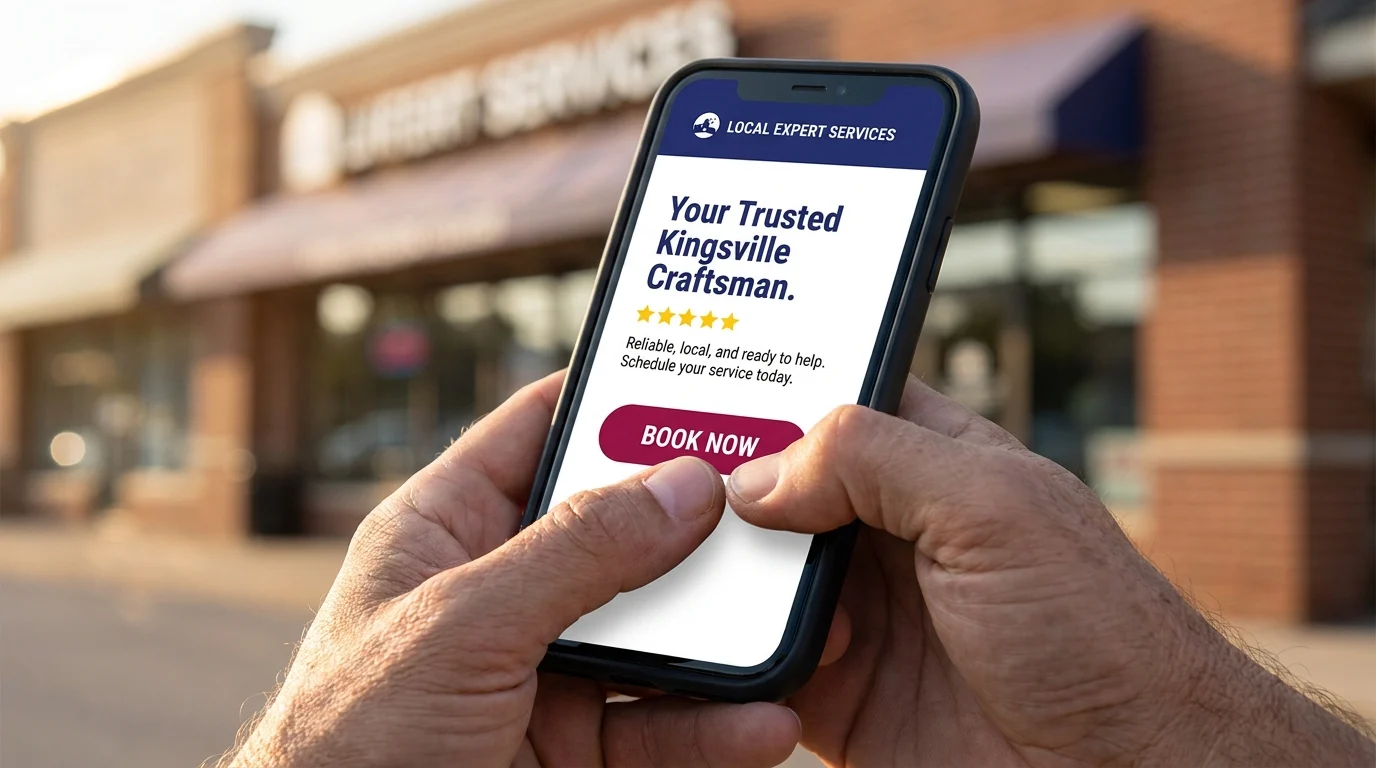


Three estimates sit uncalculated on your truck dashboard. Two voicemails wait from prospective clients who called yesterday afternoon, while four text messages about change orders ping against your phone before lunch. Landing more clients feels like winning until delivery starts slipping through the cracks. Most owners survive the early stages through raw memory and grit, but that personal capacity runs out quickly. Adding more work to an unorganized operation simply accelerates the breakdown. Solid small business growth systems allow specialized trades, consultants, and professional services across Kingsville, Ontario and the Windsor-Essex Region to handle higher demand cleanly, protecting both client relationships and daily peace of mind.
The Breaking Point: Why Revenue Growth Multiplies Operational Chaos
Every business begins with direct, personal control. You remember customer preferences, keep project timelines in your head, and follow up whenever you spot a quiet moment in your schedule. This informal approach functions well when you manage five accounts simultaneously.
Double that volume to 10 or 15 active projects, and the informal framework buckles under its own weight. Revenue increases, yet profitability drops because administrative friction consumes your productive hours. Operational chaos arrives when customer volume outpaces personal memory. Urgent tasks permanently crowd out strategic planning, leaving you trapped in constant firefighting mode.
The Hidden Friction of Text Message Operations
Client communication scatters across multiple personal channels without a centralized hub. Project approvals hide inside evening text threads, change requests arrive through social direct messages, and critical job details stay locked inside private email inboxes. Staff members guess at scope requirements, which forces you to spend your afternoon playing telephone operator.
A missed detail leads to rework, delayed invoices, and eroded trust. You end up working late into the night just to reconstruct conversations that happened three days earlier. Critical files stay trapped on individual phones, leaving team members unable to resolve issues without pulling you into the weeds.
The Compounding Cost of Mental Inventories
Relying on mental bandwidth creates an operational ceiling that traps the owner at the centre of every decision. When every quote, follow-up, and material order requires your personal sign-off, growth translates directly into fatigue. Team members stop taking initiative because standard procedures exist only in your memory.
Manual coordination creates predictable bottlenecks that stall momentum. Leads turn cold while waiting for estimates, billing falls two weeks behind schedule, and cash flow tightens unexpectedly. You become the single point of failure in your own company. Sustainable scale requires documented, repeatable business systems that execute consistently, whether you are on site or taking a rare weekend off.
The Four Small Business Growth Systems You Cannot Scale Without
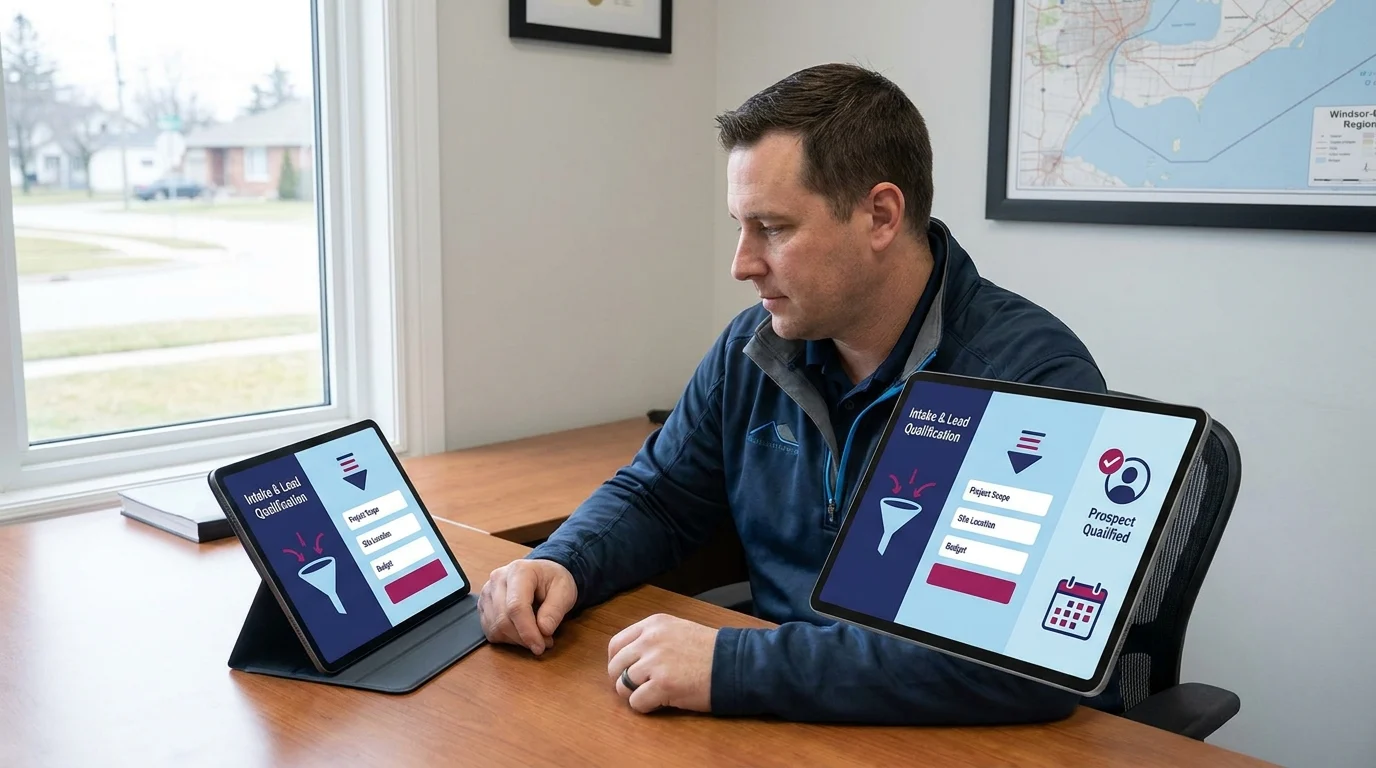
Scaling an established service firm or trade operation requires four foundational tracks working in synchronization. When one track sags under heavier volume, the entire operation stalls. Installing dependable business systems across each stage keeps daily workflows orderly when client demand spikes.
1. Intake and Lead Qualification
A reliable intake system acts as a front filter for your calendar. For specialized contractors and consulting firms in Kingsville, Ontario and the Windsor-Essex Region, this mechanism qualifies prospects before anyone drives out for an estimate. It captures project scopes, confirms site locations, and establishes realistic project budgets through structured digital forms. Qualified leads move straight to scheduled consultations, while mismatched jobs receive polite, automated referrals.
2. Centralized Client Communication
Scattered text messages and private inboxes kill team accountability. A centralized communication hub channels every phone log, email, and customer update into a unified project record. Field crews, estimators, and office coordinators see the exact agreements made with each customer. This visibility stops conflicting instructions, prevents costly rework, and protects job margins.
3. Delivery and Fulfillment Staging
Once a proposal is approved, project staging must advance without constant managerial intervention. Documented delivery workflows detail who orders materials, who assigns field crews, and when milestone inspections occur. Stripping the friction out of daily execution ensures your service standards remain consistent, whether you manage five active jobs or 50.
4. Invoicing and Cash Flow Automation
Delayed invoicing drains working capital faster than sluggish sales. Connect your billing schedule directly to project milestones so invoices generate the moment work finishes. Automated systems collect initial retainers, send progress draws, and issue polite payment reminders on outstanding balances. This discipline maintains steady cash flow without awkward collection calls.
Treat these four small business growth systems as interlocking gears. When each component functions predictably, your company can take on higher sales volume without sacrificing project quality or burning out your staff.
Pipeline Clarity: Implementing a Practical CRM for Small Business Operations
Lost revenue slips through the cracks between the initial inquiry and a signed agreement. Paper notes, scattered text messages, and unlogged phone calls guarantee forgotten proposals as your client roster grows. A dedicated CRM small business setup builds a single, reliable repository for every active lead.
Consolidate Every Interaction
Select a platform that your staff can manage without friction. Stripped-back tools like Pipedrive keep attention squarely on deal stages, while HubSpot handles deeper interaction histories for consulting firms managing longer sales cycles. Whichever software you deploy, enforce one rule across your company: every customer touchpoint gets logged inside the shared file within the hour.
When an estimator in Kingsville, Ontario and the Windsor-Essex Region prices a project, your office coordinator instantly views the scope, the quoted fee, and the requested timeline. That immediate visibility eliminates internal confusion before work begins on site.
Lock Down a Standardized Cadence
A pipeline stalls when staff reach out only during quiet weeks. Replace erratic check-ins with a disciplined rhythm that activates the moment you deliver an estimate:
- Day one: Send the completed estimate with an option to approve the project digitally.
- Day three: Trigger a short note confirming the client received the figures and asking if they need clarification on the project phases.
- Day seven: Schedule an internal task for a brief phone call to discuss dates before your schedule fills.
This steady rhythm protects your pipeline without swallowing administrative hours. Structured follow-up ensures you capture the true return on the small business growth systems you build, converting open quotes into signed contracts before prospective clients look elsewhere.
Fulfillment and Cash Flow: How to Automate Operations from Estimate to Payment

Winning a contract brings excitement until Monday morning arrives with a pile of manual hand-offs. Transcribing line items from an accepted proposal into a separate project board or accounting ledger drains valuable hours and invites costly errors. Estimators forget to copy special notes, technicians receive outdated drawings, and nobody remembers who ordered the materials. When you automate operations across this transition, fulfillment begins instantly and cash moves into your bank account on schedule.
Triggering Production on Signature
The moment a customer approves an estimate online, the software should complete the administrative heavy lifting. A single digital signature can trigger three actions at once: generating the active job record, notifying your team of the assigned deliverables, and issuing the initial deposit invoice.
Trade businesses often benefit from platforms like Jobber, which glues quotes, crew dispatch, and field payments into a single mobile dashboard. Professional services and technical consultants generally gain more control by linking QuickBooks Online to their project boards using Make or Zapier. Both routes strip out duplicate data entry and give your team immediate clarity on scope, labour allocations, and client commitments.
Eliminating Receivable Delays
Cash flow stalls when invoicing relies on weekend administrative marathons. Paper cheques get lost in the mail, while busy clients forget manual bank transfers. Configure your accounting platform to send milestone invoices automatically once technicians complete specific phases or log required hours. Coupling automated invoices with digital payment options like Stripe or Plooto enables clients to settle balances in two clicks, cutting average collection cycles from 45 days down to four.
For independent operations in Kingsville, Ontario and the Windsor-Essex Region, rapid billing cycles defend profit margins against inflation and rising materials costs. Tying fulfillment directly to receivables ensures your small business growth systems support healthy balance sheets, allowing you to scale local business capacity without draining your cash reserves.
The Connected Architecture: Integrating Backend Workflows into a Smart Digital Doorway
A website that acts like an online brochure forces your staff to copy intake emails into spreadsheets. Functional small business growth systems bridge front-facing marketing directly to backend delivery tools.
We call this unified structure a Smart Digital Doorway. It captures client intent, qualifies requirements, and feeds structured project data straight into your operational pipeline. Your public web presence functions as the automated front office for your entire workflow.
Bridging Public Intake and Operational Execution
Consider a commercial contractor or professional consultancy in Kingsville, Ontario and the Windsor-Essex Region. When a prospect submits an inquiry, the intake form handles the initial triage: it runs qualification filters, creates a deal in your CRM, and generates an onboarding card automatically.
Connecting your intake forms to your CRM using Make or Zapier turns passive inquiries into immediate operational momentum. If a prospect selects specific project parameters, the integration assigns the file to the correct team member and issues an automated calendar link. The client schedules their own discovery call, while your staff receives complete project specs without manual transcription.
Centralized Data Over Patchwork Apps
Owners often juggle separate platforms for scheduling, job tracking, and bookkeeping. When these tools operate in isolation, team members drop critical details during handoffs. Connecting your field software or CRM directly to your accounting ledger guarantees that customer notes, change orders, and signed contracts remain visible across every department.
This automated bridge preserves data integrity between sales and fulfillment. A project manager sees the exact scope the client approved, while your bookkeeper sees billing milestones generated directly from completed milestones.
From the client’s perspective, the onboarding process feels polished and immediate. From your desk, you eliminate hours of repetitive administrative coordination. Tying front-end entry points to reliable business systems lets you scale local business operations smoothly, protecting team capacity as transaction volume grows.
Monday Morning Blueprint: Five Immediate Steps to Transition from Friction to Control

Installing dependable small business growth systems starts with identifying the single operational bottleneck that drains your team’s energy. You can work through five practical moves to stabilize your day-to-day workflow before lunch on Monday.
1. Trace the Bottleneck
Review the last 10 client accounts or active projects that generated unnecessary confusion. Pinpoint the exact handoff where an estimate stalled, an invoice sat unbilled, or your staff lacked the project specs required to proceed. Isolating that single point of friction shows you precisely where your workflow needs structural repair.
2. Seal the Side Doors
Channel every prospective customer inquiry through a single Smart Digital Doorway. Route direct messages, office voicemails, and personal referrals through one central intake form. That single entry point gathers clean project specifications and deposits customer records directly into your CRM for small business tracking.
3. Clean Your Pipeline Stages
Organize your sales pipeline into five clear milestones: inquiry received, discovery scheduled, estimate pending, contract active, and invoice settled. Visible milestone stages show your entire team where current revenue sits, removing speculative guesswork from your operational planning.
4. Automate One Routine Handshake
Choose one repetitive administrative task and automate operations across that boundary. Connect approved proposals to deposit invoices, or link appointment confirmations to automated onboarding emails. Eliminating manual transcription protects your schedule and prevents handoff delays.
5. Hand Off the Rulebook
Record concise operating instructions for how your staff maintains the system. Outline the exact criteria that mark a stage complete and assign clear ownership for the next task. Durable business systems hold up because team members know who owns each stage and what trigger moves the work forward.
Once these components run together, your pipeline operates predictably. You reclaim your working hours, and your team executes with confidence.
Building Operational Capacity for the Long Term
Sustainable growth requires deliberate operational structure. For specialized trades and professional service firms across Kingsville, Ontario and the Windsor-Essex Region, building sound infrastructure protects your personal capacity as transaction volumes rise.
Connected business systems allow your company to deliver consistent customer experiences while keeping your calendar clear of administrative clutter. Client intake occurs on schedule, contracts convert to invoices automatically, and communication stays organized across every project stage.
Putting practical small business growth systems in place gives you control over your working week. You protect your profit margins, support your team, and build a resilient enterprise capable of thriving through every stage of expansion. Reliable operations turn your hard-won growth into lasting business stability.
Want this fitted rather than figured out? Doorways Into Your Business helps owner-operators put systems like this in place. Book a free consultation.
Paul Hughes founded Doorways Into Your Business after more than five decades consulting across 30+ countries, from implementing early IBM email systems in the 1980s to running multi-million-dollar IT projects for global organizations. A St. Clair College graduate (1976), he settled in Kingsville, Ontario in 2019 to help local small businesses grow with practical “smart digital doorways”, websites, customer service, reviews, bookings, and payments, matched to what a business needs, not unnecessary technology.
All articles by Paul →