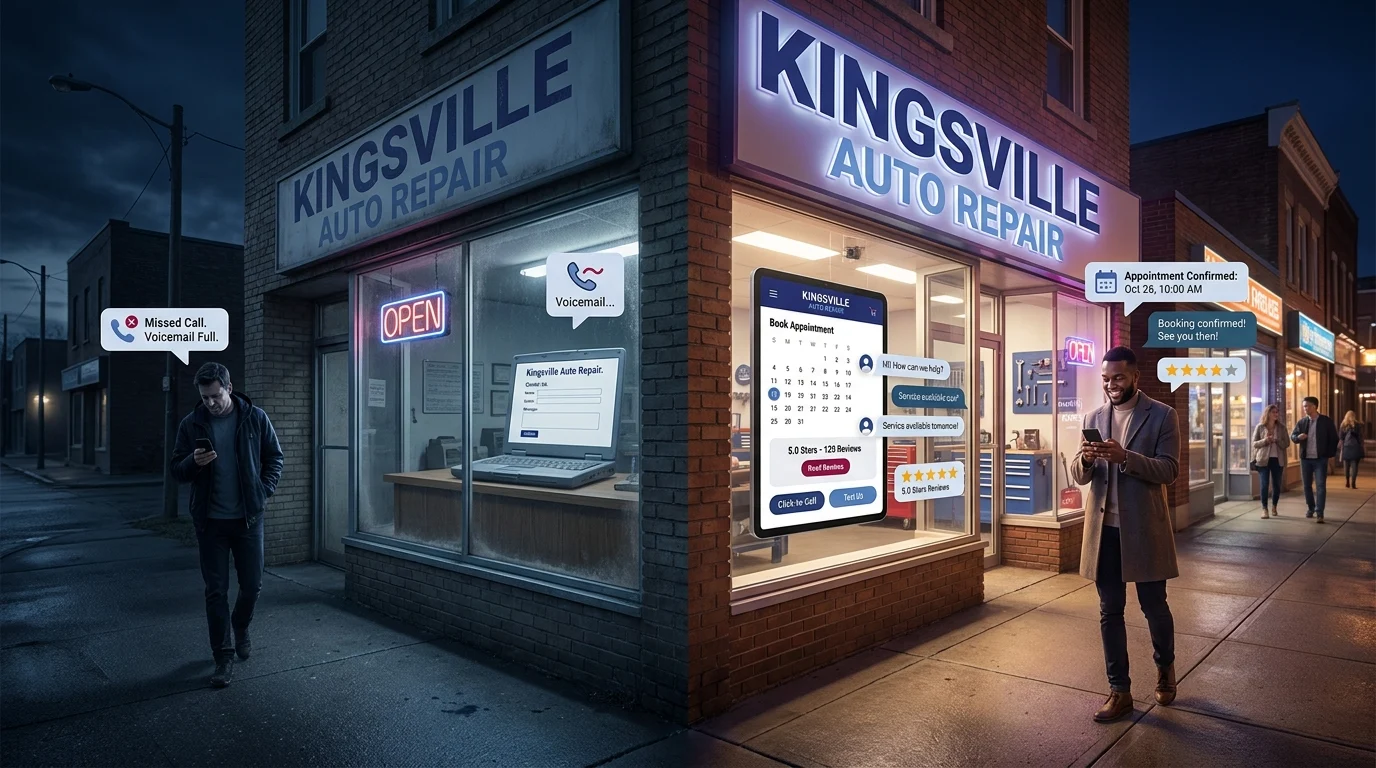

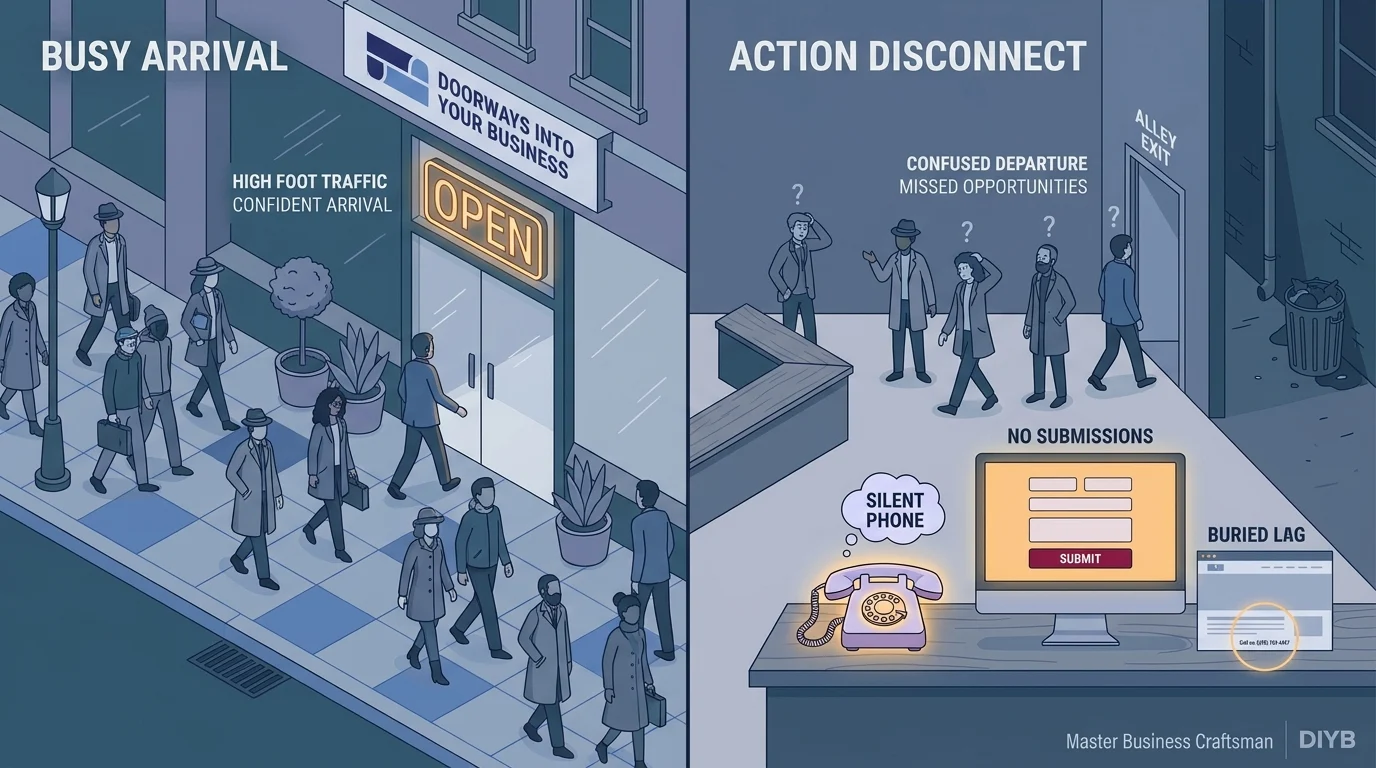
Your website gets visitors. Google Analytics shows steady traffic every month, maybe even growing. But the phone stays quiet and the contact form sits empty. If that sounds familiar, you’ve probably already assumed the problem is visibility: not enough people finding the site. The real issue is usually the opposite. You’re getting found just fine. What happens after someone lands on your page is where the business is leaking out the side door. Website visitors not converting is a specific, diagnosable problem, and it has nothing to do with how many people show up. It has everything to do with what they see once they get there.
Traffic Isn’t the Problem: The Gap Between Website Traffic and Conversion
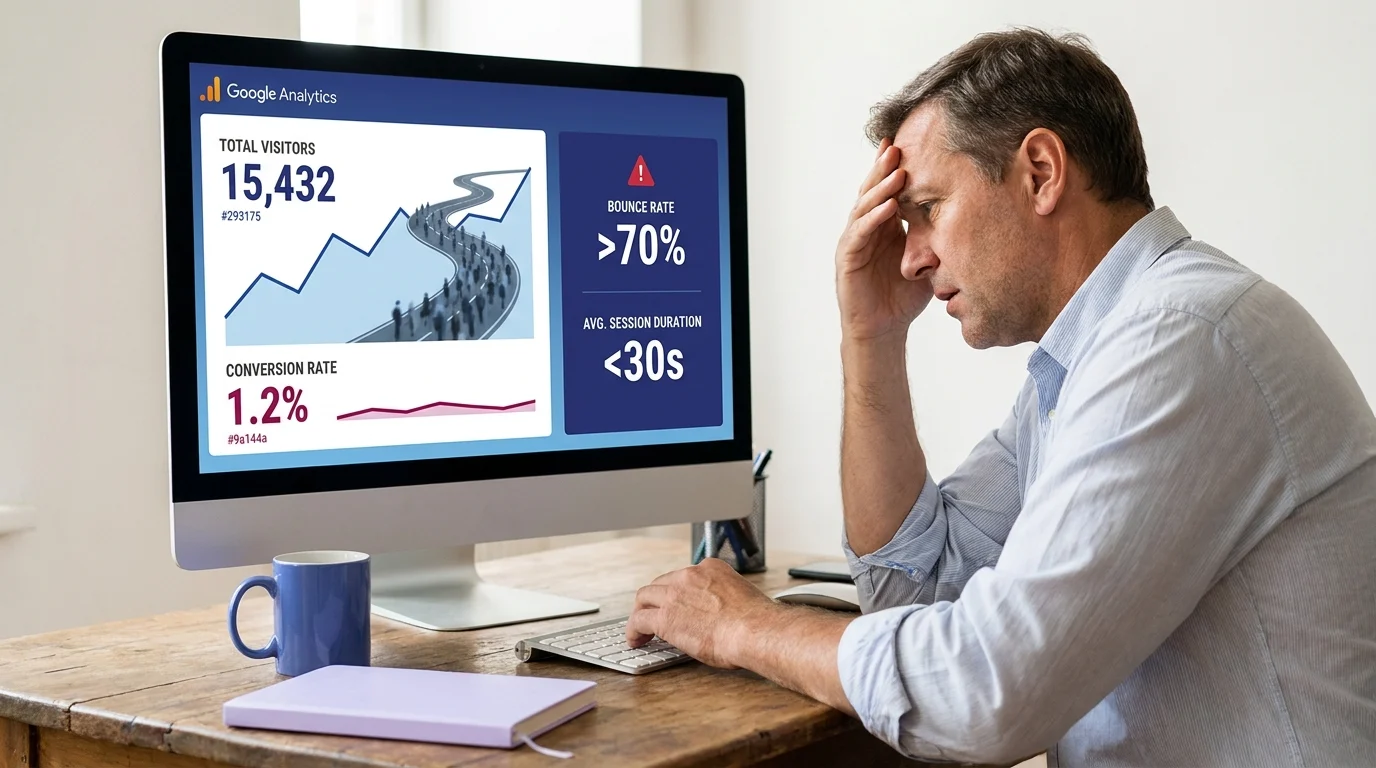
Traffic and conversion are two different metrics measuring two different problems. Traffic tells you whether people can find you. Conversion tells you whether your website does anything useful once they arrive. A business can win at one and lose badly at the other, and most owners only ever look at the number that flatters them: total visitors.
What Google Analytics Actually Shows You
Open Google Analytics and check two numbers: bounce rate and average session duration. A bounce rate above 70% on your key pages means people are landing and leaving without clicking anything else. Session duration under 30 seconds means they didn’t have time to read your offer, let alone trust it. These aren’t vanity metrics. They’re the closest thing to a security camera showing you exactly where customers walk in and immediately walk back out.
A Windsor-Essex Example
A home services company in the Windsor-Essex Region came to Doorways Into Your Business convinced their marketing was failing. Their ad spend was pulling in over 400 visitors a month. Calls booked from the site: fewer than five. Analytics told the real story. Bounce rate on the homepage sat at 78%, and the phone number was buried below three scrolls of stock photography. Visitors were arriving exactly as planned and leaving because the site gave them nothing to act on.
This is the pattern behind most “no customers” complaints. The traffic is doing its job. The website isn’t. Once you separate those two problems, the fix stops being a mystery and starts being a checklist.
5 Reasons Your Website Visitors Are Leaving Without Calling
Website visitors not converting usually comes down to one of five fixable problems. Rarely is it just one. Most underperforming sites stack two or three of these at once.
Weak Messaging
If a visitor can’t tell what you do and who it’s for within five seconds, they leave. Vague taglines and generic stock copy don’t sell anything.
Confusing Navigation
Too many menu items, unclear labels, or no obvious path to “here’s how you book us” leaves visitors clicking around instead of calling.
No Social Proof
A site with zero reviews or testimonials asks visitors to trust a stranger with their money on faith alone. Most won’t.
Buried Calls to Action
A phone number in the footer, a contact form three pages deep, no visible button above the fold. Visitors won’t hunt for a way to reach you.
Poor Experience and Friction
Slow load times, forms that don’t work on mobile, or a checkout process with too many steps. Every extra tap is a reason to quit.
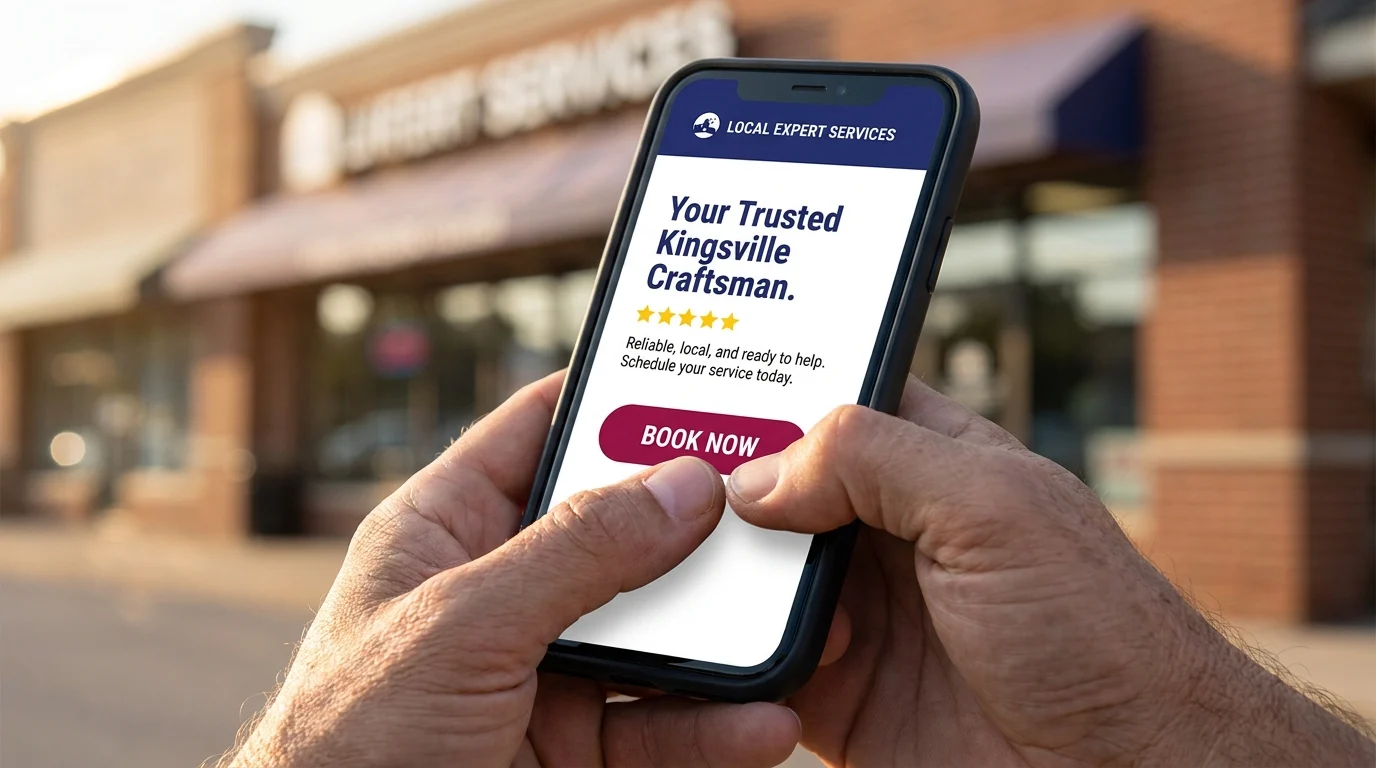
A retail shop in Kingsville, Ontario ran into three of these at once. Their homepage led with a slideshow instead of a headline, reviews were nowhere on the site, and the “Contact” button sat below a scroll of product categories most visitors never reached. Traffic from local search was solid. Calls were nearly nonexistent, and the owner assumed the ads weren’t working.
None of these problems require a full rebuild. They require someone to look at the site the way a stranger would, then fix what’s actually in the way.
Quick Fixes Ranked by Impact: Turning Visitors Into Customers
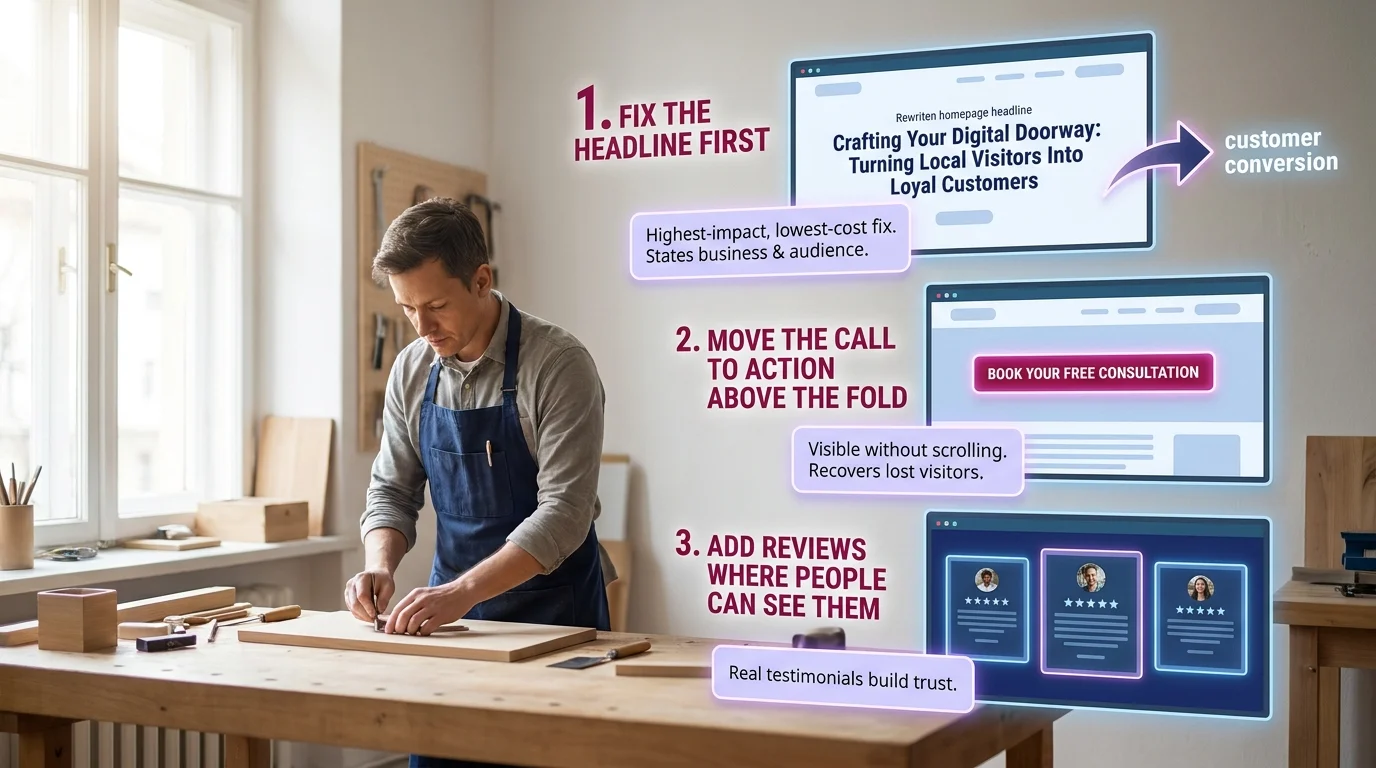
Not every fix carries the same weight. Some changes move the needle in a week. Others matter but take longer to pay off. Here’s the order that gets results fastest.
1. Fix the Headline First
Rewrite the homepage headline so it states what the business does and who it serves. This is the highest-impact, lowest-cost fix available. It changes nothing structurally but changes everything about whether a visitor stays.
2. Move the Call to Action Above the Fold
Phone number, booking button, or contact form needs to be visible without scrolling. This alone recovers visitors who would have left simply because they couldn’t find a next step.
3. Add Reviews Where People Can See Them
A handful of real reviews placed near the CTA does more for conversion than a polished design. Trust signals close the gap between interest and action.
4. Simplify the Landing Page
Cut competing links, sliders, and unrelated offers from the page visitors land on. One page, one purpose, one action. Anything else is a distraction pulling attention away from the call.
5. Shorten the Contact and Checkout Path
Fewer form fields, fewer clicks, mobile-tested every time. This fix takes longer to implement but removes the friction that causes visitors to quit right at the finish line.
Tackle these in order and most sites see a measurable jump in calls and bookings within a month, without touching the ad budget.
Key Takeaways
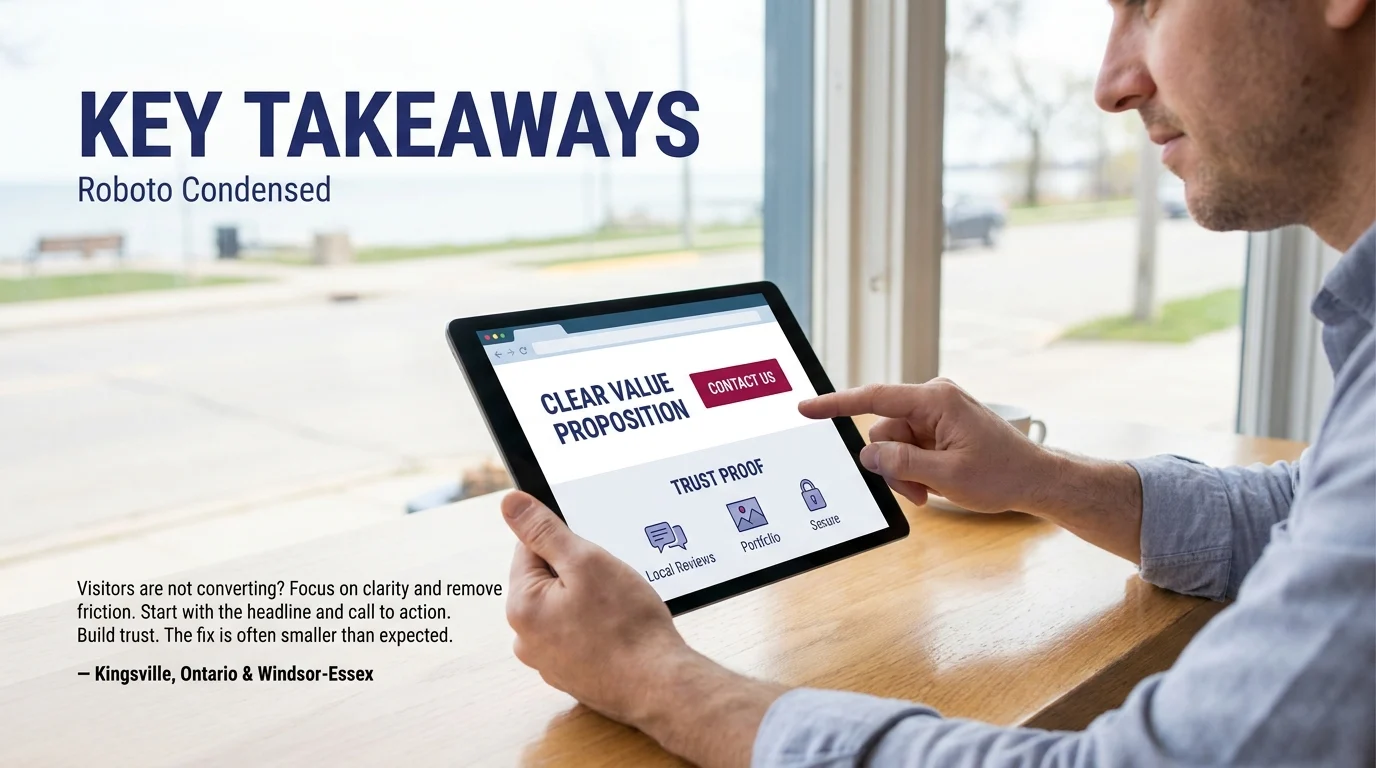
Website visitors not converting is rarely a traffic problem. It’s a clarity and friction problem, and both are fixable without a redesign. Start with the headline and the call to action, add proof that the business can be trusted, then clean up the path to contact. Business owners in Kingsville, Ontario and the Windsor-Essex Region often discover the fix is smaller than expected once someone actually looks at the site the way a stranger does. The traffic was never the issue. What visitors found when they arrived was.
Paul Hughes founded Doorways Into Your Business after more than five decades consulting across 30+ countries, from implementing early IBM email systems in the 1980s to running multi-million-dollar IT projects for global organizations. A St. Clair College graduate (1976), he settled in Kingsville, Ontario in 2019 to help local small businesses grow with practical “smart digital doorways”, websites, customer service, reviews, bookings, and payments, matched to what a business needs, not unnecessary technology.
All articles by Paul →