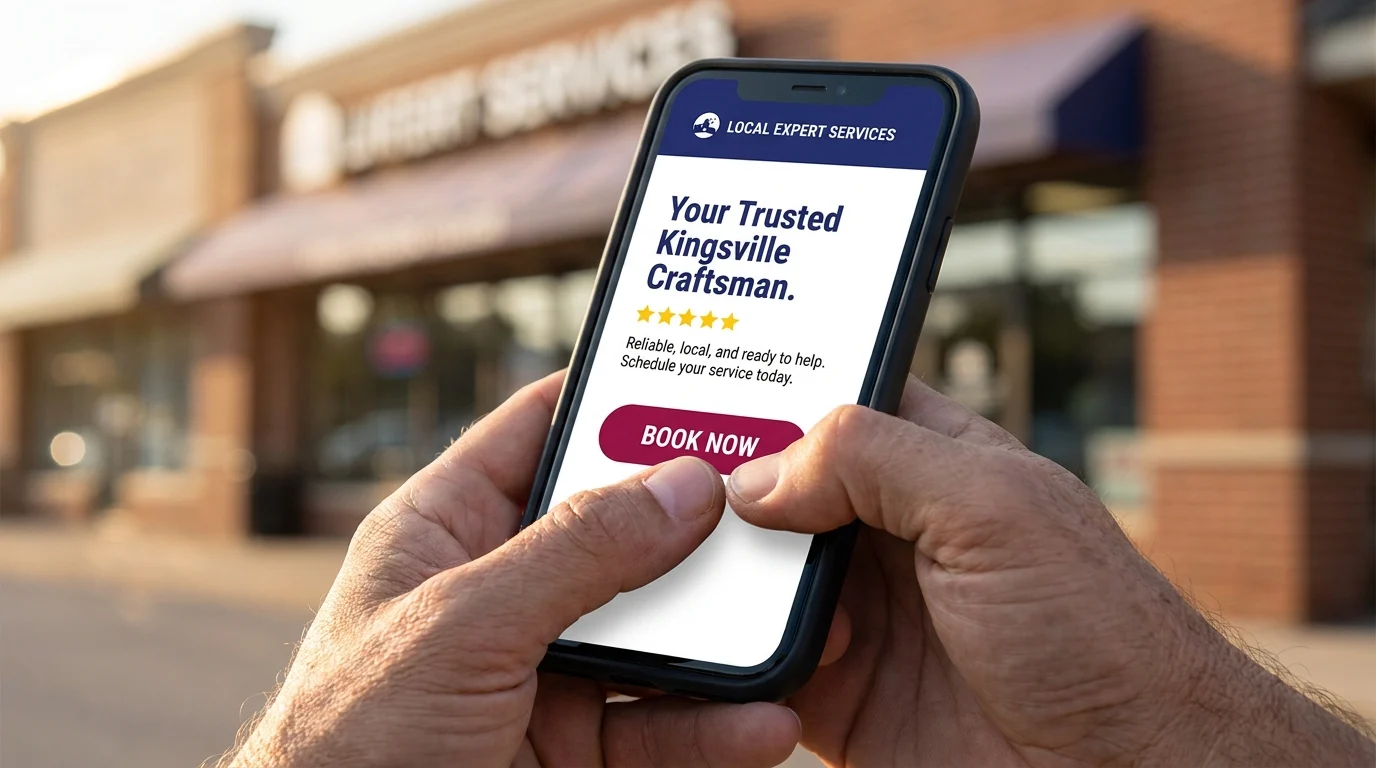

Somewhere in Kingsville, Ontario, a business owner is staring at their website analytics wondering why the phone isn’t ringing. The site looks fine. It has nice photos, a services page, maybe a contact form nobody fills out. Traffic trickles in, then leaves. Nothing happens. This is the quiet failure mode of thousands of small business websites: they exist, they look presentable, and they do almost nothing to move a visitor toward becoming a customer. The gap between a website that looks good and a website that works is where revenue disappears, and most owners never see it happen.
Smart Website vs Brochure Website: Why Your Static Site Is Costing You Customers
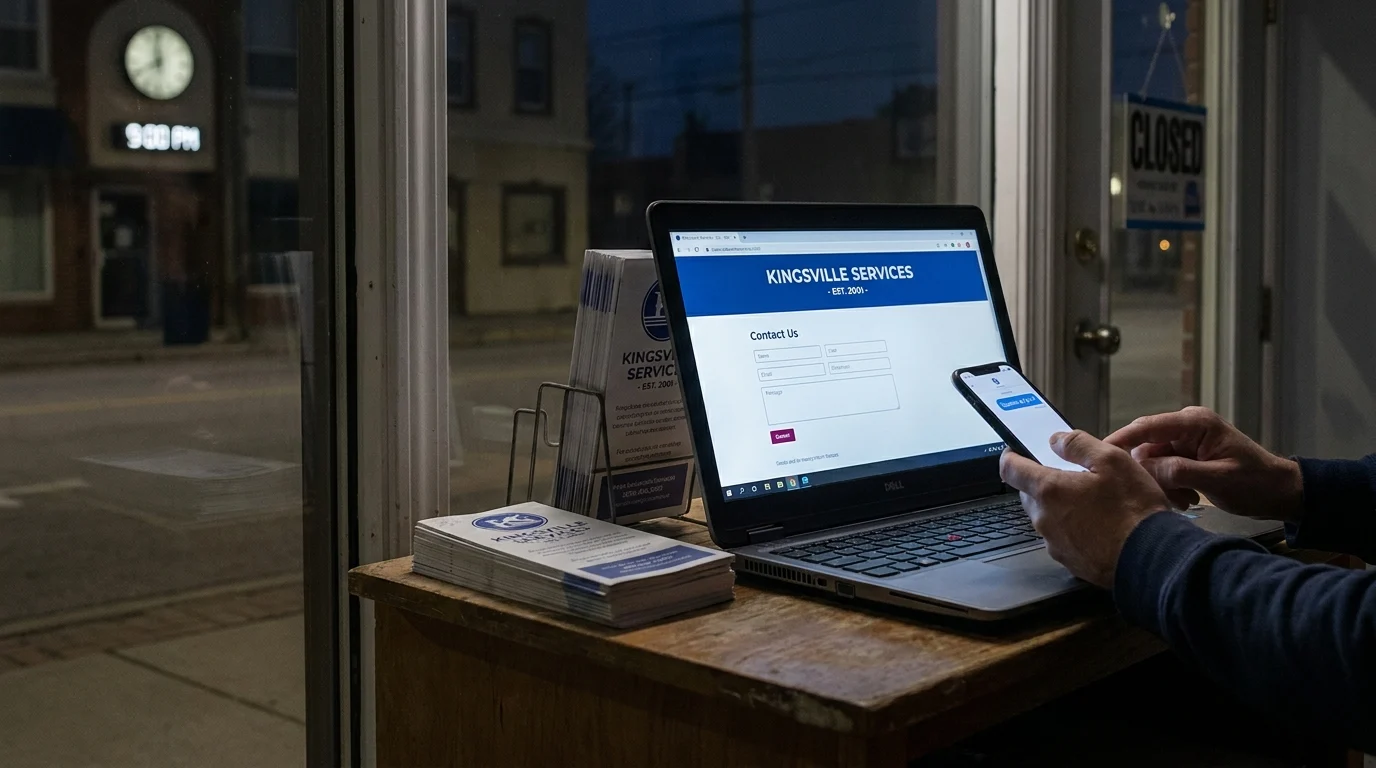
A brochure website is exactly what it sounds like: a digital pamphlet. It states who you are, what you sell, and how to reach you. It was built once, launched, and largely forgotten. For a business in the 2000s, that was enough. It isn’t anymore.
The Brochure Model, Defined
Brochure sites share a few traits: static pages that rarely change, a generic contact form as the only interaction point, no automation, and no data flowing back to the owner about visitor behaviour. The site is a one-way broadcast. It talks; it doesn’t listen, respond, or follow up.
Why Static Fails a Growing Business
The core problem is timing. A visitor lands on a brochure site at 9 p.m. with a question or a decision to make right now. There’s no chat, no booking system, no instant response. They leave and call a competitor whose site actually engages them. Multiply that across a year and a static website isn’t neutral. It’s actively leaking customers.
Static sites also fail to capture data. They don’t tell an owner which pages convert, where visitors stall, or which services generate the most interest. Without that feedback loop, marketing decisions become guesswork. Owners keep spending on ads that drive traffic to a page with no mechanism to convert it.
The Real Cost
The cost isn’t the website itself, it’s the compounding loss: missed calls, no-show appointments, cold leads nobody follows up on, and a Google review count that never grows because there’s no system prompting happy customers to leave one. For a business across the Windsor-Essex Region trying to compete for local search visibility, a brochure website is a structural disadvantage, not a cosmetic one.
The Five Functions of a Digital Doorway: What a Modern Website for Local Business Actually Does
A doorway site isn’t a brochure with more features bolted on. It’s built around five functions working together. Miss one and the whole system underperforms.
1. Attract
The site needs to actually show up: fast load times, local SEO structure, and content that answers what people are searching for. Attraction is the entry point, not the finish line.
2. Answer
Once a visitor lands, the site has to respond to real questions in real time: pricing ranges, availability, service details. Chat widgets and FAQ automation handle this without a person on call at 9 p.m.
3. Build Trust
Reviews, testimonials, and visible proof of past work do the convincing a salesperson used to do. A doorway site actively requests and displays reviews instead of hoping customers leave them unprompted.
4. Capture Leads
This is where the smart website vs brochure website distinction is sharpest. A brochure site offers a contact form nobody fills out. A doorway site captures leads through booking widgets, click-to-call, and automated follow-up sequences the moment someone shows interest, not days later.
5. Convert
Conversion means turning interest into a booked appointment, a sale, or a returning customer. That requires reminders, automated follow-up, and a clear next step baked into every page, not left to chance.
Together, these five functions turn a website from a digital pamphlet into infrastructure that works while the owner sleeps.
Before and After: A Windsor-Essex Business Transformation, Plus What To Do Monday Morning
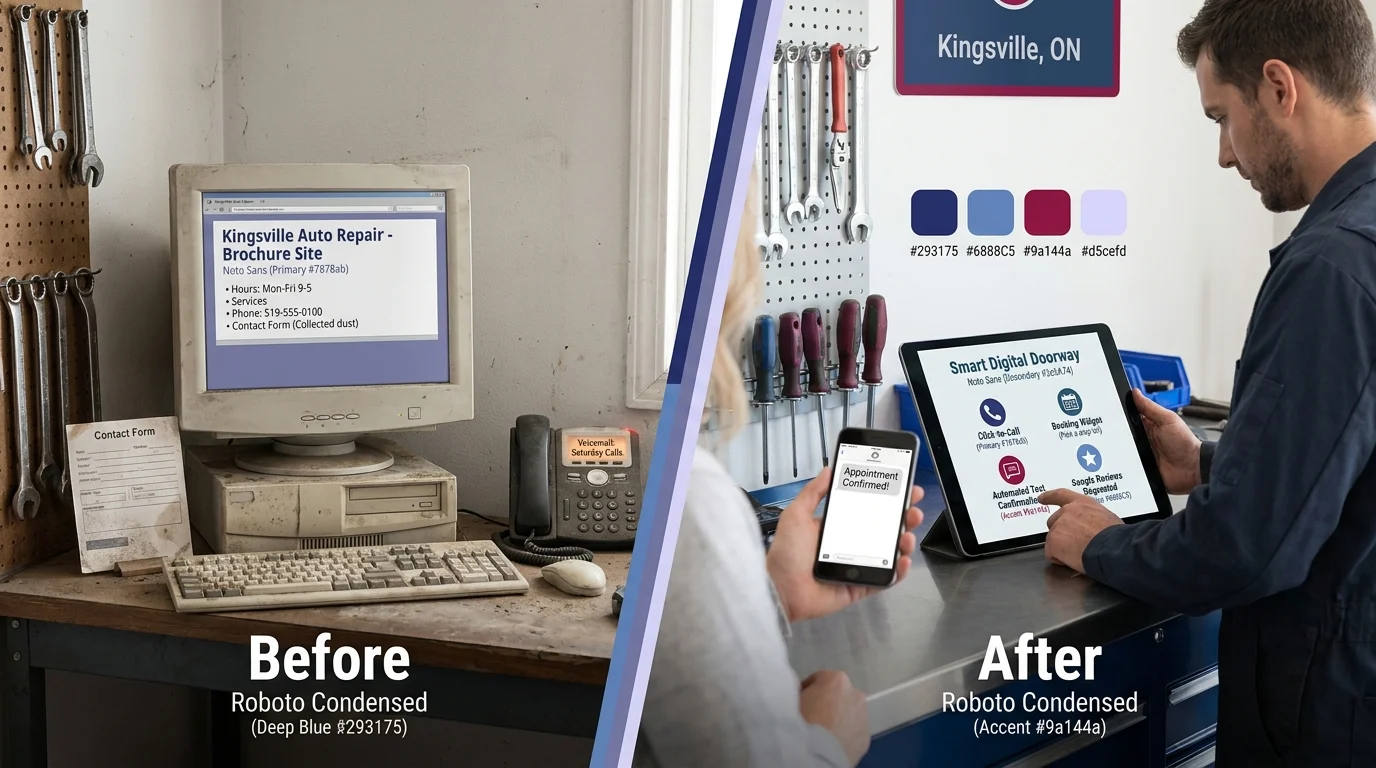
The Repair Shop That Stopped Losing Weekends
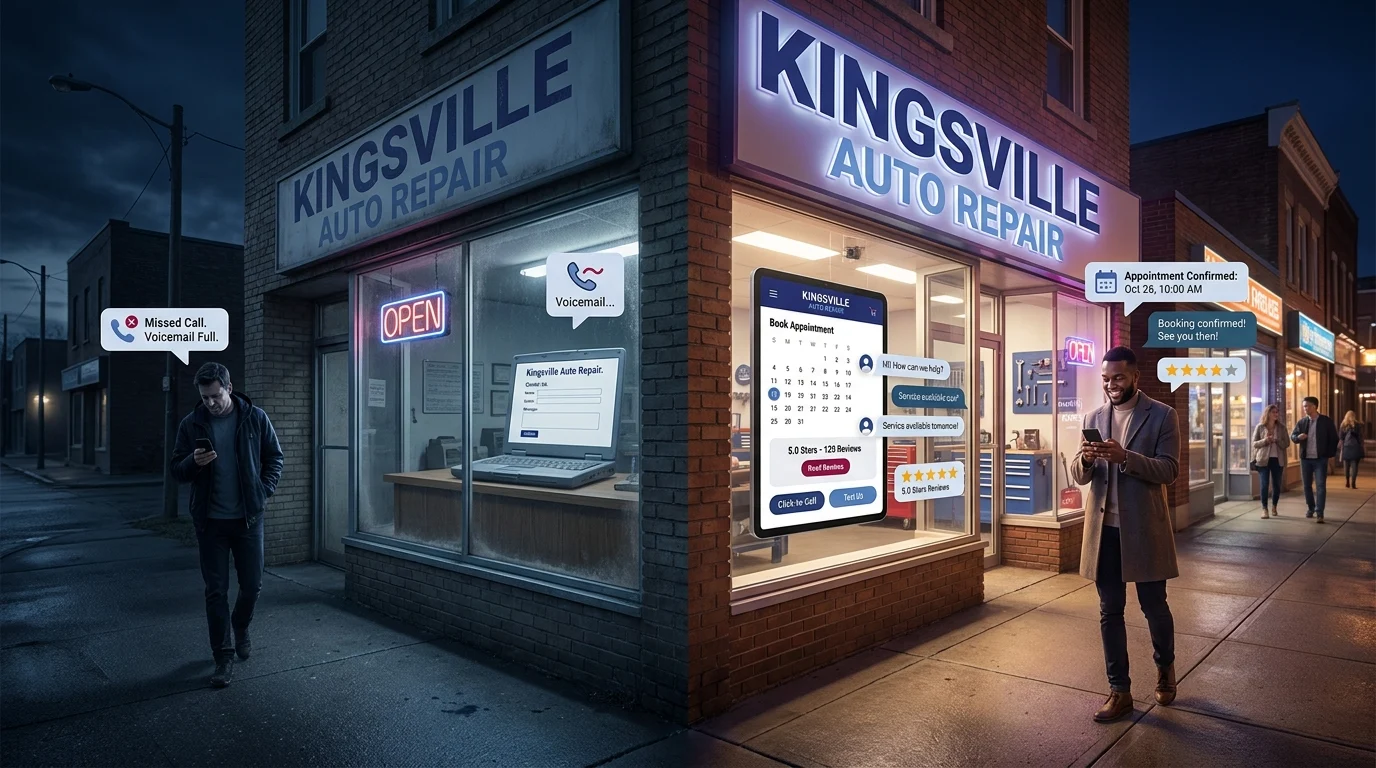
A small auto repair shop in Kingsville, Ontario ran a standard brochure site for years: hours, services, a phone number, a contact form that collected dust. Saturday calls went to voicemail. Quote requests sat unanswered until Monday, by which point half the callers had booked somewhere else.
The fix wasn’t a redesign. It was rebuilding the site around the five functions. Click-to-call replaced the buried phone number. A booking widget let customers pick a drop-off time without waiting for a callback. Automated text confirmations replaced the silence after form submissions. Google reviews got requested automatically after every job instead of never.
Within two months, after-hours bookings accounted for nearly a third of new appointments. Weekend inquiries that used to vanish into voicemail turned into Monday morning jobs already on the schedule. Nothing about the shop changed. The website stopped sleeping when the staff went home.
What To Audit This Week
- Open the site on a phone and try to book or call in under 10 seconds. If it takes longer, that’s the leak.
- Count the reviews from the last 30 days. Zero means the request system doesn’t exist.
- Submit the contact form and time the response. If nothing happens for hours, that’s a lost customer, not a delayed one.
- Check what happens after 6 p.m. If the answer is nothing, the site is still a brochure.
Businesses across Kingsville, Ontario and the Windsor-Essex Region are competing against companies that never stop responding. That’s the real gap between a brochure and a doorway.
Key Takeaways
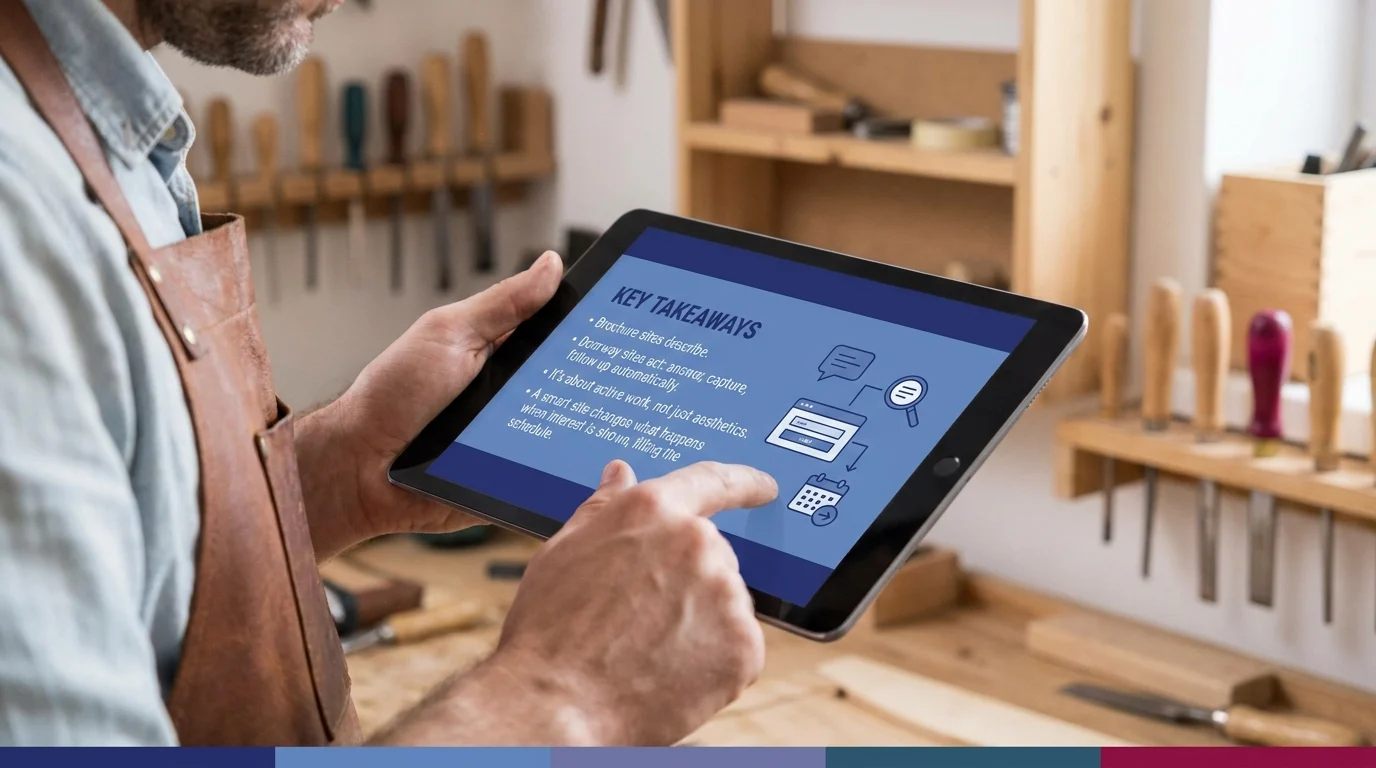
A brochure website describes a business. A doorway website runs part of it: answering questions, capturing leads, and following up automatically, all without anyone at a desk. The smart website vs brochure website comparison isn’t about aesthetics. It’s about whether the site actively works for the business or just sits there waiting to be noticed. The shop that fixed this didn’t change what it sold. It changed what happened the moment someone showed interest, and that’s the difference that shows up on the schedule every week.
Paul Hughes founded Doorways Into Your Business after more than five decades consulting across 30+ countries, from implementing early IBM email systems in the 1980s to running multi-million-dollar IT projects for global organizations. A St. Clair College graduate (1976), he settled in Kingsville, Ontario in 2019 to help local small businesses grow with practical “smart digital doorways”, websites, customer service, reviews, bookings, and payments, matched to what a business needs, not unnecessary technology.
All articles by Paul →