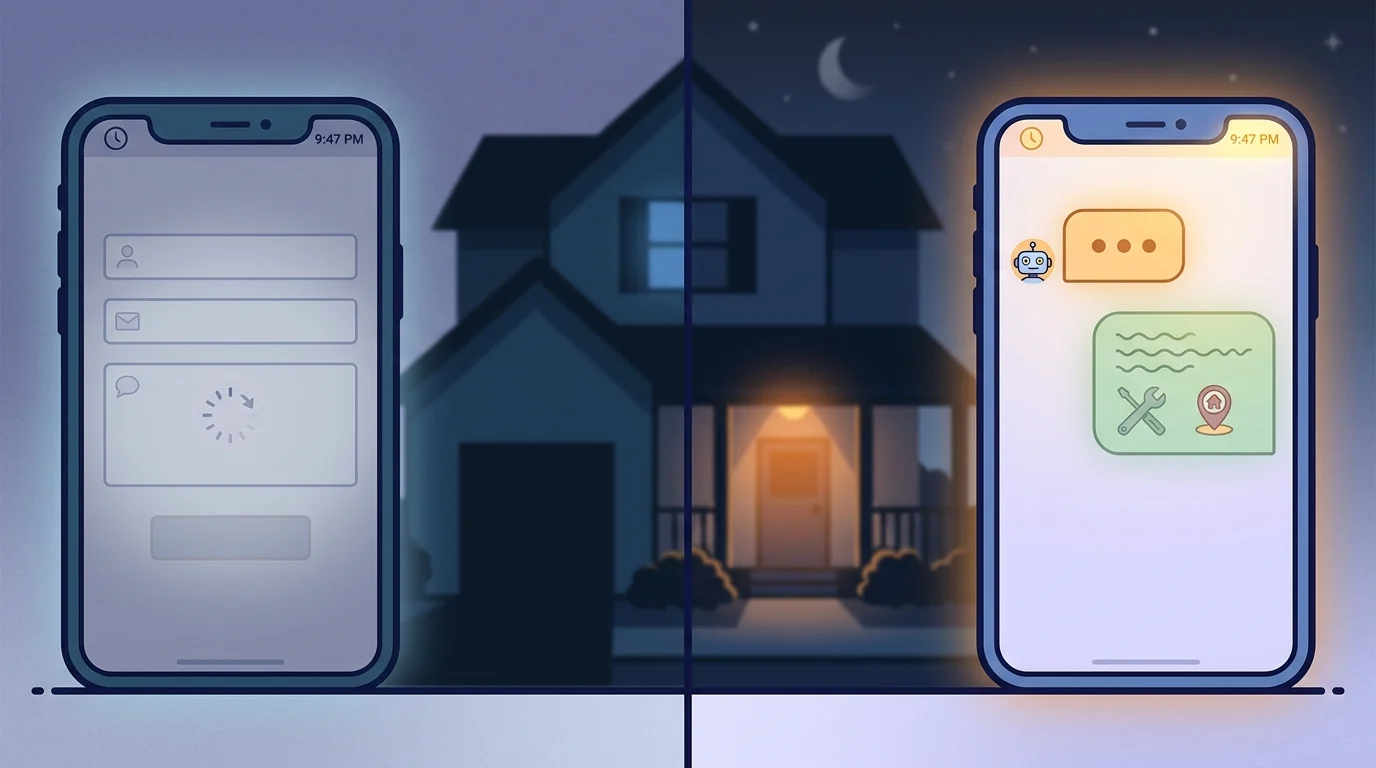

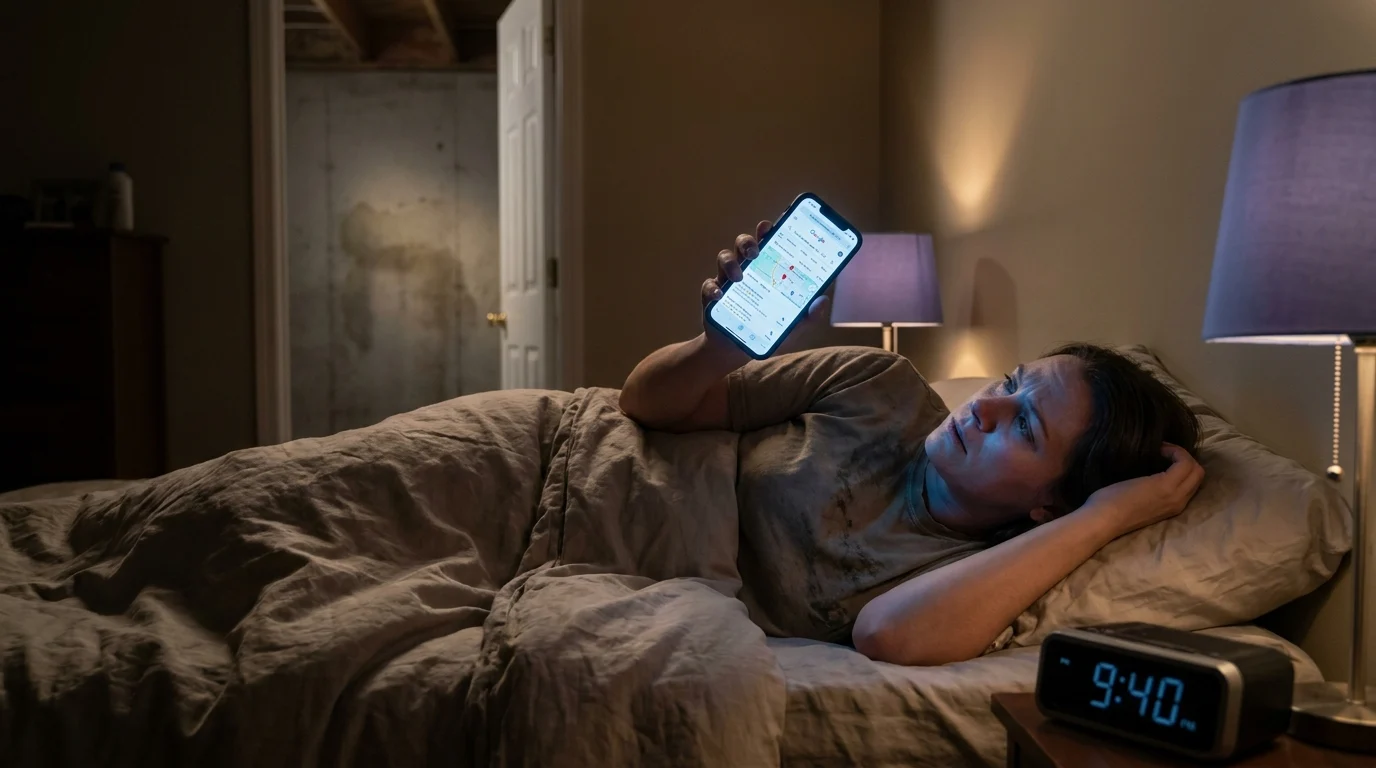
Someone in Kingsville, Ontario just finished dinner, put the kids to bed, and finally has a quiet ten minutes to figure out why their basement smells like mildew or whether that weird noise from the furnace means a service call. It’s 9:40pm. They pull out their phone, search for a local plumber or HVAC company, land on a website, and find a phone number that rings to voicemail. They don’t leave a message. They close the tab and try the next result. That question, the one that mattered enough to research at 9:40pm, just went to a competitor who happened to answer, or at least looked like they would. This is the real shape of demand for small business owners across the Windsor-Essex Region, and it rarely matches the hours printed on the door.
When Your Customers Are Actually Asking Questions (Hint: Not During Business Hours)
The Workday Doesn’t Match the Research Window
Most small businesses in Windsor-Essex operate on a 9-to-5 or 8-to-6 rhythm. Their customers do not. People are at their own jobs during the day, managing their own deadlines, meetings, and errands. The actual window for researching a contractor, comparing service prices, or deciding whether to book an appointment opens after work ends: evenings, weekends, and often well past midnight when insomnia or a genuine problem (a leaking pipe, a sick pet, a broken appliance) forces the question.
What Local Search Data Actually Shows
Google’s own behavioural data has shown for years that a significant share of local business searches, often close to half, happen outside standard 9-to-5 hours. For a business serving Kingsville, Ontario and the Windsor-Essex Region, that means a meaningful chunk of potential customers are actively looking between 6pm and midnight, and again in the early morning before most shops open.
Weekends Are Prime Territory, Not Downtime
Saturday afternoons and Sunday evenings are when homeowners tackle to-do lists and finally get around to calling about that quote they’ve been putting off. If the business appears closed or unreachable, that momentum disappears. Demand for after hours customer service small business owners often overlook isn’t a fringe case. It’s where a large share of genuine buying intent already lives, quietly, every single week.
The Cost of Silence: What Happens When Nobody Answers
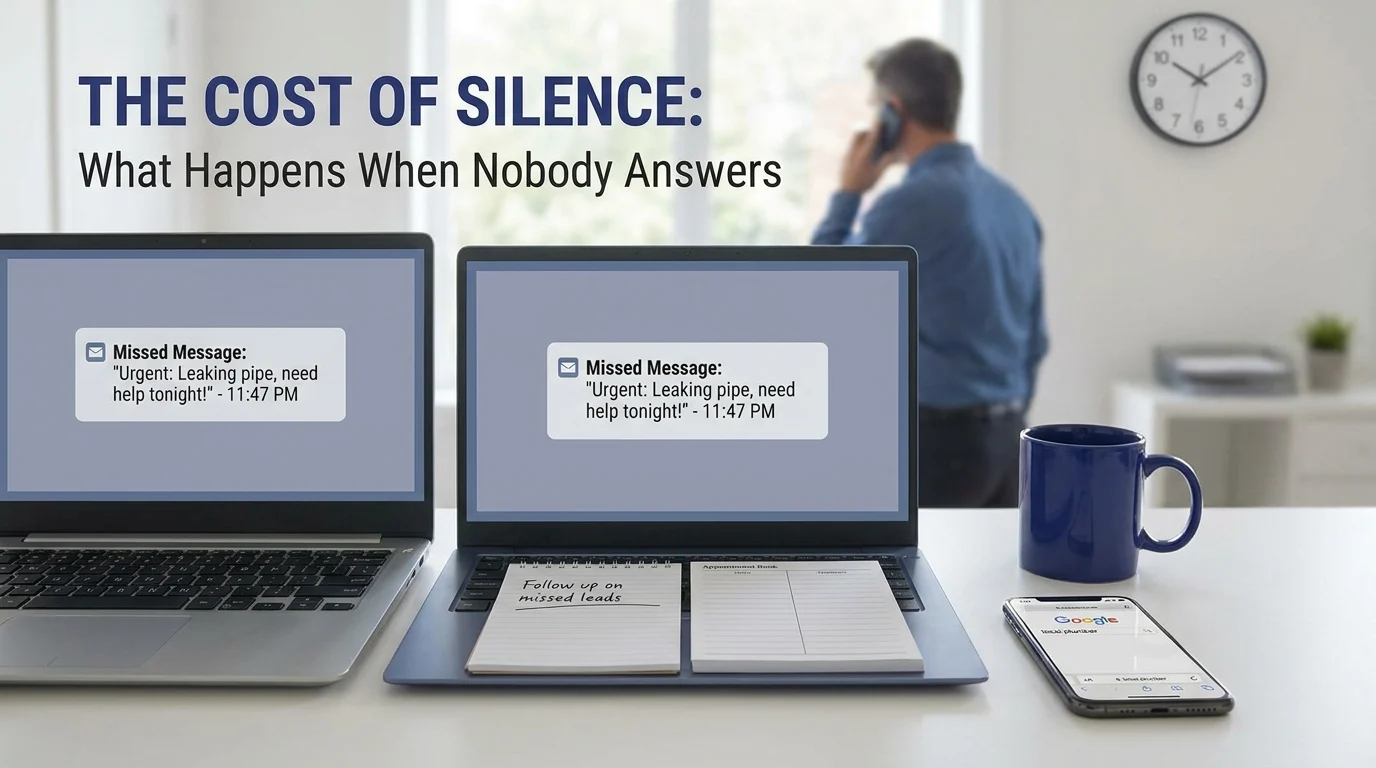
A question that goes unanswered doesn’t sit patiently in a queue waiting for the office to open. It moves on. The person with the leaking pipe or the sick pet doesn’t bookmark a website and wait until 9am. They open a new tab and search again.
The Math Behind a Missed Message
Picture ten prospects reaching out after close in a single week. Without any after hours customer service small business owners can rely on, most of those ten hear nothing back until the next morning, if at all. By then, several have already booked with a competitor who replied within minutes. That isn’t a hypothetical dip in conversion. It’s a direct, recurring loss of revenue that never shows up as a complaint, because the prospect never became a customer in the first place. Silence doesn’t just fail to convert. It actively erases the opportunity before the business owner even knows it existed.
Whoever Answers First Wins the Job
Local competition rarely gets decided on quality alone. It gets decided on speed. A homeowner comparing three contractors will often book with the first one who responds, not the one who eventually offers the best quote. If a rival business in Windsor-Essex has automated after-hours replies and yours doesn’t, every midnight question defaults to them by default, not by merit.
Trust Is the Real Currency
An unanswered message also sends a quiet signal about reliability. Customers read responsiveness as a proxy for how the business will treat them later, during the job, after the sale, when something goes wrong. Silence at midnight isn’t just a missed lead. It’s a trust deficit that compounds every time it happens.
How a Smart Digital Doorway Captures the Midnight Question
How a Smart Digital Doorway Captures the Midnight Question
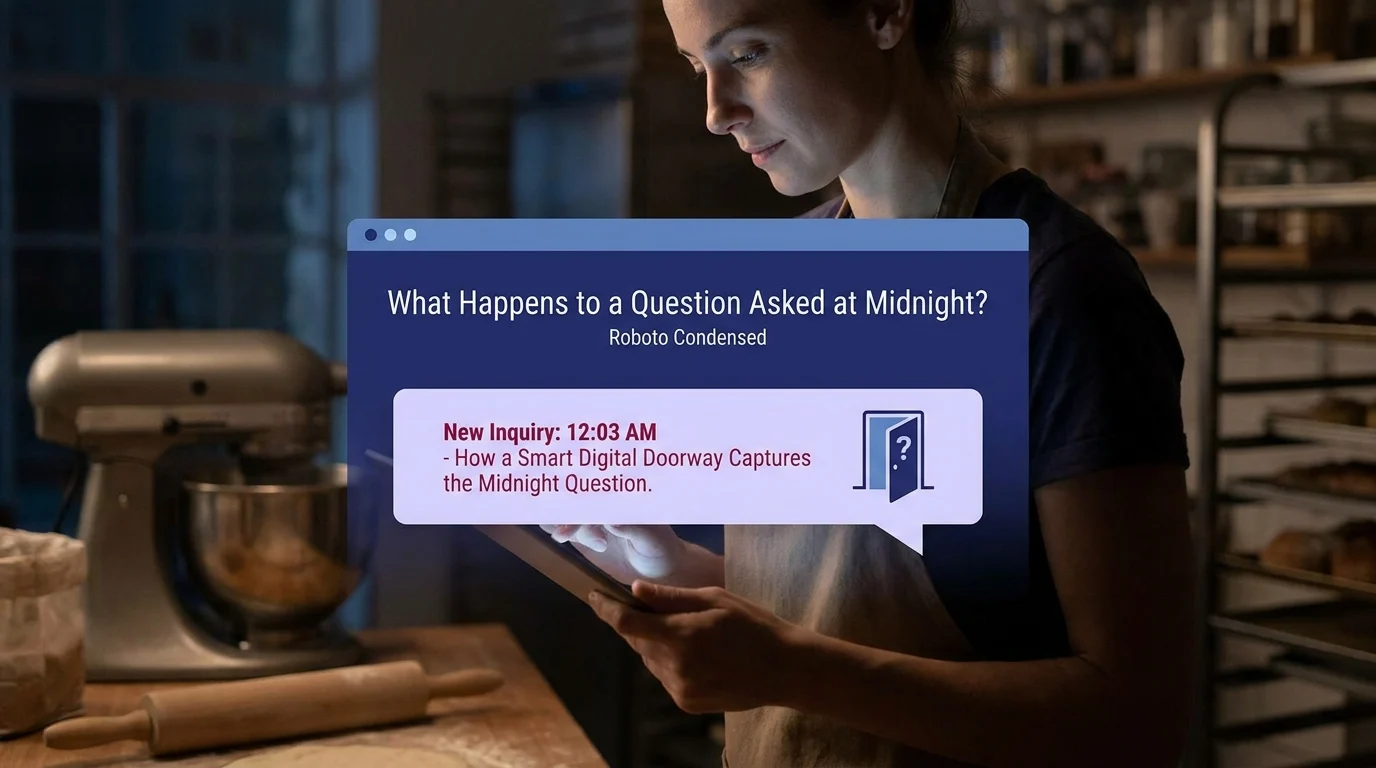
An AI employee working as a Smart Digital Doorway doesn’t sleep, doesn’t take breaks, and doesn’t let a message sit until morning. It reads the question, responds in real time, and starts doing the qualifying work a front desk staffer would normally handle during the day.
Answering and Qualifying at Once
Instead of a generic “we’ll get back to you,” the AI employee asks the questions that matter: what’s the problem, where is the property, how urgent is it. That’s not a chatbot script. It’s a working intake process that runs at 1am the same way it runs at 1pm.
A Windsor-Essex Example
Consider a plumbing company based in Kingsville, Ontario. A homeowner in the Windsor-Essex Region messages at 11:40pm about a leaking water heater. The Smart Digital Doorway confirms the issue, asks for the address and a callback number, flags it as urgent, and books a next-morning slot before the homeowner even closes the browser tab. No one on the plumbing team touched a phone. The lead was captured, qualified, and scheduled while the owner was asleep.
Capturing the Lead Before It Leaves
That’s the real function of after hours customer service for a small business: not just replying, but capturing enough detail that the lead is ready to convert the moment the doors open. The prospect never has to shop around, because someone already answered.
Key Takeaways
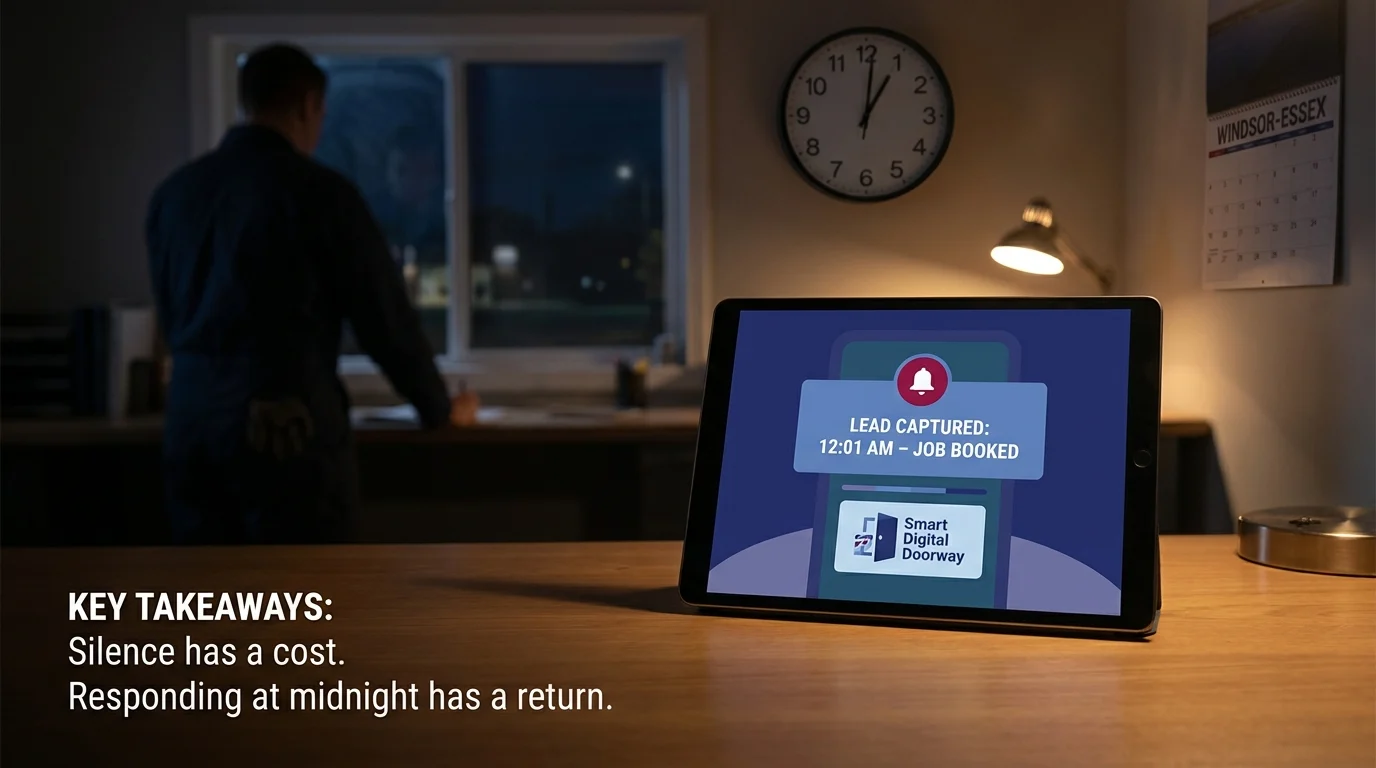
The midnight question doesn’t wait for business hours, and neither should the response. A Smart Digital Doorway answers, qualifies, and captures leads in real time, turning a missed opportunity into a booked job before morning. For a service business in Kingsville, Ontario and the Windsor-Essex Region, that speed is often the entire difference between winning the work and losing it to whoever replied first. Silence has a cost. Responding at midnight has a return.
Paul Hughes founded Doorways Into Your Business after more than five decades consulting across 30+ countries, from implementing early IBM email systems in the 1980s to running multi-million-dollar IT projects for global organizations. A St. Clair College graduate (1976), he settled in Kingsville, Ontario in 2019 to help local small businesses grow with practical “smart digital doorways”, websites, customer service, reviews, bookings, and payments, matched to what a business needs, not unnecessary technology.
All articles by Paul →