
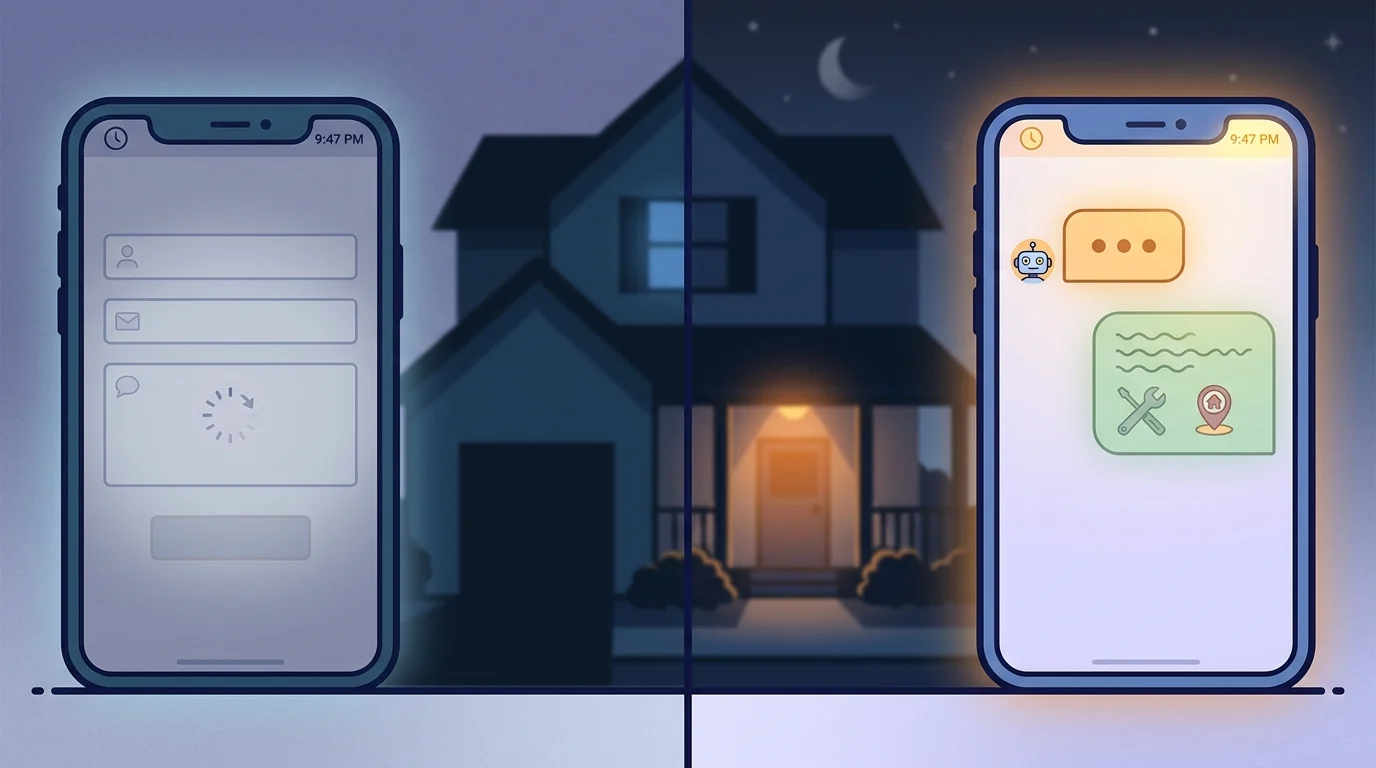
A homeowner searching for an emergency plumber at 9:47 p.m. doesn’t want to fill out a form and wait. They want an answer now, or they move to the next name on the search results page. That’s the real contest behind “AI chatbot vs contact form”: not which one looks more professional on a website, but which one captures a lead in the narrow window before that lead disappears. For small businesses in Kingsville, Ontario and the Windsor-Essex region, that window is often measured in minutes, not hours. Understanding why traditional contact forms struggle here is the first step to fixing the leak.
How Contact Forms Quietly Lose You Leads
The Delay Between Interest and Response
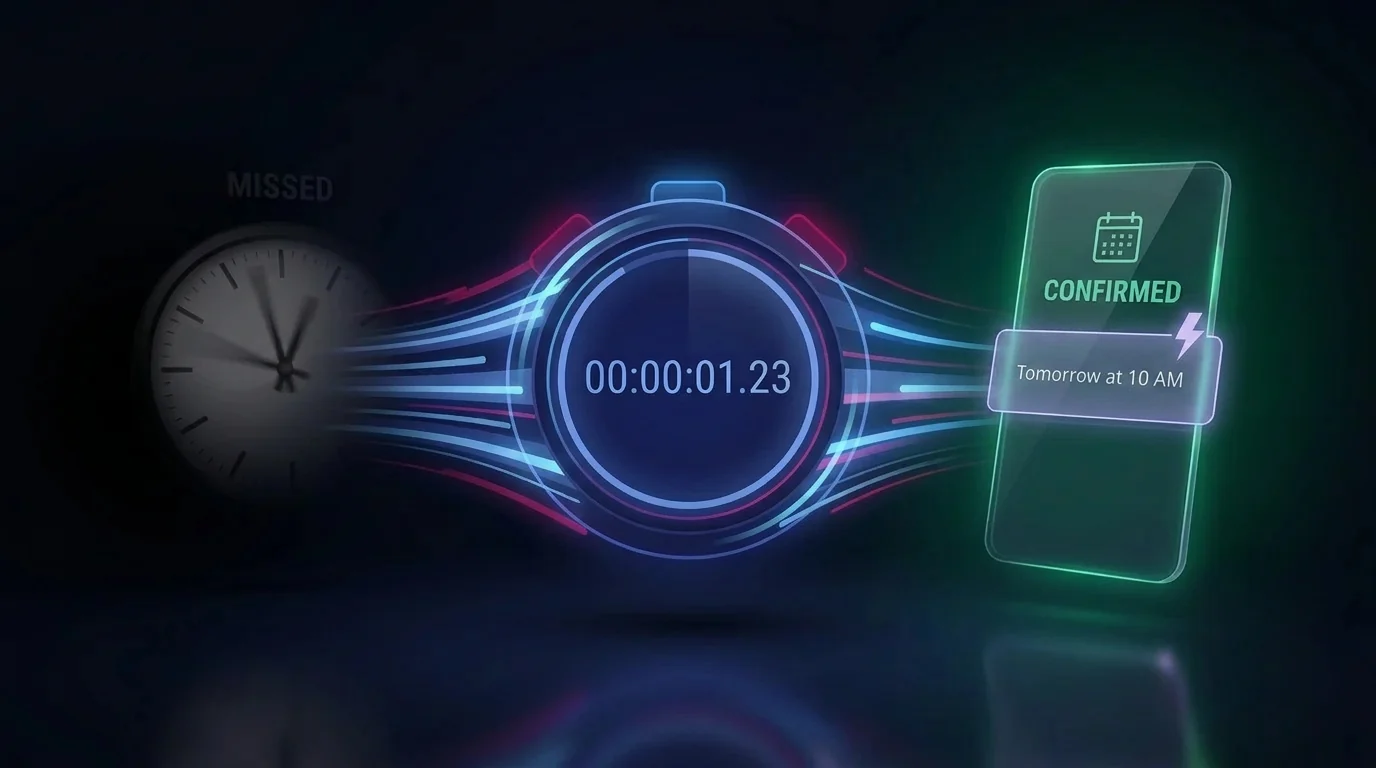
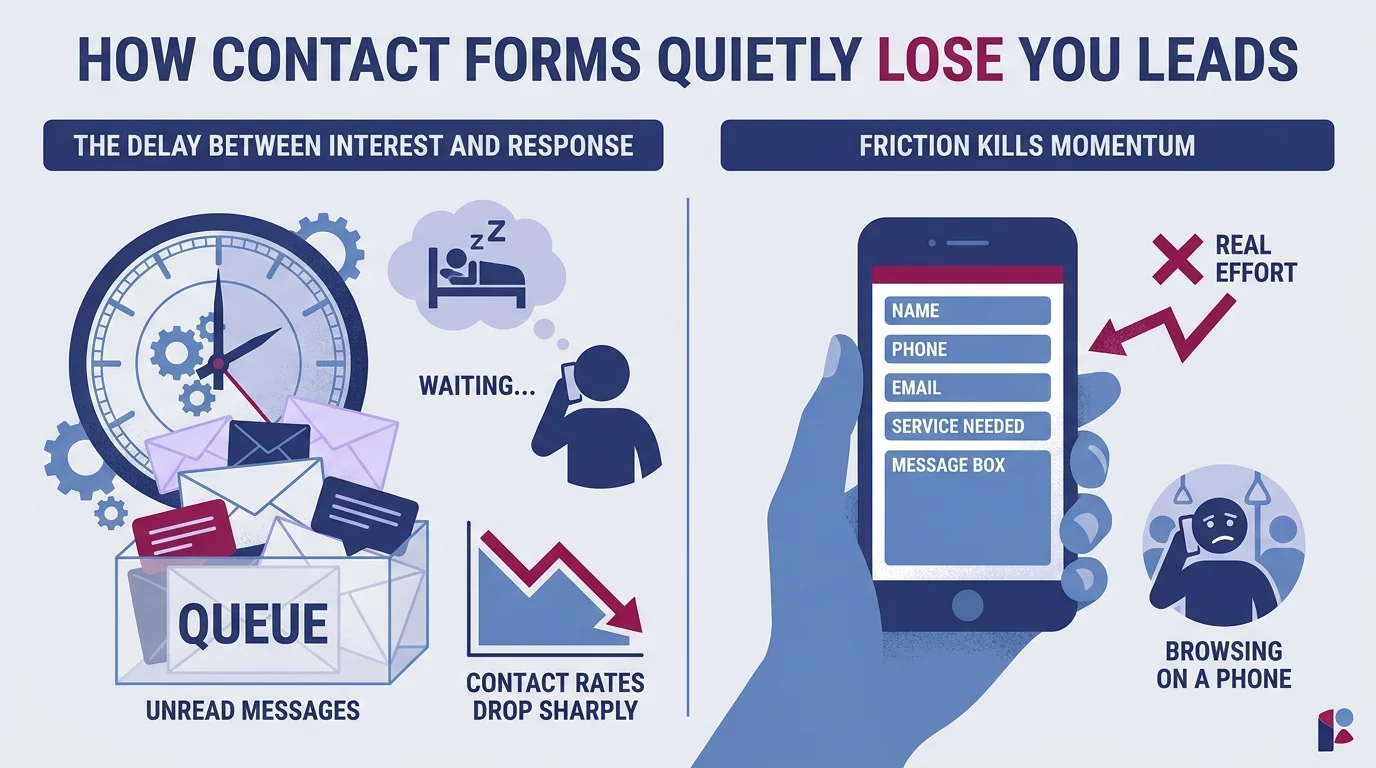
A contact form is a one-way message with no promise attached. A visitor submits their name, email, and a short note, then waits. If the business owner is on a job site, asleep, or simply busy, that message sits unread for hours. Research on lead response time consistently shows that contact rates drop sharply after the first 5 minutes and keep falling after that. A form doesn’t create urgency. It creates a queue.
Friction Kills Momentum
Every field on a form is a small decision: name, phone, email, service needed, a message box that expects the visitor to explain their own problem in writing. That’s real effort for someone browsing on a phone between errands. Some visitors abandon halfway through. Others never start, because the form feels like paperwork rather than a conversation. The more a lead has to work to reach you, the fewer leads actually arrive.
No Answers, Just a Black Box
Forms can’t answer “Do you service my area?” or “What does a service call cost?” The visitor has to submit blind and hope. That uncertainty pushes hesitant leads toward competitors who offer an immediate answer, even a partial one. For local service businesses competing on speed and trust, a static form is one of the weakest tools available for turning a curious visitor into a booked customer.
AI Chatbot vs Contact Form: What Conversational Capture Actually Does Differently
An AI chatbot for small business doesn’t wait for someone to check their inbox. It engages the visitor the moment they land on the page, while their intent is still fresh.
Real-Time Engagement Instead of a Waiting Game
Picture a homeowner in Leamington searching for an emergency plumber at 9 p.m. on a Sunday. A contact form gets them a “we’ll be in touch” message. A chatbot greets them immediately, asks what’s going on, and confirms whether the business covers their street. That single exchange, happening in real time instead of the next business day, is often the difference between a booked job and a call to the next name on the search results page.
Qualifying Leads Without Human Effort
A chatbot can ask the follow-up questions a form never thinks to ask: what service is needed, when, and how urgent it is. It sorts a curious browser from a ready-to-book customer before a human ever gets involved. That means the business owner opens their laptop the next morning to a shortlist of qualified leads with context attached, not a pile of half-finished submissions to decode.
Answering Instead of Stalling
Because a chatbot can be trained on the specific services, pricing ranges, and coverage area of a Windsor-Essex region business, it removes the guesswork that stalls form submissions. Instead of a blank box asking the visitor to explain their own problem, the visitor gets a guided conversation that ends with either an answer or a booked appointment.
Capturing the Leads a Form Would Lose
The visitors most likely to abandon a form (people on their phones, in a hurry, or unsure if the business even serves their area) are exactly the ones a chatbot can catch, because the interaction feels effortless rather than transactional.
The Honest Tradeoffs: When a Form Still Makes Sense

A chatbot is not automatically the right answer for every business. It costs money to set up and train, and a poorly configured one can frustrate visitors faster than a plain form ever could.
When Simplicity Wins
A business with a narrow service list and low inquiry volume, like a single-location bakery taking custom cake orders, may not need conversational capture at all. If every inquiry gets read and answered by the same person within an hour, a short form with a name, phone number, and order details is fast to build and easy to maintain. Adding a chatbot here is solving a problem that does not exist yet.
The Cost of Getting It Wrong
A chatbot trained on outdated pricing or a coverage area that no longer matches reality does more damage than a blank form. Visitors trust the answers they get in real time, so those answers need to stay accurate. That upkeep is a real cost, not a one-time setup task.
The Hybrid Middle Ground
Many businesses land somewhere in between: a chatbot handles the initial greeting and qualifying questions, then hands off to a short form for the visitor to confirm contact details. This keeps the conversational advantage without requiring the bot to handle every edge case a human would normally field.
How to Decide
The right setup depends on inquiry volume, how urgent the service is, and whether staff are available outside business hours. A form alone works when volume is low and response time doesn’t matter. A chatbot earns its cost when after-hours inquiries, urgent requests, or repetitive questions are already costing the business leads.
Key Takeaways
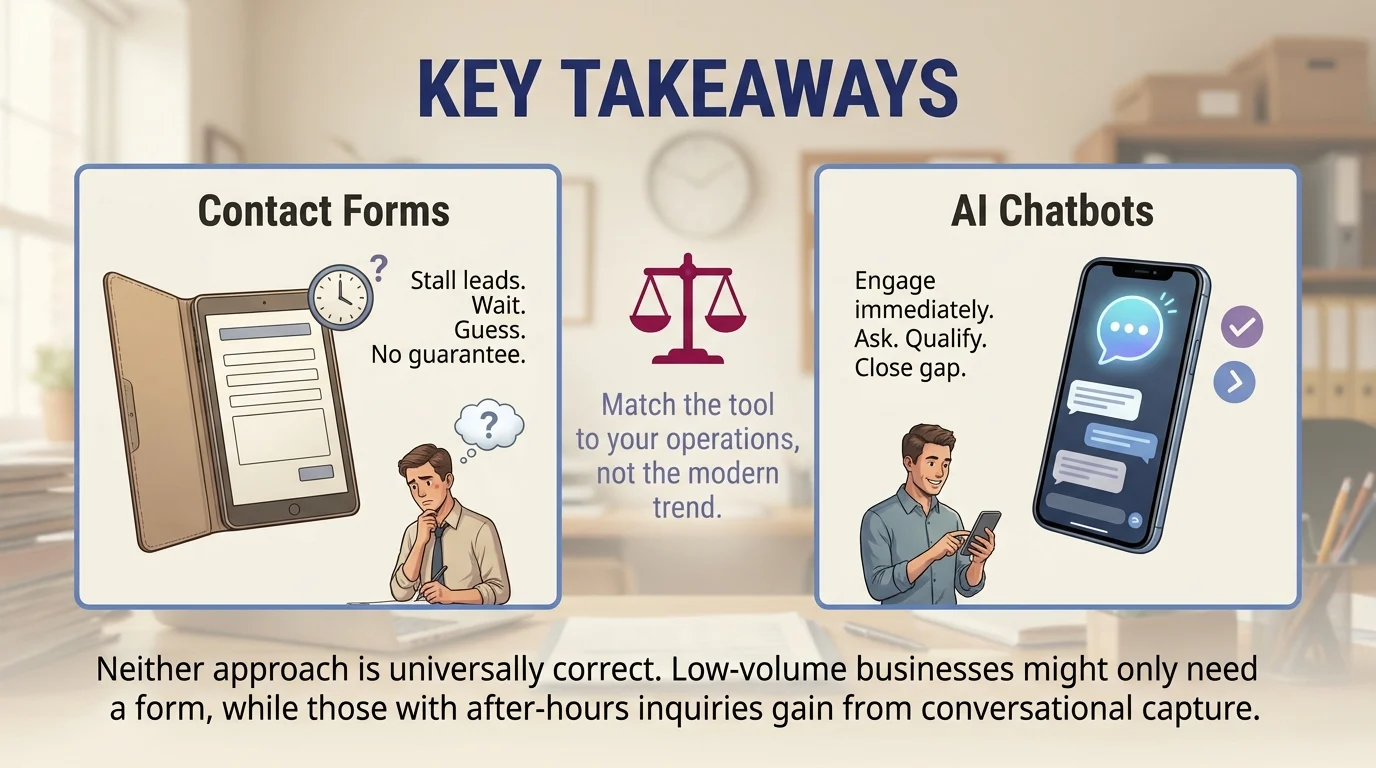
Contact forms stall leads by making people wait, guess, and fill in blanks with no guarantee of a response. Chatbots close that gap by engaging visitors immediately, asking the right questions, and qualifying leads before a human gets involved. Neither approach is universally correct. Low-volume businesses with fast response times may not need more than a form, while businesses juggling after-hours inquiries or repetitive questions stand to gain the most from conversational capture. The right move is matching the tool to how the business actually operates, not choosing whichever option sounds more modern.
Paul Hughes founded Doorways Into Your Business after more than four decades consulting across 30+ countries, from implementing early IBM email systems in the 1980s to running multi-million-dollar IT projects for global organizations. A St. Clair College graduate (1976), he settled in Kingsville, Ontario in 2019 to help local small businesses grow with practical “smart digital doorways”, websites, customer service, reviews, bookings, and payments, matched to what a business actually needs, not unnecessary technology.
All articles by Paul →