
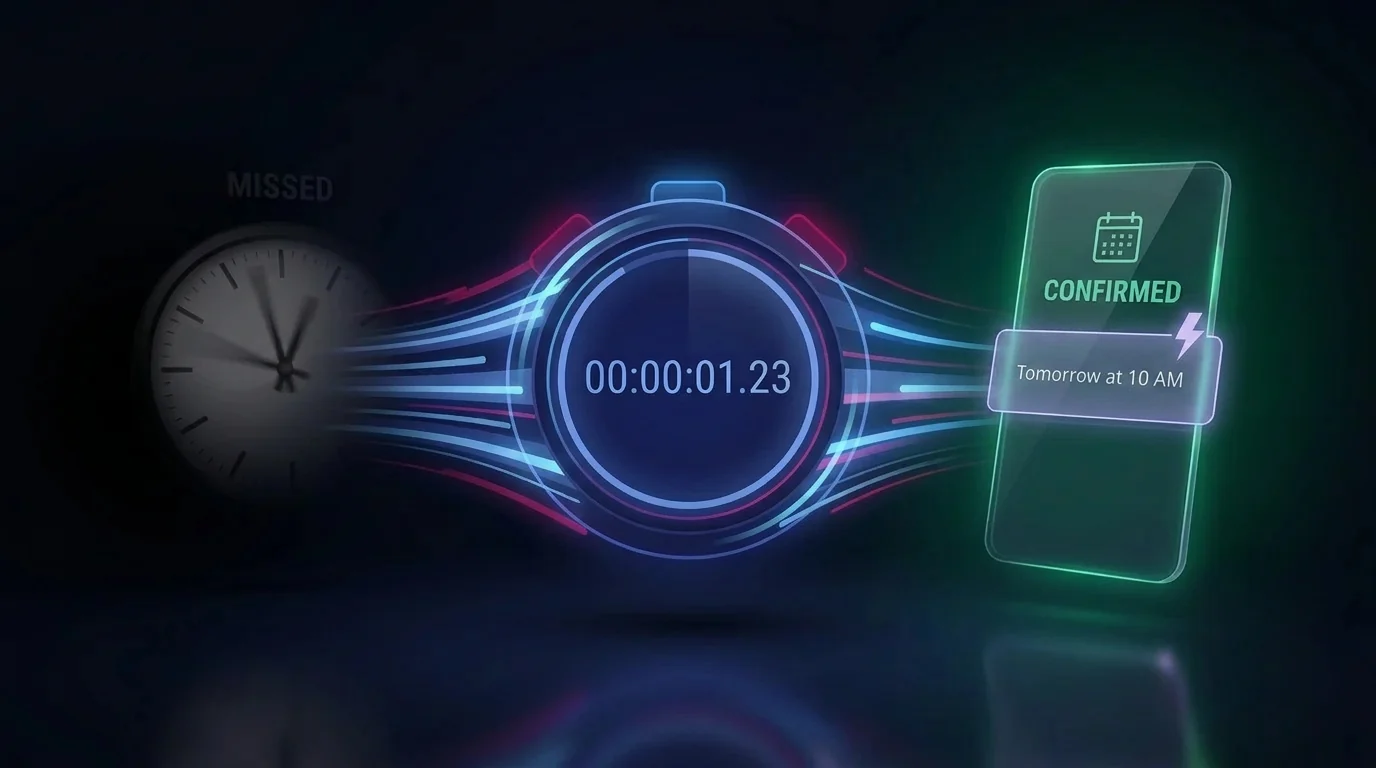
A homeowner in Kingsville, Ontario with a failing water heater fills out an online quote request at 6:30 PM. If no one calls or texts back within 10 minutes, they do not wait by the phone. They open Google, find another local contractor in the Windsor-Essex region, and submit a second request. Most service companies assume replying within 24 hours counts as good customer service. The data proves otherwise. Modern buyers reward immediacy, and waiting even half an hour to contact an inbound prospect destroys conversion rates. Response speed directly determines whether a business wins the contract or loses it to a competitor.
The Hard Data on Lead Response Time for Small Business

Empirical studies published by Harvard Business Review and the Lead Response Management study establish that lead response time small business operators maintain directly dictates sales volume. Companies that contact potential buyers within 5 minutes of an inquiry are 100 times more likely to make contact and 21 times more likely to qualify the lead compared to those that wait 30 minutes.
The 5-Minute Window vs. The 30-Minute Cliff
The decay rate of an inbound lead accelerates rapidly after the initial submission. Qualification probability drops by 80 percent between minute 5 and minute 10. By minute 30, the lead has cooled completely. The prospect has either returned to daily tasks, closed the browser window, or initiated contact with a faster competitor.
The First Responder Advantage
Research across local service sectors shows that up to 78 percent of customers award their business to the company that responds first. For high-intent inquiries such as emergency repairs, trade estimates, and professional consultations, the first competent response effectively ends the customer’s search. Despite this reality, the average small business response time sits between 24 and 47 hours, with roughly 23 percent of inbound inquiries never receiving a reply at all. This gap between consumer expectations and standard operating speed creates an immediate commercial advantage for firms equipped to respond instantly.
Why Windsor-Essex Businesses Lose High-Value Jobs to Slower Follow-Up Speed
In Kingsville, Ontario and the Windsor-Essex region, service providers rarely lose high-value contracts because of pricing or technical skill. They lose them because standard operating routines create operational bottlenecks during the critical first minutes after an inquiry arrives.
Operational Friction in Daily Workflows
Local owners and managers typically oversee job sites, client meetings, and administrative duties simultaneously. This manual distribution of labor introduces specific friction points that stall lead processing:
- Buried inbox notifications: Website contact forms send raw data to a general email address that sits unmonitored while technicians or project managers work on site.
- End-of-day voicemail review: Missed phone calls during peak operating hours route to voicemail boxes that staff only triage after 5:00 PM.
- Fragmented communication channels: Inquiries scatter across website forms, direct messages, and text lines without a centralized intake mechanism to alert team members instantly.
The Competitive Cost in Local Markets
When a homeowner or business client in the Windsor-Essex region needs a specialized service, they rarely contact just one company. They contact 2 or 3 providers in rapid succession. An unmanaged lead response time small business teams fall into gives the fastest competitor full control of the sales conversation.
The provider that acknowledges the request instantly and secures the initial consultation halts the customer’s search. When a slower contractor or professional firm returns the inquiry 4 or 6 hours later, the prospect has already committed to an on-site visit. For firms based in Kingsville, Ontario, eliminating these manual delays prevents high-margin revenue from flowing directly to competitors.
How to Respond to Leads Faster with a Smart Digital Doorway System
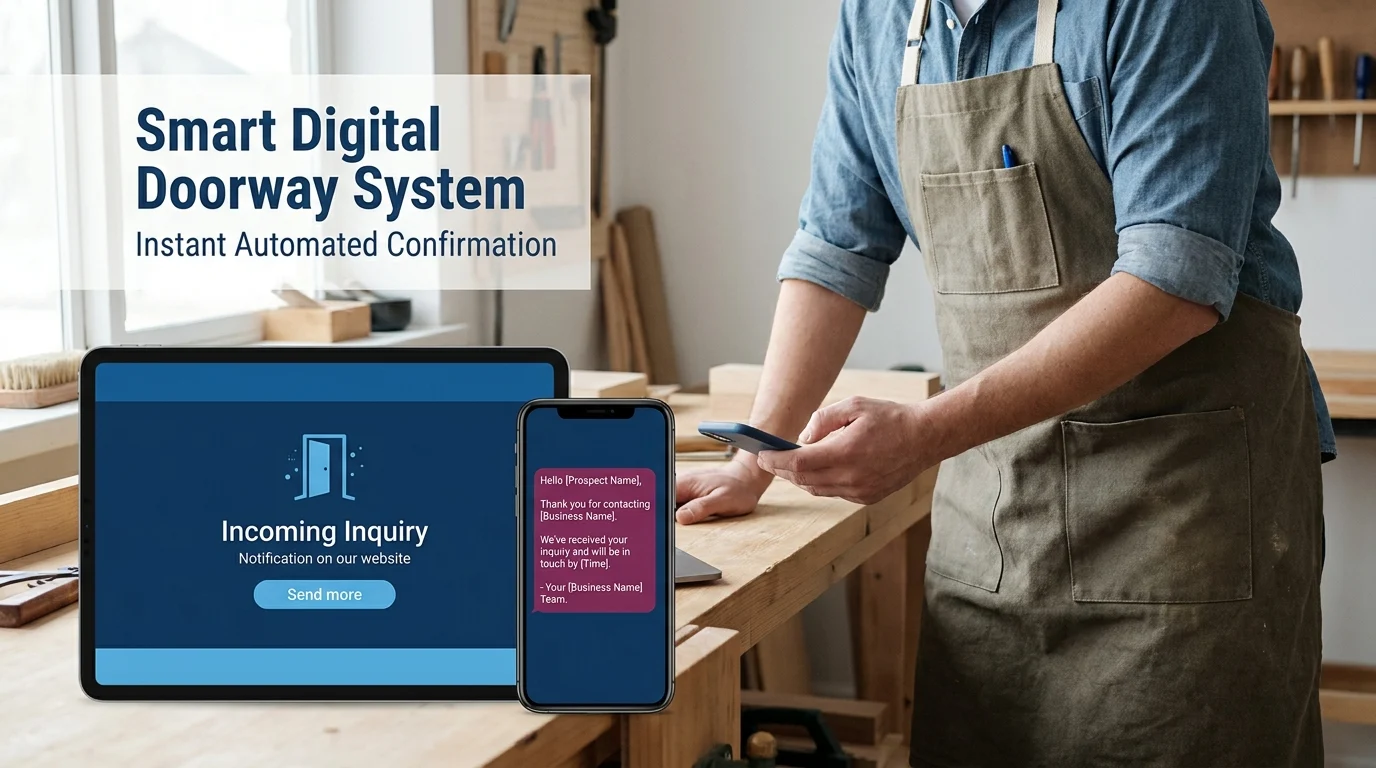
Fixing response speed requires replacing ad-hoc manual checking with structured, automated intake. A smart digital doorway captures incoming inquiries from every channel, validates the contact details, and initiates contact immediately.
Instant Automated Confirmation
The moment an inquiry enters your system, an automated SMS or email should acknowledge the customer within 60 seconds. This initial message confirms receipt, addresses the prospect by name, and specifies when a team member will follow up. Immediate acknowledgement reassures the prospect that their request is active, which stops them from contacting competing businesses.
Centralised Triage and Team Dispatch
Manual inbox monitoring fails when key staff work on site. An automated system routes leads from web forms, direct messages, and missed phone calls into a single feed. The platform sends push notifications or text alerts directly to on-duty staff, showing the lead details and inquiry type so the right team member can respond with context.
Direct Self-Scheduling
Eliminate telephone tag by embedding calendar booking directly into your intake flow. Prospects seeking an estimate or consultation can select an open appointment slot immediately after submitting their details. This locks in the meeting without administrative delay and prevents prospects from shopping around.
- Set up automated text replies for missed calls during business hours.
- Route incoming requests to active staff phones instead of unmonitored desktop inboxes.
- Provide automated booking links on confirmation pages to secure appointments instantly.
Key Takeaways on Lead Response Speed
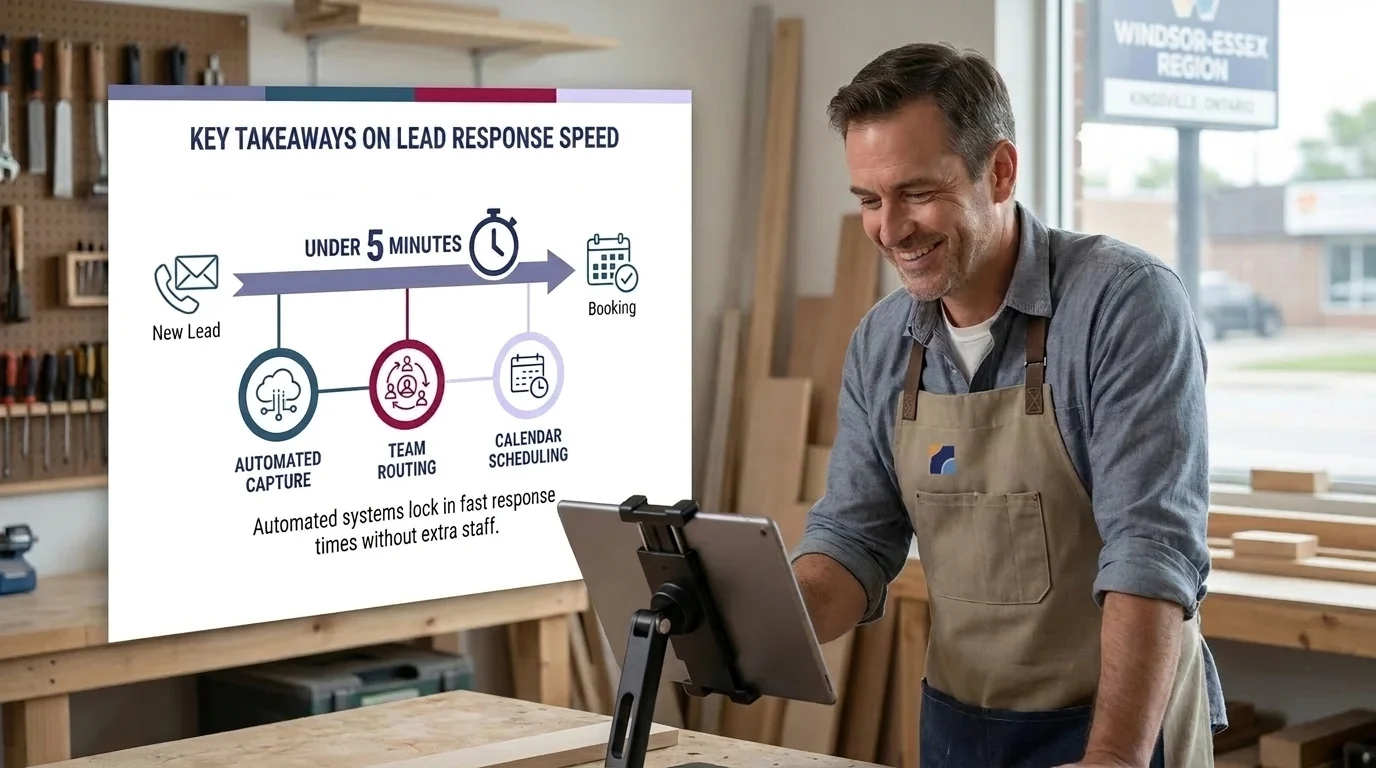
Improving lead response time small business operations rely on is one of the most direct ways to increase booking rates and revenue. Customers contact multiple providers when they need service, and the company that connects first wins the project most often.
Manual tracking through scattered inboxes creates friction and delays. By putting automated capture, team routing, and calendar scheduling in place, service providers across Kingsville, Ontario and the Windsor-Essex region can lock in standard response times of under 5 minutes without adding extra administrative staff.
Paul Hughes founded Doorways Into Your Business after more than four decades consulting across 30+ countries, from implementing early IBM email systems in the 1980s to running multi-million-dollar IT projects for global organizations. A St. Clair College graduate (1976), he settled in Kingsville, Ontario in 2019 to help local small businesses grow with practical “smart digital doorways”, websites, customer service, reviews, bookings, and payments, matched to what a business actually needs, not unnecessary technology.
All articles by Paul →