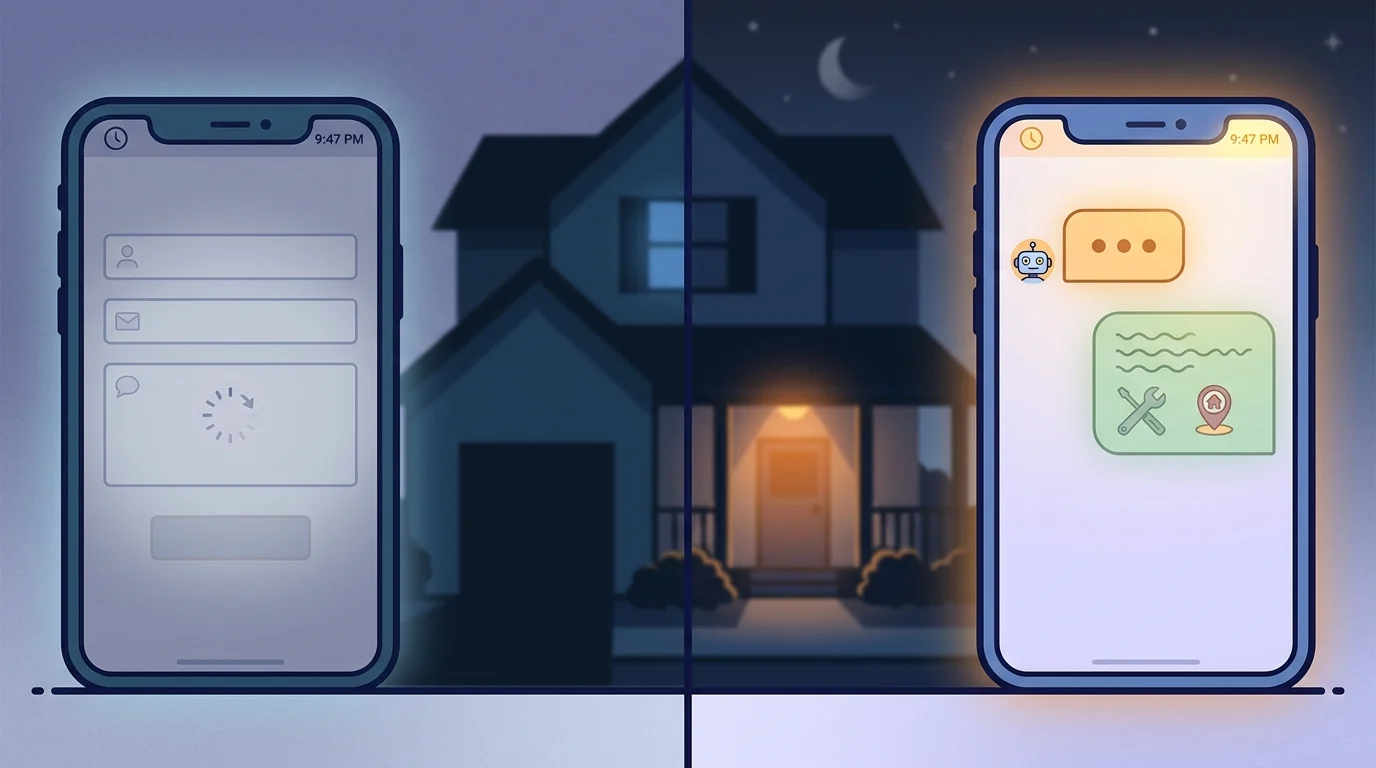


Local business owners across Kingsville, Ontario and the Windsor-Essex Region often hear conflicting opinions about artificial intelligence. Software vendors promise automated software that replaces entire customer support teams, while traditionalists warn that automated chat destroys hard-earned client loyalty. The practical reality for local trades, retail shops, and professional service providers sits between these extremes. AI customer service for local business captures inquiries when your front office is closed, answers repetitive questions instantly, and stops prospective clients from phoning a competitor down the street, all while preserving your personal relationships.
Separating AI Myths from Reality: What AI Customer Service for Local Business Actually Does
The Fear of Losing the Human Connection
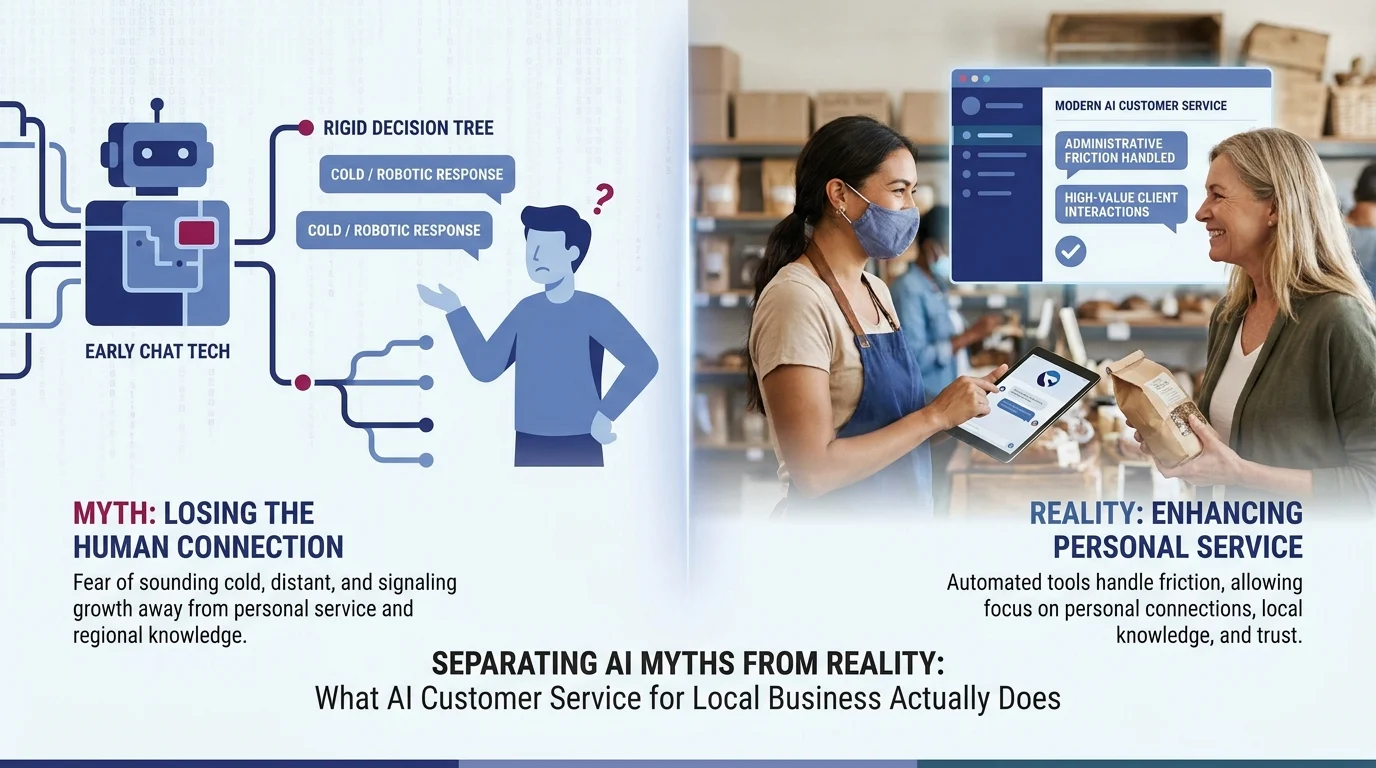
The primary objection from small business owners involves the fear of sounding cold or robotic. Local companies win on personal service, regional knowledge, and trust. Business owners worry that introducing automated messaging will signal to long-time customers that the company has grown distant.
That fear stems from early chat technologies that forced users through rigid decision trees. Modern AI customer service for local business operates differently. When configured correctly, automated tools handle administrative friction so your team can focus entirely on high-value client interactions.
What AI Tools Handle Reliably
Automation excels at predictable, high-volume tasks that consume valuable desk time. A well-trained system handles 5 specific operational duties without friction:
- Providing immediate answers about business hours, parking, or location details
- Collecting basic contact information and project details from intake forms
- Sending appointment reminders and confirmation links to reduce no-shows
- Greeting website visitors after regular office hours to log inquiry details
- Directing complex requests directly to the correct team member
Where Human Expertise Must Take Over
AI functions strictly as an intake assistant. Human judgment remains necessary to diagnose a complex plumbing emergency, quote a custom renovation, or de-escalate an upset client. When a conversation requires empathy, technical problem-solving, or negotiation, the software hands the conversation to a team member immediately. Clear operational boundaries prevent awkward customer experiences and protect your local reputation.
Maintaining Your Local Reputation: How to Keep AI Responses Authentic and On-Brand
Local trust takes years to build and seconds to lose. When prospective clients in Kingsville, Ontario and the Windsor-Essex Region contact your business, they expect a helpful, professional tone that reflects a genuine local operation. Keeping AI responses authentic relies on how you configure the system, what data you feed it, and where you set its operating limits.
Train the System on Your Real Business Material
Default software setups sound cold because they draw on generic web templates. An effective setup for AI customer service for local business uses your existing business communication instead. Feed the system your past customer email answers, desk scripts, intake forms, and pricing policies. Add practical local context such as landmark-based directions, municipal service boundaries, and parking details across the Windsor-Essex area. That context ensures automated replies sound like they come from an experienced local team member.
Establish Strict Voice and Policy Boundaries
System prompts control tone, word choices, and operational limits. If your business relies on a straightforward, friendly communication style, direct the software to match that exact tone. Set firm guardrails that prevent the tool from guessing quotes on custom jobs, changing service terms, or making scheduling guarantees. When an inquiry falls outside approved rules, the system must state what it can confirm and offer a clear path to staff support.
Provide Immediate Handoffs for Complex Needs
Protecting your local reputation requires knowing when automation must step aside. When a customer raises a complex technical issue or expresses frustration, the software should pass the message directly to your staff. A quick transfer to a real person preserves the personal trust that sets independent local businesses apart from distant national competitors.
The Sensible First Step: Deploying AI for Small Business Without Overhauling Operations
Adopting new technology fails when it forces a team to abandon established daily routines. Implementing AI customer service for local business doesn’t require replacing your primary phone lines or retraining your entire staff on day 1. The most practical entry point focuses on filling operational gaps when your physical doors are locked and staff are off the clock.
Focus on After-Hours Lead Capture
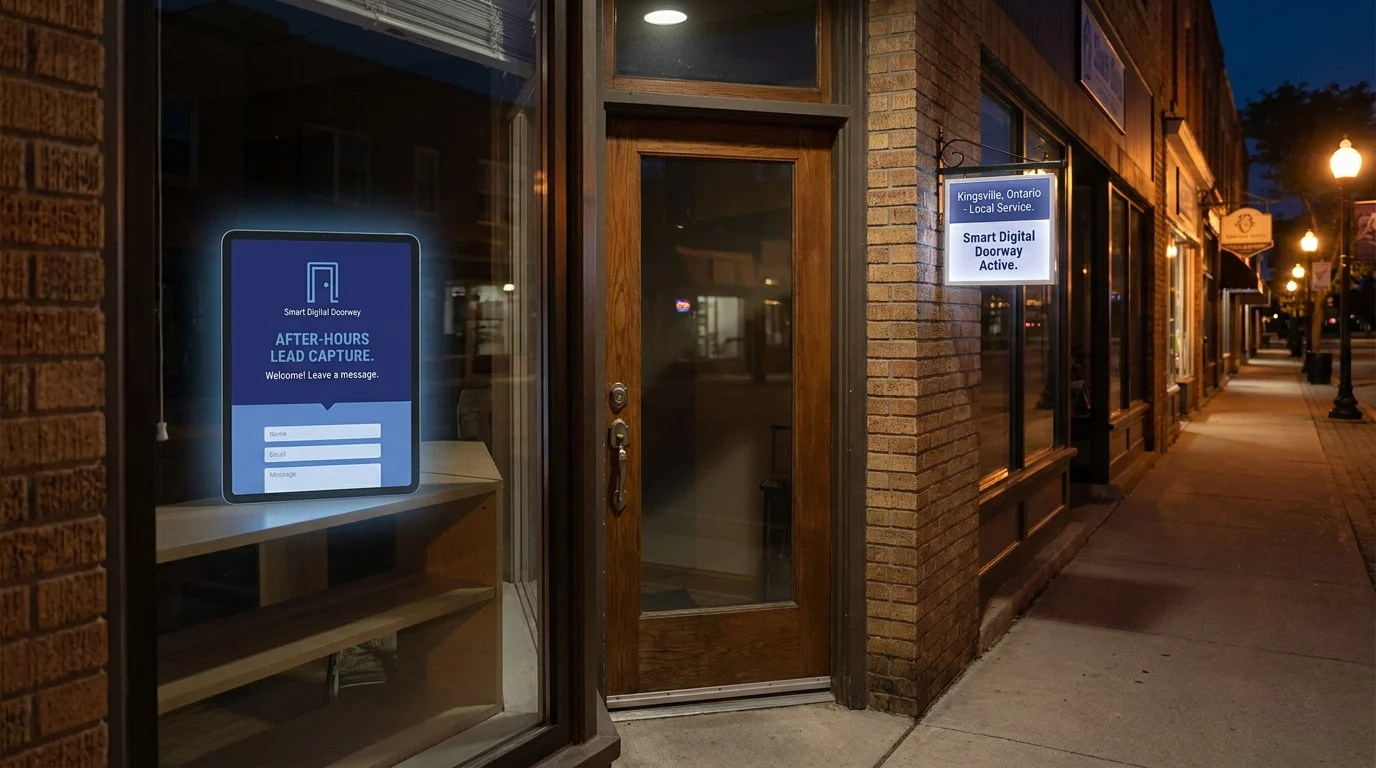
Service providers across Kingsville, Ontario and the Windsor-Essex Region routinely lose revenue from missed evening calls and late website visits. Deploying an automated assistant as your Smart Digital Doorway secures those opportunities without placing extra demands on local staff. The tool handles baseline questions regarding service boundaries, standard turnaround times, and initial booking steps. Instead of leaving prospective clients with a blank contact form, the assistant collects verified contact details and specific project needs, leaving an organized intake record ready for morning review.
Protect Existing Staff Workflows
Automation must support your team rather than disrupt their existing habits. Integrate the assistant directly into your current software, such as a central management email inbox or CRM platform. When staff begin their shift at 8:00 AM, they receive structured lead summaries with complete conversation context rather than scattered notes or cryptic voicemail recordings. Internal staff continue using their familiar morning routine, but they begin the day with fully qualified prospects who received immediate assistance overnight.
By limiting initial deployment to after-hours intake, owners evaluate response accuracy and measure lead retention with zero risk to daytime operations. Once the system proves its value, businesses can selectively expand its role to assist during high-volume call hours.
Building a Practical Future for Local Business Automation
Automating customer communications isn’t about imitating large tech corporations or removing the human element from your company. For an independent business owner, practical AI adoption provides an immediate response when staff are unavailable, preventing prospects from reaching out to a regional competitor instead. Training tools on your genuine operational material keeps customer interactions grounded in local knowledge while protecting your hard-earned reputation. Starting with targeted after-hours lead capture gives your business a reliable competitive edge across Kingsville, Ontario and the wider Windsor-Essex market, ensuring every inquiry receives a fast, helpful reply without overwhelming your team.
Paul Hughes founded Doorways Into Your Business after more than five decades consulting across 30+ countries, from implementing early IBM email systems in the 1980s to running multi-million-dollar IT projects for global organizations. A St. Clair College graduate (1976), he settled in Kingsville, Ontario in 2019 to help local small businesses grow with practical “smart digital doorways”, websites, customer service, reviews, bookings, and payments, matched to what a business needs, not unnecessary technology.
All articles by Paul →