

When a regular customer stops buying, they rarely leave because of a fight. Most simply get busy, try an alternative, or fall out of their regular routine. For business owners in Kingsville, Ontario and the Windsor-Essex region, letting these past buyers drift away means leaving predictable revenue on the table. Reclaiming them requires a structured strategy rather than random discounts. Executing a systematic 90-day customer win-back campaign allows you to re-engage past clients with precision, warming up cold contacts before asking for another purchase. By separating your campaign into clear stages, you protect your brand reputation, lower advertising costs, and turn forgotten accounts back into active, profitable relationships.
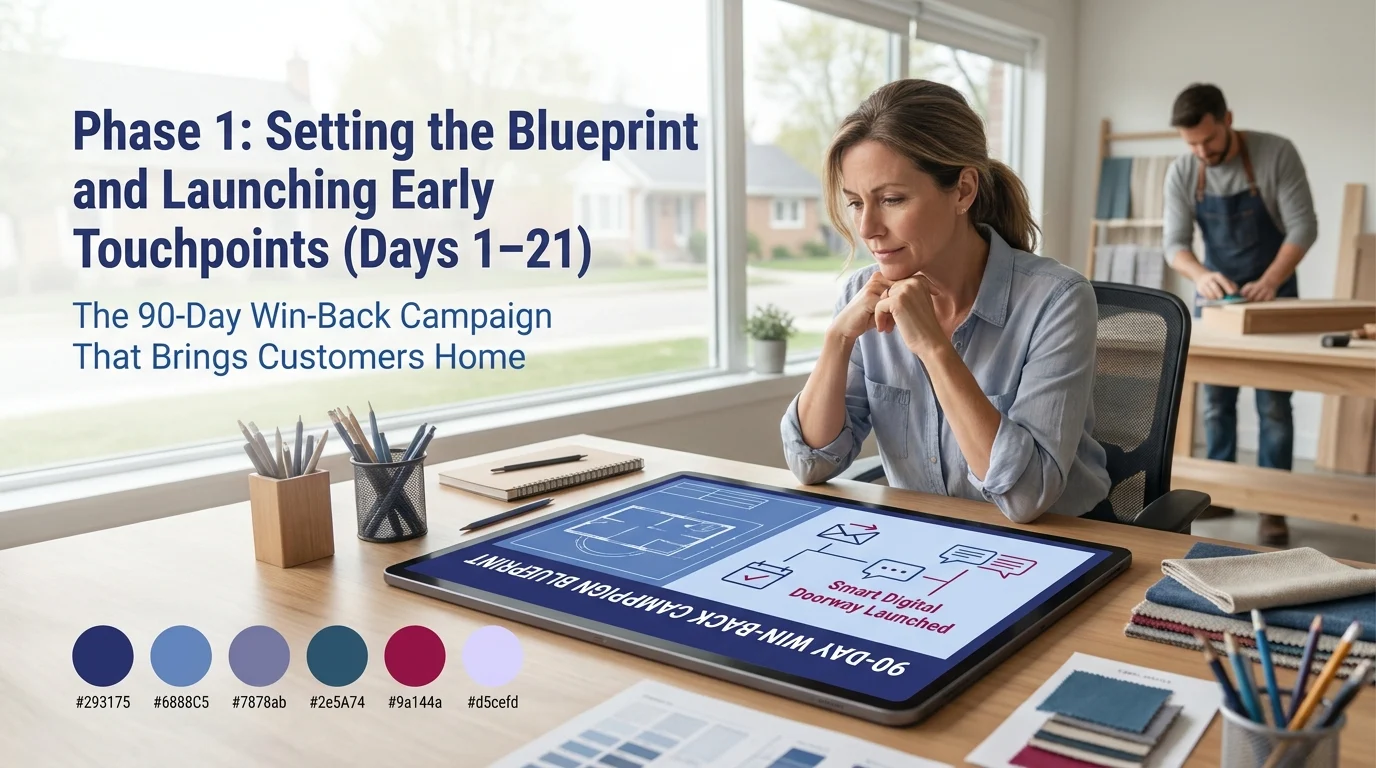
Phase 1: Setting the Blueprint and Launching Early Touchpoints (Days 1–21)
Identifying Inactive Accounts and Cleaning Data
Before sending a single email or text message, audit your customer database. Filter your sales records to isolate buyers who have not made a purchase or booked a service in 6 months or more. A standard 180-day inactivity threshold separates normal buying gaps from true attrition.
Remove invalid email addresses and wrong phone numbers before launching your outreach. Sending messages to abandoned accounts damages your email deliverability rates and wastes campaign budget. Group these inactive profiles by their past purchase history so your message matches their actual interests.
Deploying Low-Friction Reconnection Messages (Days 1–7)
The first outreach should never demand a purchase. Pushing a hard sales pitch to a quiet account immediately triggers unsubscribes. Start with a light, friendly check-in designed solely to open a line of communication.
Send a short email or SMS acknowledging the lapse without laying guilt. Use clear language like, “We noticed it has been a while since your last visit, and we wanted to make sure you still have everything you need.” Give the reader a zero-friction action, such as a single link to a helpful resource or a one-click response option asking if their preferences have changed.
Sharing Value-Focused Content (Days 8–21)
Once the initial contact is made, spend the next 2 weeks delivering pure value. Use this period to highlight improvements to your business, new product lines, or practical advice relevant to their previous buys.
If you operate a regional service business in the Windsor-Essex area, share a helpful seasonal checklist or a brief guide addressing a common customer problem. Showing progress and utility reminds past clients why they trusted your business in the first place, laying the foundation for an offer in the next phase.
Phase 2: Driving Conversions with Offers, Social Proof, and the Final Nudge (Days 30–90)
By day 30 of your 90-day customer win-back campaign, you have re-established contact and delivered practical value without asking for a financial commitment. Now the focus shifts toward converting restored interest into actual revenue using structured incentives, local evidence, and explicit calls to action.
Deploying Targeted Incentives (Days 30–45)
Generic coupons rarely motivate inactive clients who drifted away due to busy schedules or simple oversight. Instead, present a tailored incentive aligned with their past purchase history. A fixed dollar credit toward a specific service, a free complementary add-on, or exclusive access to an upgraded package yields far higher conversion rates than a standard blanket discount. Define a strict 14-day redemption window to encourage prompt decision-making and prevent your message from sitting unread in an inbox.
Showcasing Recent Social Proof (Days 46–60)
When an offer alone does not prompt an immediate order, highlight active work and proven outcomes. Disengaged customers need assurance that your operational standards remain high. Share recent client testimonials, quick walkthroughs, or concise case studies that demonstrate current quality. For example, a local trade business in Kingsville, Ontario and the Windsor-Essex region might feature a recent customer review emphasizing reliable scheduling and thorough work. Demonstrating verified results rebuilds buyer confidence and positions your business as an active, high-value provider.
Executing the Direct Final Nudge (Days 61–90)
The final month of the campaign requires direct, unvarnished communication. Transition away from polished marketing templates and send a concise, plain-text email directly from the business owner or service lead. Frame the message around account administration and database hygiene rather than sales promotion.
Inform the customer that their profile is scheduled for archival and ask whether they wish to remain on your primary contact roster. Provide a clear option to retain their account status or opt out. This polite ultimatum prompts lingering prospects to take action, securing late-stage conversions while clarifying true client churn.
Phase 3: Benchmarking Results, Handling Non-Responders, and Integrating Strategy
Benchmarking Reactivation Metrics
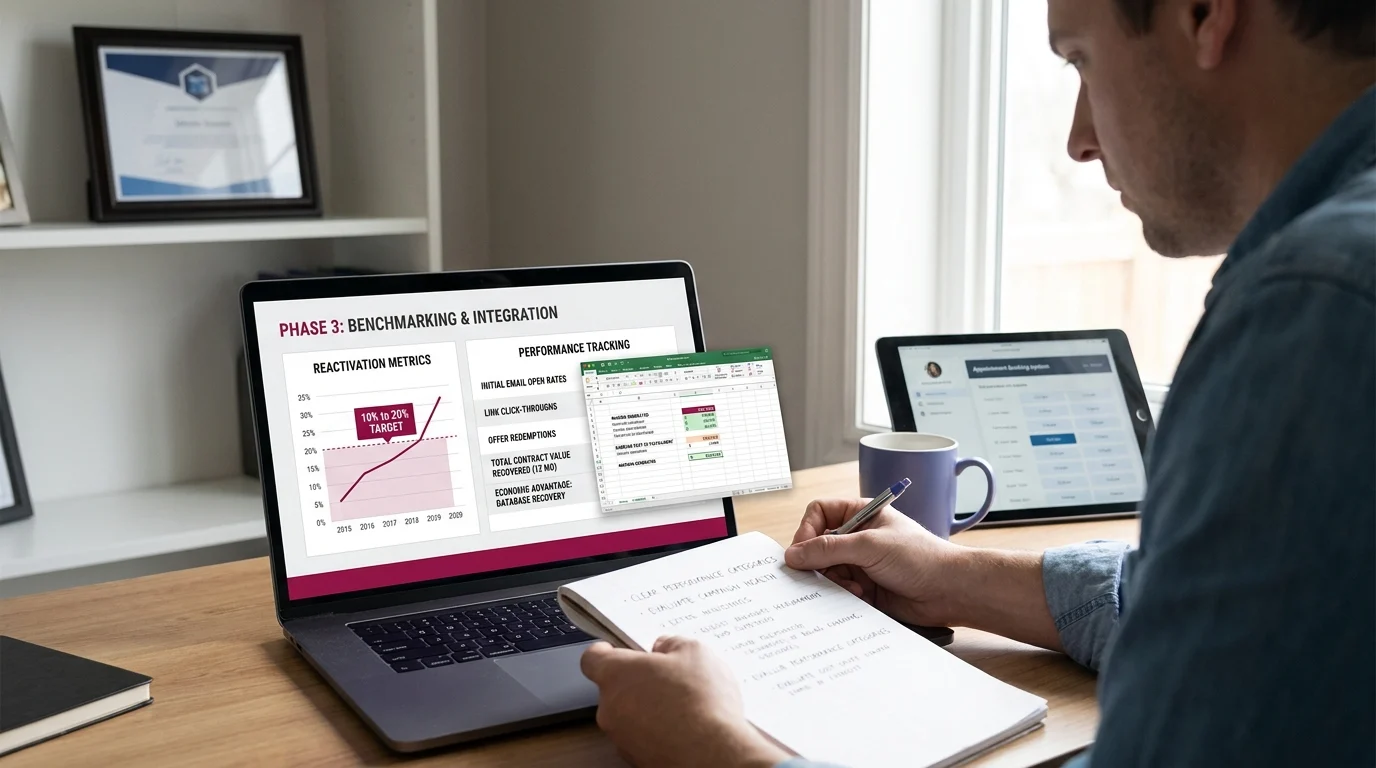
Evaluating the impact of a 90-day customer win-back campaign requires clear baseline benchmarks and consistent performance tracking. A well-designed workflow targets a 10% to 20% reactivation rate across your dormant contact database. Measure success by tracking initial email open rates, link click-throughs, offer redemptions, and total contract value recovered over the subsequent 12 months. Calculating the total margin generated from reactivated clients against the baseline cost of fulfillment demonstrates the economic advantage of database recovery over cold customer acquisition.
Establishing clear performance categories helps evaluate campaign health quickly:
- Top-Tier Response (15% to 20%+): Indicates strong offer alignment and healthy baseline sender reputation.
- Standard Response (10% to 14%): Reflects solid re-engagement, though messaging timing or offer strength may need minor refinement.
- Underperforming (Below 10%): Signals outdated contact data, weak incentives, or deliverability issues requiring immediate technical adjustments.
Managing Non-Responders and Database Health
Contacts who navigate all 90 days without opening a message, redeeming an offer, or responding to direct outreach require immediate database hygiene. Continuing to send regular marketing broadcasts to unengaged email addresses damages inbox placement and risks domain blacklisting over time. Move non-responders out of your active broadcast queues and place them on a quiet, quarterly check-in list. This suppressed segment receives only major company updates, annual service reviews, or high-value seasonal announcements, protecting sender reputation while preserving a clean avenue for future recovery.
Integrating Reactivation into Long-Term Retention Systems
Reactivation sequences perform best when integrated directly into your central customer relationship management platform. Link the workflow to client account timelines so enrollment triggers automatically based on transaction history. If a client exceeds their standard repurchasing cadence by 90 days, the system initiates Phase 1 automatically without requiring manual administrative tracking. Unifying post-purchase onboarding, proactive account management, and automated win-back triggers builds an operational safety net that protects recurring revenue continuously.
Building an Automated Win-Back System
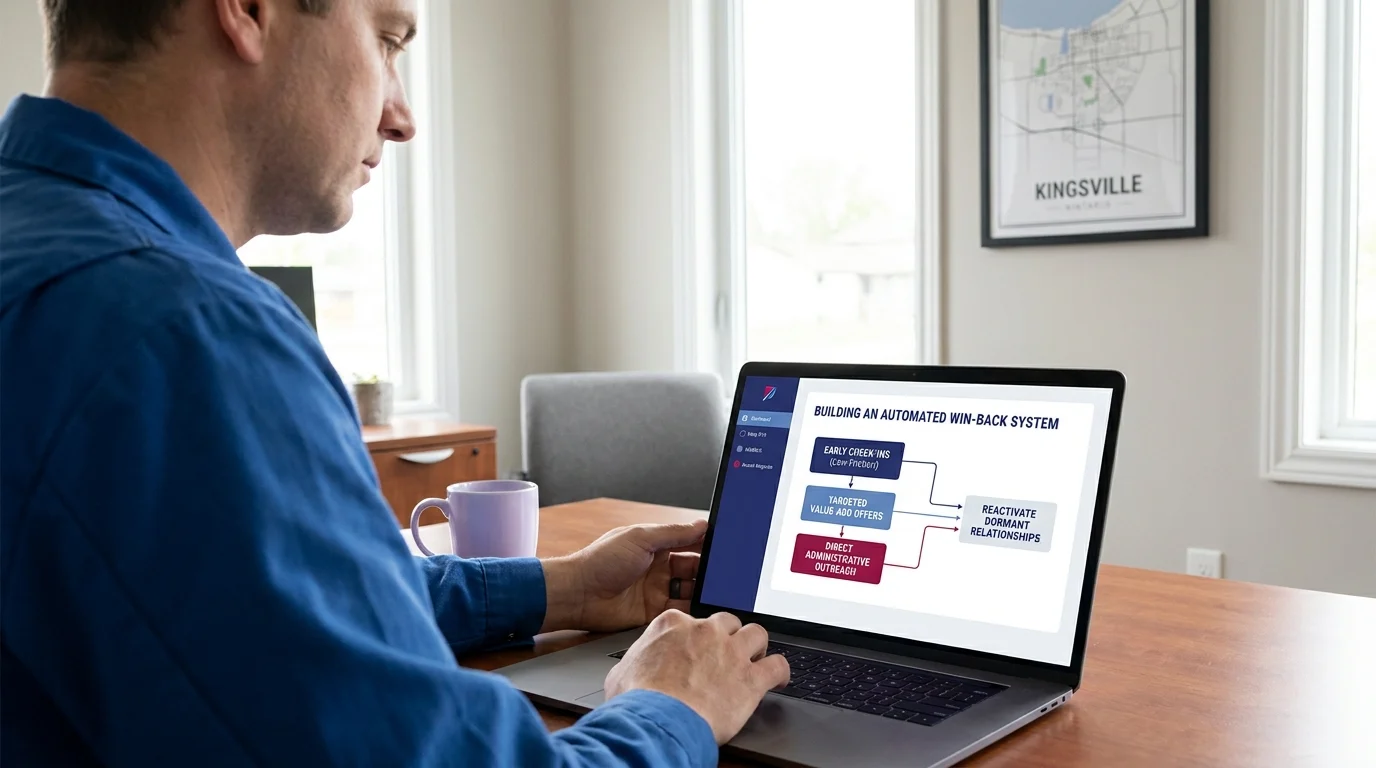
Recovering inactive accounts requires a systematic, multi-stage communication sequence rather than occasional, discounted promotions. By combining early low-friction check-ins, targeted value-add offers, and direct administrative outreach, business owners can systematically reactivate dormant client relationships before accounts churn permanently. Doorways Into Your Business works with service providers and growing companies in Kingsville, Ontario and the Windsor-Essex region to design automated retention systems, client follow-up sequences, and database recovery workflows that turn neglected contact lists into reliable revenue channels.
Paul Hughes founded Doorways Into Your Business after more than four decades consulting across 30+ countries, from implementing early IBM email systems in the 1980s to running multi-million-dollar IT projects for global organizations. A St. Clair College graduate (1976), he settled in Kingsville, Ontario in 2019 to help local small businesses grow with practical “smart digital doorways”, websites, customer service, reviews, bookings, and payments, matched to what a business actually needs, not unnecessary technology.
All articles by Paul →