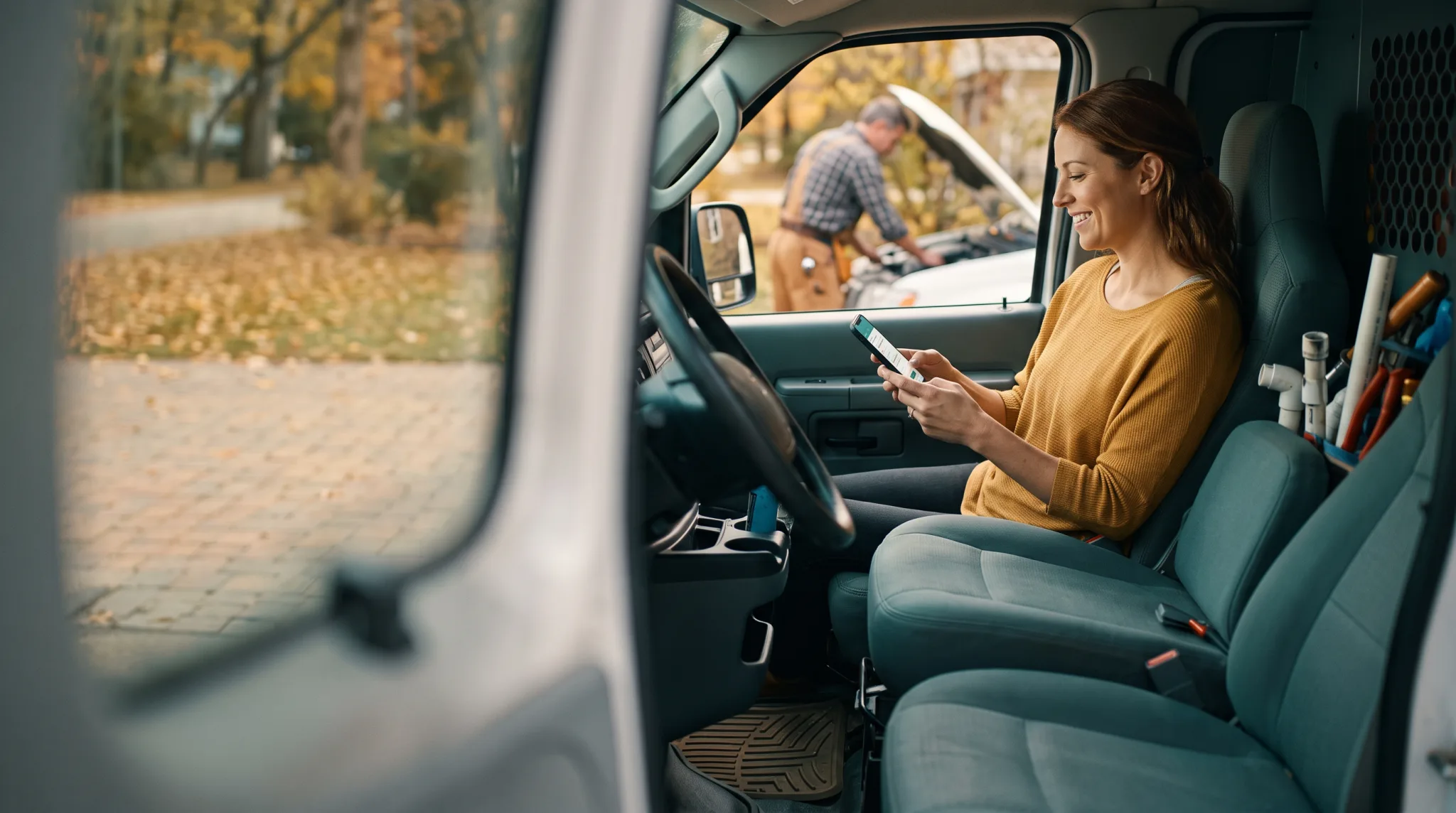


Picture a nine o’clock slot at a Kingsville auto shop. The bay is prepped, the technician is clocked in, and the parts are sitting on the bench. Nine comes and goes. So does nine-fifteen. By nine-thirty it’s clear the customer isn’t coming, and nobody called to say so. That empty bay isn’t a minor inconvenience. It’s the moment most owners in the Windsor-Essex Region start wondering how to reduce appointment no-shows before the pattern quietly eats into a month’s revenue without anyone noticing until the books close.
The Real Cost of No-Shows (It’s More Than the Missed Slot)
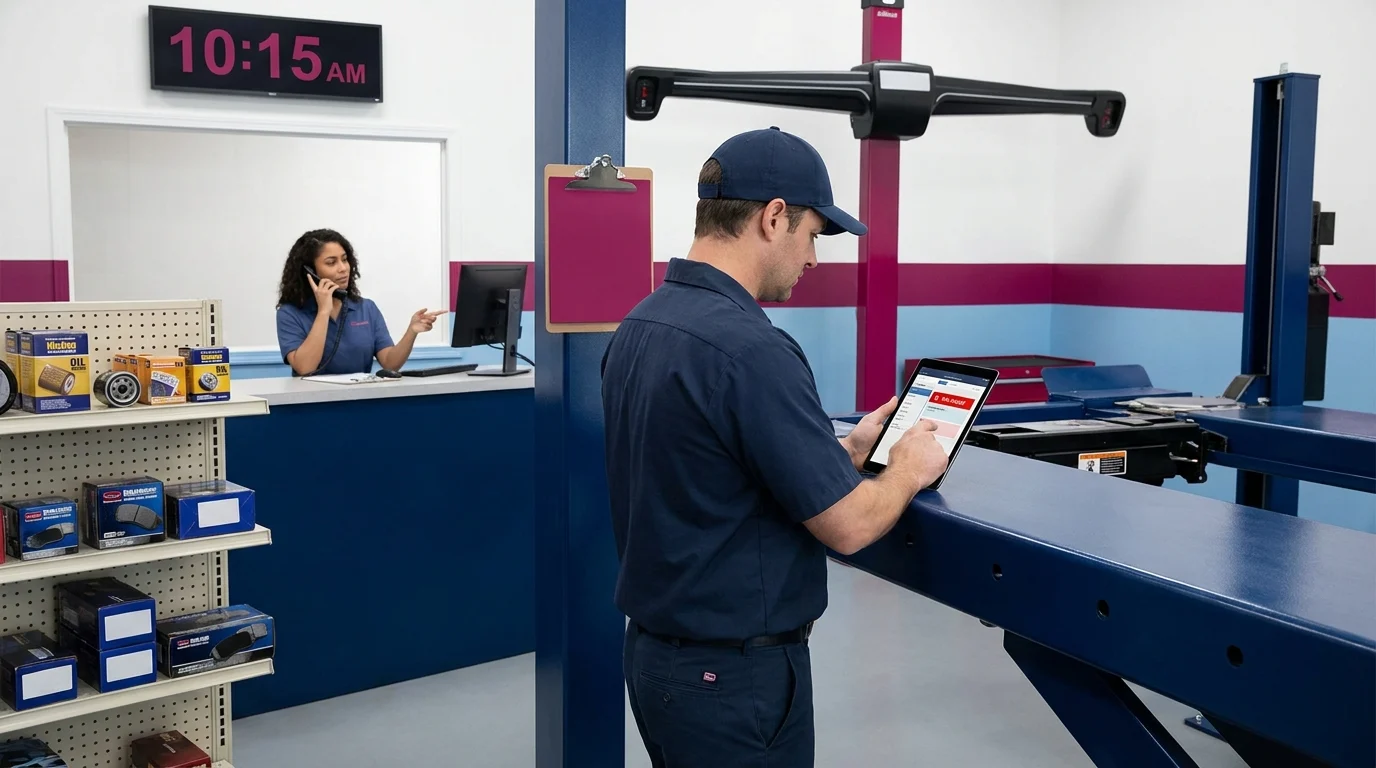
The Direct Revenue Hit
Start with the obvious number. A $180 oil change and inspection appointment that no-shows is $180 gone, full stop. Now multiply. A four-bay shop running two no-shows a week loses roughly $18,000 a year at that rate alone, before you factor in higher-ticket jobs like brakes or diagnostics that routinely run $400 to $800.
Wasted Labour and Scheduling Capacity
The technician still got paid for that hour. Parts ordered specifically for the job now sit on a shelf. Front-desk staff spent time confirming a booking that evaporated. None of that labour produced a dollar of billable work, and it can’t be recovered by working faster next week.
The Ripple Effect on Other Customers
Here’s the part owners underestimate most. A shop in Leamington running a tight schedule turns away callers all week because the book looks full. When a Tuesday slot no-shows, that’s not just lost revenue, it’s a slot a real, paying customer was refused three days earlier. Every no-show is also a rejected booking somewhere upstream.
Add it up across a year and no-show prevention stops looking like a nice-to-have. It’s the difference between a schedule that reflects actual demand and one quietly bleeding capacity nobody budgeted for.
Why Customers Forget (And Why It’s Not About Them Being Rude)
Most owners assume a no-show is a character problem. It’s usually a calendar problem. The customer who books an oil change on a Monday isn’t thinking about your bay at all by Thursday. Life filled the gap, and your appointment quietly lost the argument.
The Booking-to-Service Gap
A booking made two weeks out competes with everything that happens in those two weeks: school pickups, a work deadline, a kid’s dentist appointment. The intention to show up was real at the moment of booking. It just wasn’t reinforced, and unreinforced intentions lose to whatever feels urgent that day.
No Reinforcement, No Memory
A confirmation text sent once at booking does one job: it confirms the slot exists. It does nothing to keep that slot present in someone’s mind a week later. Human memory needs repeated, spaced cues, not a single mention buried in a text thread from twelve days ago.
Competing Priorities Win by Default
Your appointment is rarely the most urgent thing on a customer’s plate on any given day. It only becomes urgent again when something reminds them it’s coming. Without that nudge, a genuinely well-intentioned customer simply loses the mental thread, and the appointment falls off the list without any decision being made to skip it.
This is why no-show prevention built on customer-relations lectures rarely moves the number. Reminding people to “be more responsible” doesn’t fix a structural gap between when someone books and when the service happens. What closes that gap is reinforcement at the right intervals, delivered automatically, so the appointment stays visible right up until it matters.
How an Automated Reminder System Actually Reduces Appointment No-Shows
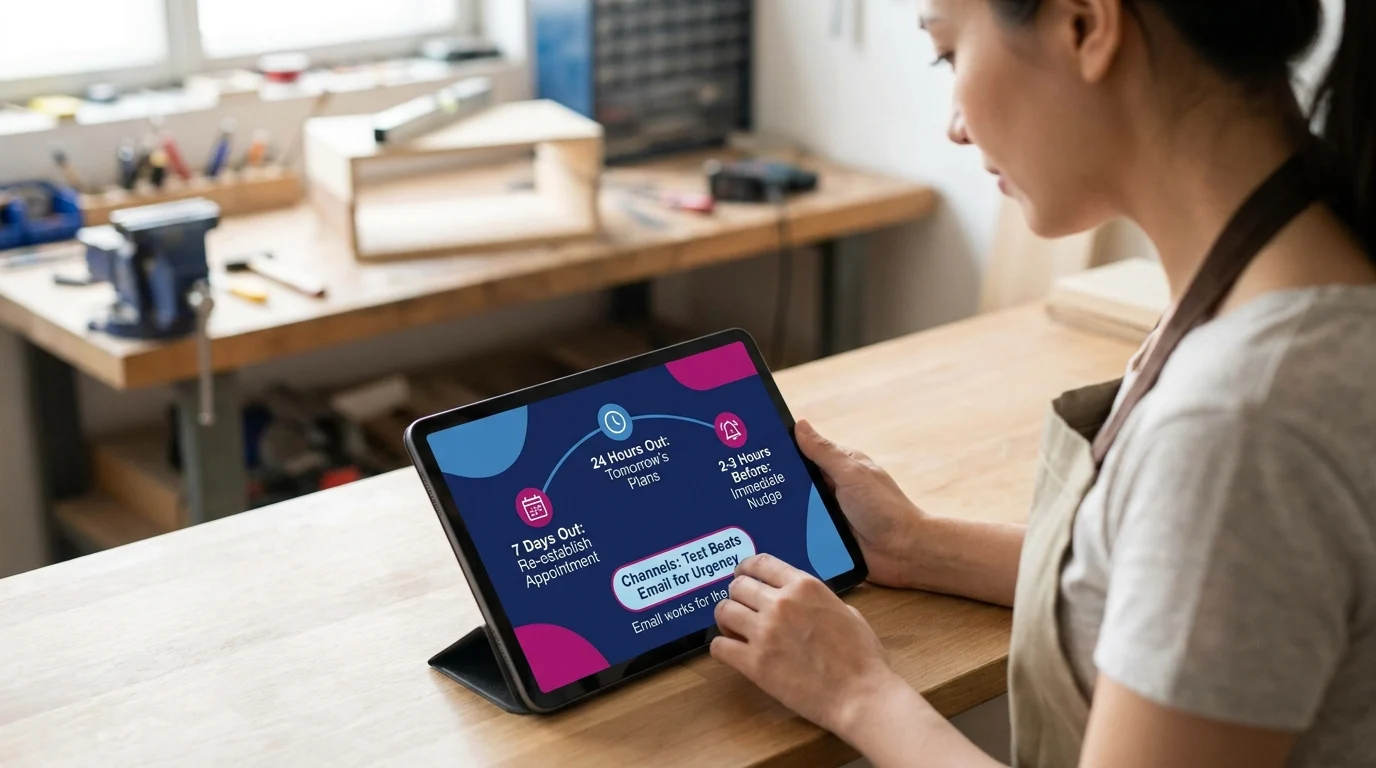
An appointment reminder system works by reinserting your business into the customer’s attention at the exact moments memory tends to fail. Not once. Several times, on a schedule built around how people actually forget.
Timing That Matches the Booking-to-Service Gap
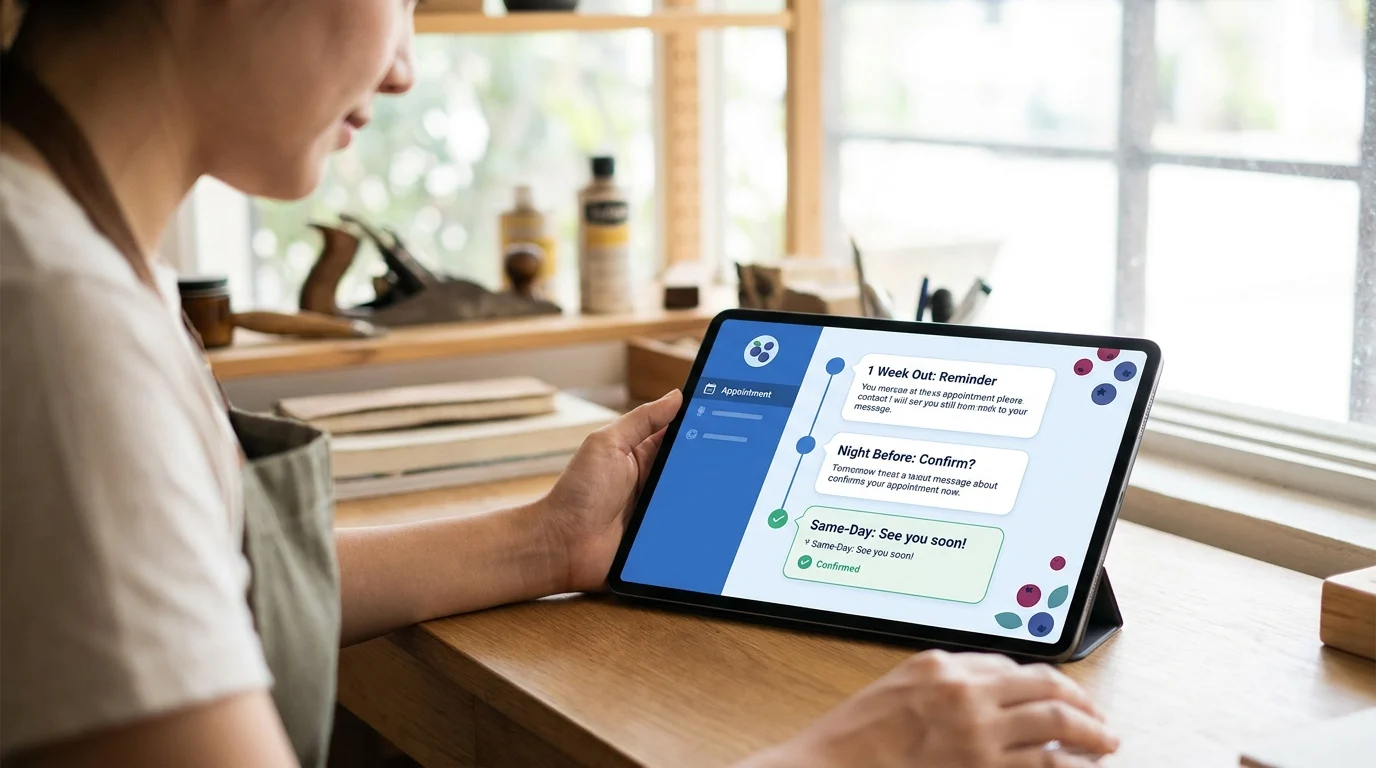
A solid sequence fires at three points: seven days out, 24 hours out, and two to three hours before the slot. The first touch re-establishes the appointment while the customer can still rearrange their week. The second catches them the night before, when tomorrow’s plans are getting fixed. The third is a same-day nudge that turns a vague memory into an immediate decision.
Channels: Text Beats Email for Urgency
Email works for the first, distant reminder. For anything inside 24 hours, text wins. Open rates on SMS run far higher than email, and a text reads in seconds without needing an inbox check. A shop in Leamington running automated reminders for its detailing bookings moved its 24-hour touch from email to text and watched no-shows on that slot drop by more than half within two months, without changing anything else about the booking process.
Confirmation Loops Close the Gap
A reminder that just informs is weaker than one that asks for a reply. Building in a simple “reply C to confirm” step forces a small commitment, and small commitments hold better than passive notices. It also surfaces cancellations early enough to refill the slot, instead of finding out at the door.
This is genuine no show prevention: automated reminders small business owners in Kingsville, Ontario and the Windsor-Essex Region can set up once and let run, reinforcing the appointment at intervals until showing up is the path of least resistance.
Key Takeaways
No-shows aren’t a discipline problem you can lecture your way out of. They’re a memory problem, solved by reinforcement, not reminders that fire once and disappear.
A sequence spaced across a week, the night before, and same-day, delivered by text where urgency matters, with a built-in confirmation step, closes the gap between booking and showing up. That structure is what actually reduces appointment no-shows, not better intentions from your customers.
Want this fitted rather than figured out? Doorways Into Your Business helps owner-operators put systems like this in place. Book a free consultation.
Paul Hughes founded Doorways Into Your Business after more than five decades consulting across 30+ countries, from implementing early IBM email systems in the 1980s to running multi-million-dollar IT projects for global organizations. A St. Clair College graduate (1976), he settled in Kingsville, Ontario in 2019 to help local small businesses grow with practical “smart digital doorways”, websites, customer service, reviews, bookings, and payments, matched to what a business needs, not unnecessary technology.
All articles by Paul →